

Blog
How Do Interest Rates Directly Affect Forex Currency Values?


Interest rates directly affect forex currency values by influencing international capital flows, where higher interest rates attract foreign investment, increasing demand for and strengthening the currency. This happens because investors seek the best possible return on their money. When a country’s central bank raises its interest rate, financial assets in that country, such as government bonds and savings accounts, offer a higher yield compared to those in other countries. This makes the country an attractive destination for foreign capital, leading to a stronger currency.
A central bank’s monetary policy stance, described as either hawkish or dovish, signals future interest rate changes and directly shapes investor sentiment and a currency’s value. A hawkish stance implies that the central bank is concerned about inflation and is likely to raise interest rates, which typically makes the currency more attractive. In contrast, a dovish stance suggests the bank is focused on stimulating economic growth and may lower interest rates, which can weaken the currency as capital flows elsewhere in search of better returns.
Currency values are heavily influenced by market expectations of future rate changes, often moving in anticipation of a central bank’s decision rather than just reacting to it. Forex traders and institutional investors constantly analyze economic data and central bank communications to predict future policy moves. This phenomenon, known as “pricing in,” means that the expected rate change is already reflected in the currency’s price before the official announcement is even made.
This intricate relationship between interest rates, central bank policy, and market expectations forms the backbone of fundamental analysis in the forex market. Understanding how these elements work together is key to interpreting currency movements. We will now explore this mechanism in detail, breaking down how capital flows, central bank language, and investor psychology drive the value of currencies up and down.
What is the Fundamental Relationship Between Interest Rates and Currency Value?
The fundamental relationship is a direct correlation where higher interest rates tend to strengthen a currency by attracting foreign capital, while lower rates tend to weaken it by encouraging capital outflow. This cause-and-effect mechanism is one of the most powerful drivers in the foreign exchange market.
To understand this better, think of a currency’s interest rate as the “return” you get for holding assets in that currency. Just as you would choose a savings account with a higher interest rate to earn more money, global investors do the same on a much larger scale. They constantly move vast amounts of capital around the world, seeking the highest possible yield while balancing risk. When a country raises its interest rates, it effectively increases the return on assets denominated in its currency, making it a more attractive place to invest. This increased demand to buy the currency pushes its value higher relative to others. Conversely, when a country cuts its interest rates, the return on its assets decreases, prompting investors to sell that currency and move their capital to countries offering better returns. This selling pressure causes the currency’s value to fall. This dynamic is central to understanding why currency pairs fluctuate daily.
How Do Higher Interest Rates Attract Foreign Investment?
Higher interest rates attract foreign investment by offering a superior return on capital, often referred to as a higher “yield.” This process creates what is known as capital inflow, sometimes called “hot money,” where investors from countries with lower interest rates convert their money into the currency of the country with higher rates.

For instance, imagine an institutional investor in Japan, where the central bank has set interest rates at a very low 0.1%. Meanwhile, the U.S. Federal Reserve has raised its benchmark rate to 5%. The investor can earn a significantly higher return by investing in U.S. assets, such as government bonds, than by keeping their money in Japanese assets. To do this, the investor must first sell their Japanese Yen (JPY) and buy U.S. Dollars (USD). They then use these dollars to purchase U.S. bonds. This single transaction, when multiplied by thousands of investors and corporations doing the same thing, creates a massive flow of capital into the United States. This flow is driven purely by the “interest rate differential,” the gap between the two countries’ rates. The larger the differential, the stronger the incentive for investors to move their money, leading to a greater demand for the higher-yielding currency.
How Does Increased Demand for a Currency Strengthen Its Value?
Increased demand for a currency strengthens its value based on the fundamental economic principle of supply and demand. In the forex market, currencies are priced relative to one another in pairs, like EUR/USD or USD/JPY. When there is a surge in demand for one currency, its price rises against the other.
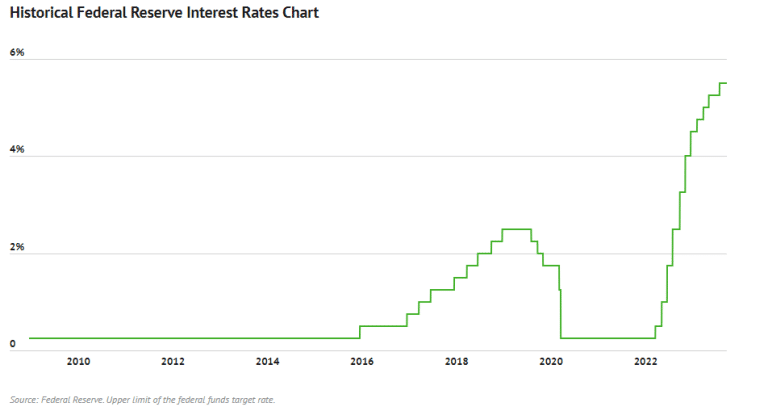
Continuing the previous example, when Japanese investors sell yen to buy U.S. dollars, they are increasing the supply of yen in the market and simultaneously increasing the demand for dollars. As more and more people want to buy dollars, the “price” of a dollar goes up. This means it now takes more yen to buy one dollar, causing the USD/JPY exchange rate to rise. This reflects a stronger dollar and a weaker yen. Think of it like an auction. If there is only one rare item available (supply is fixed) and many people want to buy it (demand increases), the bidders will have to offer more and more money to acquire it, pushing its price up. In the forex market, the act of buying a currency is the bid, and when millions of bids come in for the U.S. dollar, its value naturally appreciates against the currencies being sold to fund those purchases.
What are the Key Differences Between a Hawkish and a Dovish Monetary Policy?
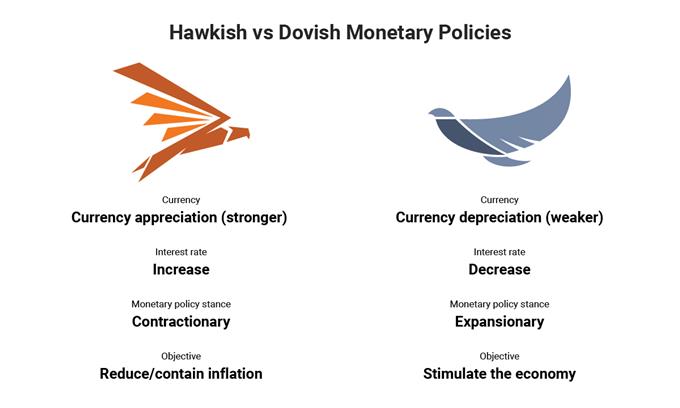
A hawkish policy signals a commitment to raising interest rates to control inflation, strengthening the currency, while a dovish policy indicates a preference for lowering rates to boost the economy, weakening the currency. These terms describe the two primary mindsets a central bank can adopt when managing monetary policy.
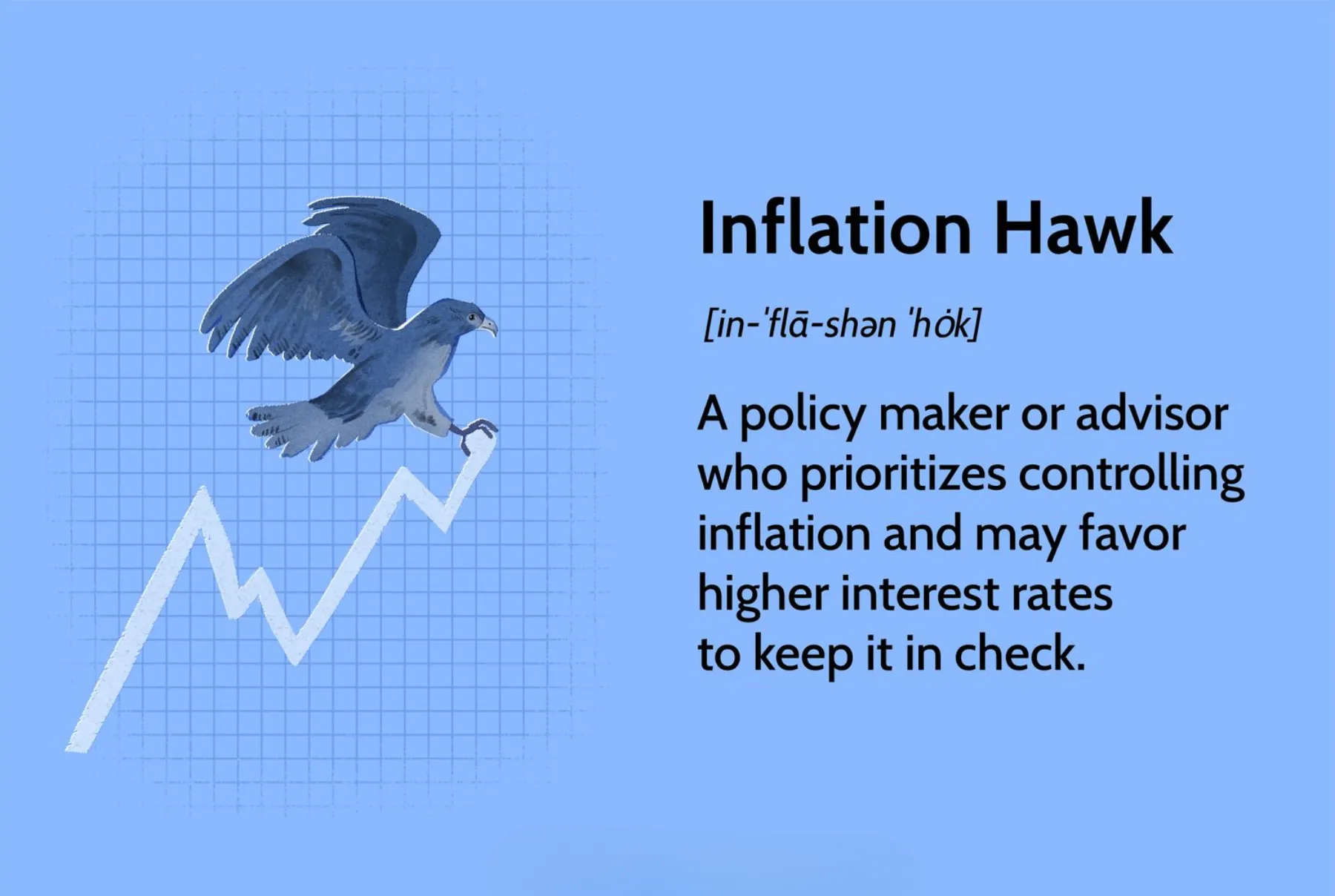
Let’s explore this further. Central bankers are often compared to birds of prey. A “hawk” is seen as aggressive and ready to attack inflation by raising interest rates, even if it slows down economic growth. Their primary concern is keeping prices stable. On the other hand, a “dove” is seen as gentle and passive, prioritizing economic growth and employment over fighting inflation. Doves are more likely to keep interest rates low or cut them to make it cheaper for businesses and consumers to borrow money, thereby stimulating economic activity. Forex traders listen intently to the language used by central bank officials in speeches, press conferences, and meeting minutes to determine whether their tone is leaning hawkish or dovish. This tone provides critical clues about the future direction of interest rates, and therefore, the future value of the currency. A shift from a dovish to a hawkish stance can cause a currency to rally significantly, while a shift from hawkish to dovish can cause it to fall.
How Does a Hawkish Stance (Higher Rates) Impact a Currency?
A hawkish stance typically strengthens a currency because it signals the central bank’s intention to raise interest rates or keep them high. This forward-looking guidance is often more powerful than the rate hikes themselves, as it allows investors to position themselves for future capital appreciation.

When a central bank adopts a hawkish tone, its officials might use phrases like “inflation remains unacceptably high,” “we must remain vigilant,” or “further policy firming may be appropriate.” These words are a clear signal to the market that interest rate hikes are on the horizon. Forex traders and investors react immediately to this language. They anticipate that the country’s currency will soon offer a higher yield, making it more attractive. Consequently, they start buying that currency in expectation of its future strength. This anticipatory buying increases demand and pushes the currency’s value up, often weeks or months before the central bank takes any official action. A hawkish stance builds confidence in the currency, as it suggests the central bank is proactive in maintaining economic stability and protecting the currency’s purchasing power from being eroded by inflation.
How Does a Dovish Stance (Lower Rates) Impact a Currency?
A dovish stance typically weakens a currency because it signals that the central bank is considering lowering interest rates to stimulate a flagging economy. This expectation of lower future returns causes capital to flow out of the country as investors seek better yields elsewhere.
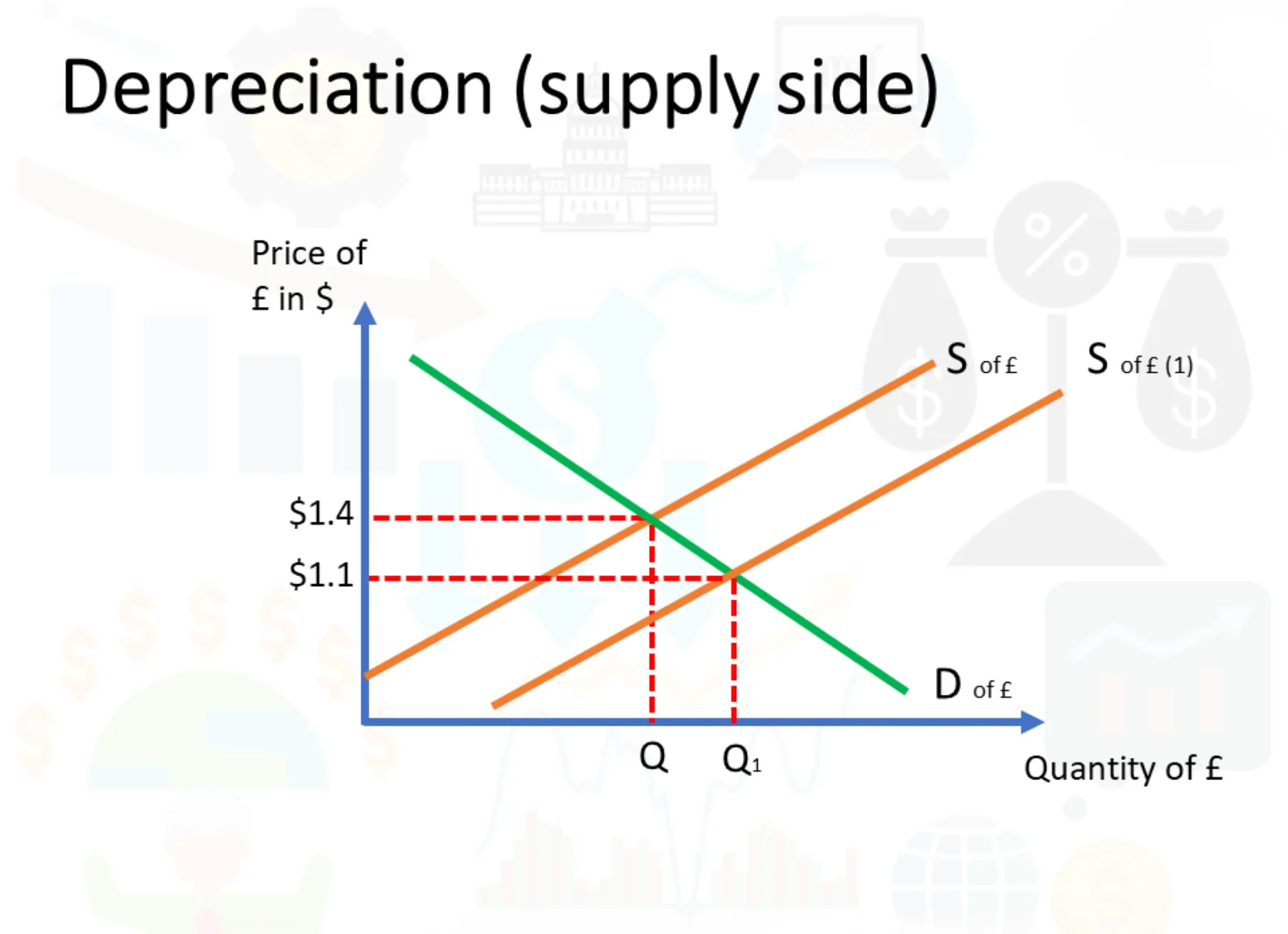
When a central bank turns dovish, its policymakers might talk about “downside risks to growth,” “softening labor market conditions,” or a “lack of inflationary pressure.” This language tells the market that the bank’s priority has shifted from fighting inflation to supporting economic activity. The immediate implication is that future interest rate cuts are possible, or at the very least, that rate hikes are off the table. Upon hearing this, investors holding assets in that currency may decide to sell. They anticipate that the return on their investments will decrease, so they sell the currency and buy another one from a country with a stronger economic outlook and a more hawkish central bank. This wave of selling increases the currency’s supply on the forex market, causing its value to decline relative to other currencies. A dovish stance can erode investor confidence, leading to a sustained period of currency weakness.
What Role Do Central Banks Play in Setting Interest Rates?
Central banks, like the U.S. Federal Reserve and the European Central Bank, set their nation’s benchmark interest rate to manage inflation and maintain economic stability, which directly influences currency values. They are the primary architects of a country’s monetary policy and hold immense power over financial markets.
In detail, a central bank acts as the guardian of an economy’s financial system. Its main responsibility is to create conditions that foster sustainable economic growth. The primary tool used to achieve this is the benchmark interest rate, often called the “policy rate” or “overnight rate.” This is the rate at which commercial banks can borrow money from the central bank or from each other. Changes to this single rate have a ripple effect throughout the entire economy, influencing everything from mortgage rates and car loans to business investment and, of course, the value of the national currency.
The decision to raise, lower, or hold interest rates is typically made by a committee within the central bank. For example, in the United States, the Federal Open Market Committee (FOMC) of the Federal Reserve meets eight times a year to decide on the federal funds rate. Their decisions are based on a vast array of economic data, including inflation reports (like the Consumer Price Index), employment figures (like the Non-Farm Payrolls report), and Gross Domestic Product (GDP) growth. Most central banks operate with a specific mandate. The U.S. Federal Reserve has a “dual mandate” to achieve both maximum employment and price stability (typically defined as an inflation rate around 2%). The European Central Bank (ECB), which sets rates for the Eurozone, has a primary mandate of price stability. The Bank of England (BoE) and Bank of Japan (BoJ) have similar goals. When inflation is too high, they raise rates to cool down the economy. When the economy is weak and inflation is low, they cut rates to encourage spending and investment. Each decision is a delicate balancing act with global consequences.
Do Market Expectations of Rate Changes Affect Currencies?
Yes, market expectations of rate changes dramatically affect currencies, often causing price movements well before a central bank’s official announcement as traders “price in” the anticipated outcome. The anticipation of a policy change is frequently a more powerful market mover than the change itself.
Let’s explore this concept of “pricing in.” The foreign exchange market is forward-looking. Institutional investors, hedge funds, and traders do not wait for a central bank to act. Instead, they spend their time analyzing economic data and listening to every word from central bankers to predict what they will do next. If economic reports show inflation is rising rapidly and unemployment is low, the market will begin to expect the central bank to adopt a hawkish stance and raise rates. In response, traders will start buying that country’s currency. This buying pressure causes the currency to strengthen in the weeks and days leading up to the official policy meeting. By the time the central bank announces the widely expected rate hike, the currency may not move much further, or it might even fall. This is because the news is already reflected in the price. This leads to a common trading adage: “buy the rumor, sell the fact.” The “rumor” is the expectation of the rate hike, which drives the price up. The “fact” is the official announcement, at which point those who bought early may take their profits by selling, causing a temporary dip.
The real volatility in the forex market occurs when a central bank’s decision is a surprise. For example, if the market expects a 0.25% rate hike but the central bank delivers a 0.50% hike, this is a “hawkish surprise.” The currency would likely surge in value because the policy is more aggressive than anticipated. Conversely, if the market expects a 0.25% hike and the central bank decides to hold rates steady, this is a “dovish surprise,” and the currency would likely plummet. To manage these expectations, central banks often use “forward guidance,” which involves communicating their future policy intentions as clearly as possible. By signaling their plans in advance, they can help guide market expectations and avoid causing unnecessary financial market volatility. However, even with forward guidance, the market’s interpretation of economic data can lead to strong currency movements based on what it thinks the central bank will do next.
What Other Economic Factors are Related to Interest Rates and Currency Values?
Economic factors like inflation, GDP growth, employment data, and central bank communications are all deeply connected to interest rates and directly influence currency valuation. Furthermore, understanding these interconnected concepts provides a more complete picture of what drives forex market movements beyond just the headline interest rate number. Investors and traders analyze these elements together to form a holistic view of a country’s economic health and the likely future path of its currency.
What is an Interest Rate Differential and How Does it Affect Forex Pairs?
An interest rate differential is the difference between the interest rates of two countries. This gap is a fundamental driver of capital flows in the forex market and, consequently, a key determinant of a currency pair’s exchange rate. When one country offers a significantly higher interest rate than another, it creates an incentive for global investors to move their capital into the higher-yielding currency to earn a better return. This increased demand for the high-interest-rate currency causes it to appreciate against the lower-rate currency.
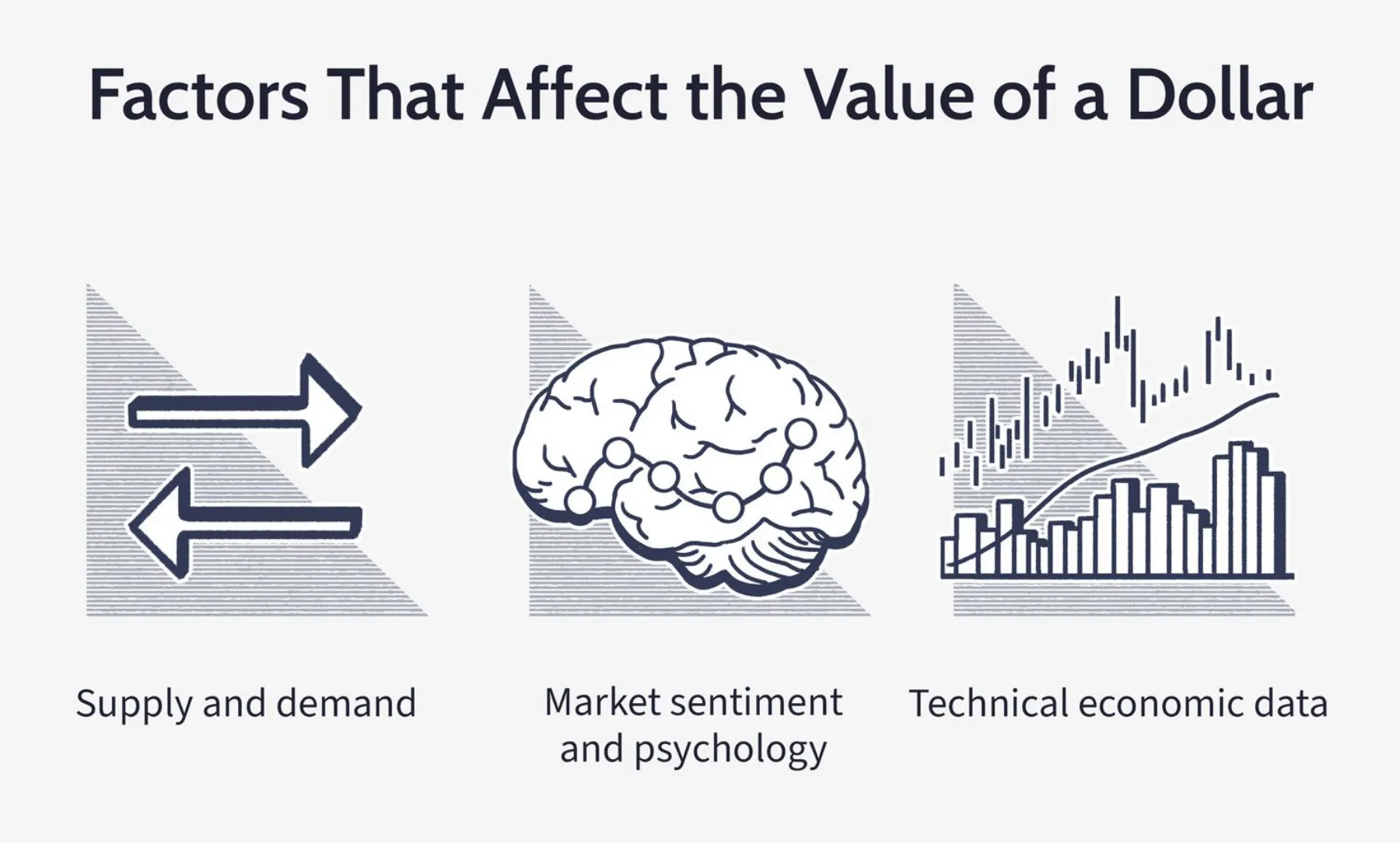
Traders use this concept to analyze the potential direction of a currency pair.
- For example, the Australian Dollar versus the Japanese Yen (AUD/JPY) has historically been a popular pair for this analysis. The Reserve Bank of Australia has often maintained higher interest rates than the Bank of Japan, which has kept rates near zero for long periods.
- A widening differential, where Australia’s rates increase while Japan’s stay low, would typically lead to a stronger AUD relative to the JPY.
- Conversely, if the differential narrows because Australia cuts its rates, the appeal of holding the AUD diminishes, potentially causing the AUD/JPY pair to fall.
What is the Difference Between Real and Nominal Interest Rates?
The distinction between real and nominal interest rates is essential for accurately assessing the true return on an investment and a currency’s underlying strength. The nominal interest rate is the stated, headline rate that a central bank announces or that a financial product offers. It is the rate of return before factoring in the effects of inflation. While simple to understand, it does not tell the whole story about an investment’s purchasing power.

The real interest rate, on the other hand, provides a much clearer picture by accounting for inflation. It is calculated by subtracting the inflation rate from the nominal interest rate.
- Real Interest Rate = Nominal Interest Rate – Inflation Rate
- For instance, if a country has a nominal interest rate of 4% but its inflation rate is 3%, the real interest rate is only 1%.
- If inflation were 5%, the real interest rate would be -1%, meaning an investor’s purchasing power is actually decreasing over time. International investors are primarily concerned with the real return, as it reflects the actual growth of their wealth. A high nominal rate is unattractive if inflation is even higher, as it signals an eroding economic environment.
What is a Forex Carry Trade Strategy?
A forex carry trade is a popular strategy where a trader seeks to profit from the interest rate differential between two currencies. The core concept involves borrowing a currency with a very low interest rate, often called the “funding currency,” and using those funds to purchase a currency that offers a much higher interest rate, the “asset currency.” The trader’s profit is generated from the difference, or “carry,” between the interest paid on the borrowed currency and the interest earned on the purchased currency. This income is typically collected daily for as long as the position is held.
For this strategy to be successful, the exchange rate between the two currencies must remain relatively stable or move in the trader’s favor.
- A classic example is borrowing Japanese Yen (JPY), which has historically had near-zero interest rates, to buy a currency like the Australian Dollar (AUD) or New Zealand Dollar (NZD) when their central banks offer higher rates.
- The carry trade thrives in low-volatility, “risk-on” market environments where investors are more confident and seeking higher yields.
- During these periods, the consistent income from the interest rate differential can provide a steady stream of returns.
#### What are the Risks of a Carry Trade?
The primary risk associated with a forex carry trade is adverse exchange rate movement. While the strategy earns a predictable income from the interest differential, this gain can be quickly erased by a negative swing in the currency pair’s value. If the high-interest-rate currency depreciates against the low-interest-rate currency, the capital loss from the exchange rate shift can easily outweigh all the interest earned. This is the central vulnerability of the strategy.
This risk is often amplified by two factors.
- First, carry trades are frequently executed with significant leverage, meaning a small adverse price movement can result in large losses.
- Second, carry trades tend to unwind rapidly during times of global economic uncertainty or “risk-off” sentiment. When market fear increases, investors pull their money from higher-risk, high-yield assets and move it to “safe-haven” currencies like the JPY or CHF. This mass exodus causes the high-yield currencies to fall sharply against the low-yield funding currencies, creating large losses for anyone still in a carry trade position.
Which Economic Indicators Do Traders Watch Besides Interest Rate Announcements?
While central bank interest rate decisions are major market-moving events, they are a reaction to broader economic conditions. Therefore, savvy forex traders monitor a range of key economic indicators to anticipate a central bank’s next move and gauge the underlying health of an economy. These data releases provide clues about future monetary policy and can trigger significant currency volatility on their own.
Three of the most closely watched indicators include:
- Inflation (CPI): The Consumer Price Index measures the average change in prices paid by consumers for a basket of goods and services. Persistently high inflation often pressures a central bank to raise interest rates to cool down the economy, which is typically bullish for the currency.
- Gross Domestic Product (GDP): GDP represents the total value of all goods and services produced by a country. A strong GDP growth figure indicates a robust economy, giving the central bank justification to tighten monetary policy (raise rates). Conversely, a weak or contracting GDP may lead to rate cuts to stimulate growth, which is bearish for the currency.
- Employment Data (NFP): In the United States, the Non-Farm Payrolls (NFP) report is a critical measure of the labor market’s health. Strong job creation and low unemployment suggest a thriving economy, supporting the case for higher interest rates and a stronger U.S. dollar.
What is “Forward Guidance” from a Central Bank?
Forward guidance is the communication tool used by central banks to signal their future policy intentions to financial markets and the general public. Instead of making abrupt policy changes that could shock the economy, central banks use speeches, press conferences, official statements, and published meeting minutes to provide insight into their economic outlook and the likely path of future interest rates. This practice is designed to manage market expectations, reduce uncertainty, and make monetary policy more effective.
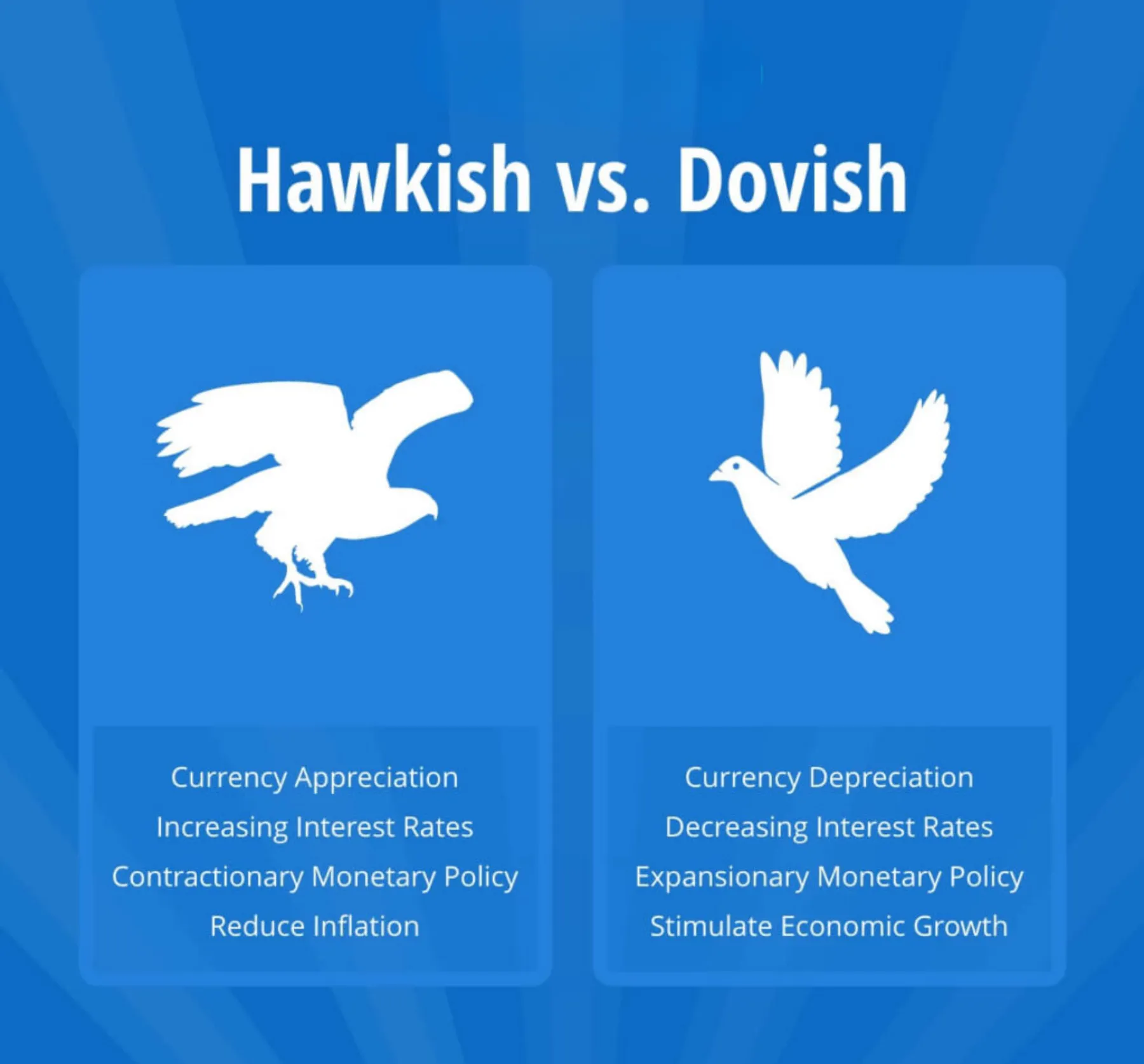
The language used in forward guidance is meticulously analyzed by traders.
- A central bank is described as “hawkish” if its communication suggests a readiness to raise interest rates to combat inflation. This tone is generally supportive of the currency.
- A central bank is considered “dovish” if its statements indicate a preference for keeping interest rates low to support employment and economic growth. This tone is usually bearish for the currency.
- Forward guidance can move markets just as much as an actual rate adjustment. For instance, if a central bank keeps rates unchanged but changes its language from dovish to hawkish, the currency may strengthen immediately as traders begin pricing in the probability of future rate hikes.