

Blog
Scalping vs Swing Trading: Which Forex Style Fits Your Personality and Goals?

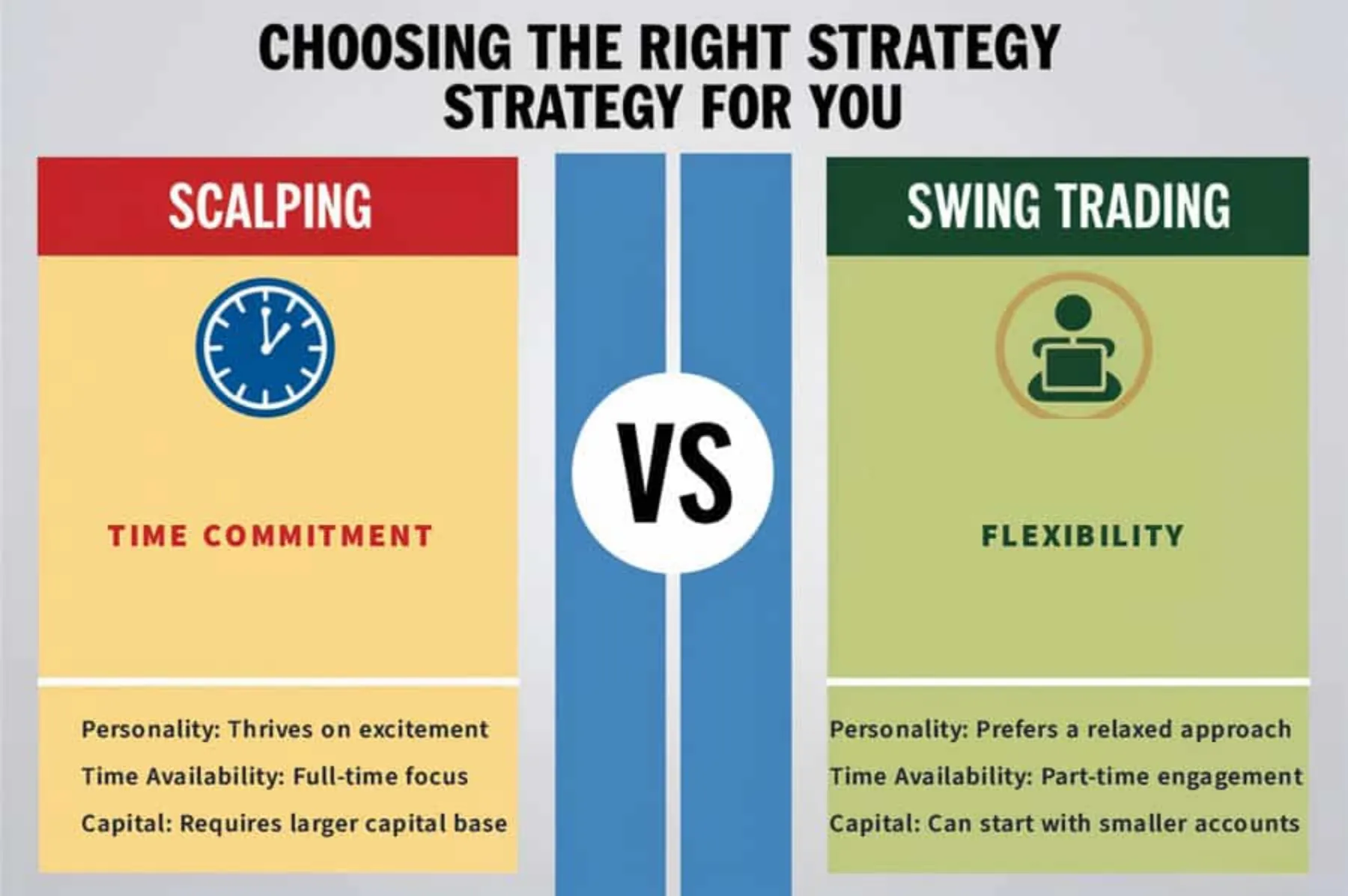
Choosing between scalping and swing trading depends entirely on your personality, lifestyle, and financial goals. The right forex trading style for you is the one that aligns with your available time for trading, your psychological tolerance for risk and stress, and your preference for either frequent small wins or less frequent but larger gains. If you are an action-oriented person who can dedicate a few intense hours to the market each day and handle rapid decision-making, scalping might be a good fit. Conversely, if you have a patient temperament, a full-time job, and prefer to make fewer, more calculated decisions based on longer-term trends, swing trading will likely suit you better.
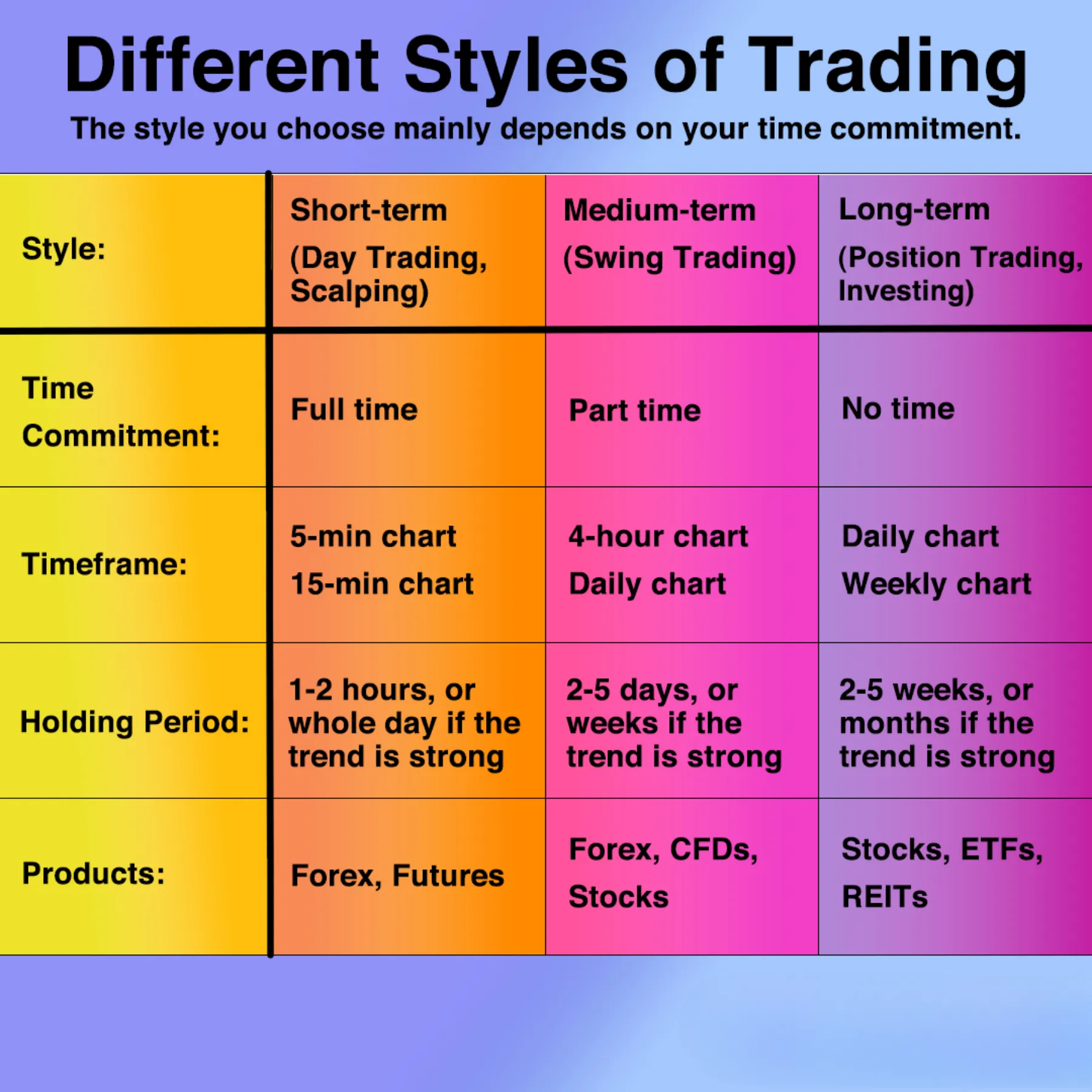
The primary difference between these two popular styles is the trade holding time and the corresponding profit target. Scalping involves holding trades for just a few seconds to a few minutes to capture very small profits of a few pips, while swing trading involves holding trades for several days to a few weeks to capture larger price movements or “swings” of 50 to hundreds of pips. This core distinction in duration and profit objective creates a cascade of differences in analysis, risk management, and the psychological demands placed on the trader.
For new traders, one style is generally considered more approachable than the other. Swing trading is often a better starting point for beginners because it operates on slower timeframes, allowing more time for analysis, decision-making, and learning without the high-pressure environment of scalping. Scalping requires a level of speed, precision, and emotional control that most newcomers have not yet developed, making it a more advanced strategy where mistakes can be costly and frequent.
Understanding these fundamental differences is the first step toward building a trading plan that you can stick with for the long term. This guide will explore each style in detail, compare their key attributes, and provide a framework to help you assess which path aligns best with who you are and what you want to achieve in the forex market.
What Is Scalping in Forex Trading?
Scalping is a high-frequency forex trading style that involves executing a large number of trades to capture very small profits, often just a few pips at a time. The core idea is that small, frequent wins can accumulate into a substantial profit by the end of a trading session. Scalpers hold their positions for an extremely short duration, typically ranging from a few seconds to a maximum of a few minutes. They thrive on market volatility and operate during the busiest trading hours when price action is most active, aiming to get in and out of the market before any significant adverse movements can occur. This style is often compared to being a “market maker,” as scalpers provide liquidity by constantly buying at the bid price and selling at the ask price.
To understand this better, let’s break down the defining attributes of scalping. First is the timeframe. Scalpers live on the lowest possible chart timeframes, primarily using the one-minute (M1) and five-minute (M5) charts. These micro-level views allow them to spot tiny price fluctuations that would be invisible on higher timeframes. Their analysis is almost purely technical, focusing on indicators like moving averages, the stochastic oscillator, or Bollinger Bands to identify immediate entry and exit signals. They are not concerned with the long-term trend or fundamental economic news, unless it is a high-impact release scheduled to cause immediate, explosive volatility.
The second key attribute is the profit target. A scalper’s goal for a single trade is exceptionally modest, usually between 5 and 10 pips. A “pip” stands for “percentage in point” and is the smallest price move that a currency pair can make. Because the profit per trade is so small, scalpers must execute dozens or even hundreds of trades in a single session. This high volume is what makes the strategy viable. To achieve this, they often use higher leverage to magnify the financial impact of these small price moves. However, this also magnifies potential losses, making strict risk management absolutely essential. A scalper must use very tight stop-losses, often just a few pips away from their entry price, to ensure that a single losing trade does not wipe out the profits from many winning ones. The required precision is immense, as the difference between profit and loss can be decided in a split second.
What Is Swing Trading in Forex Trading?
Swing trading is a medium-term trading style that aims to capture gains in a currency pair over a period of several days to several weeks. Swing traders identify a potential price “swing” or momentum shift and seek to ride that trend until it shows signs of ending. Unlike scalpers who are interested in the market’s “noise,” swing traders focus on the larger, more significant price movements. They are not concerned with the minor fluctuations that happen minute-to-minute; instead, they position themselves to profit from the primary directional moves that form over a longer duration. This approach allows them to place fewer trades but target much larger profits on each position.
Let’s explore the core characteristics of swing trading. The first is the timeframe. Swing traders operate on much higher chart timeframes compared to scalpers. They typically use the four-hour (H4), the daily (D1), and sometimes the weekly (W1) charts for their analysis. These charts filter out the intraday volatility and provide a clearer picture of the dominant trend and key market structure. By analyzing these broader views, swing traders can identify major support and resistance levels, chart patterns like head and shoulders or triangles, and trend continuations. Their analysis often blends technical indicators, such as the Relative Strength Index (RSI) or MACD, with a basic understanding of fundamental factors that could influence the currency’s direction over the coming weeks.
The second defining attribute is the profit target. A swing trader’s profit objective is significantly larger than a scalper’s, typically ranging from 50 to over 250 pips per trade. Because they are targeting these substantial gains, they can afford to be highly selective with their trade setups, waiting patiently for high-probability opportunities to appear. This approach naturally leads to a much lower trade frequency. A swing trader might only place a handful of trades in a week or even a month. Their risk management reflects this longer-term perspective. Stop-losses are set much wider to accommodate the normal daily volatility and prevent the trade from being closed prematurely by market noise. A swing trader needs to give their position enough “breathing room” to develop. Consequently, they often use lower leverage and smaller position sizes relative to their account balance to ensure a single loss is manageable.
What Are the Key Differences Between Scalping and Swing Trading?
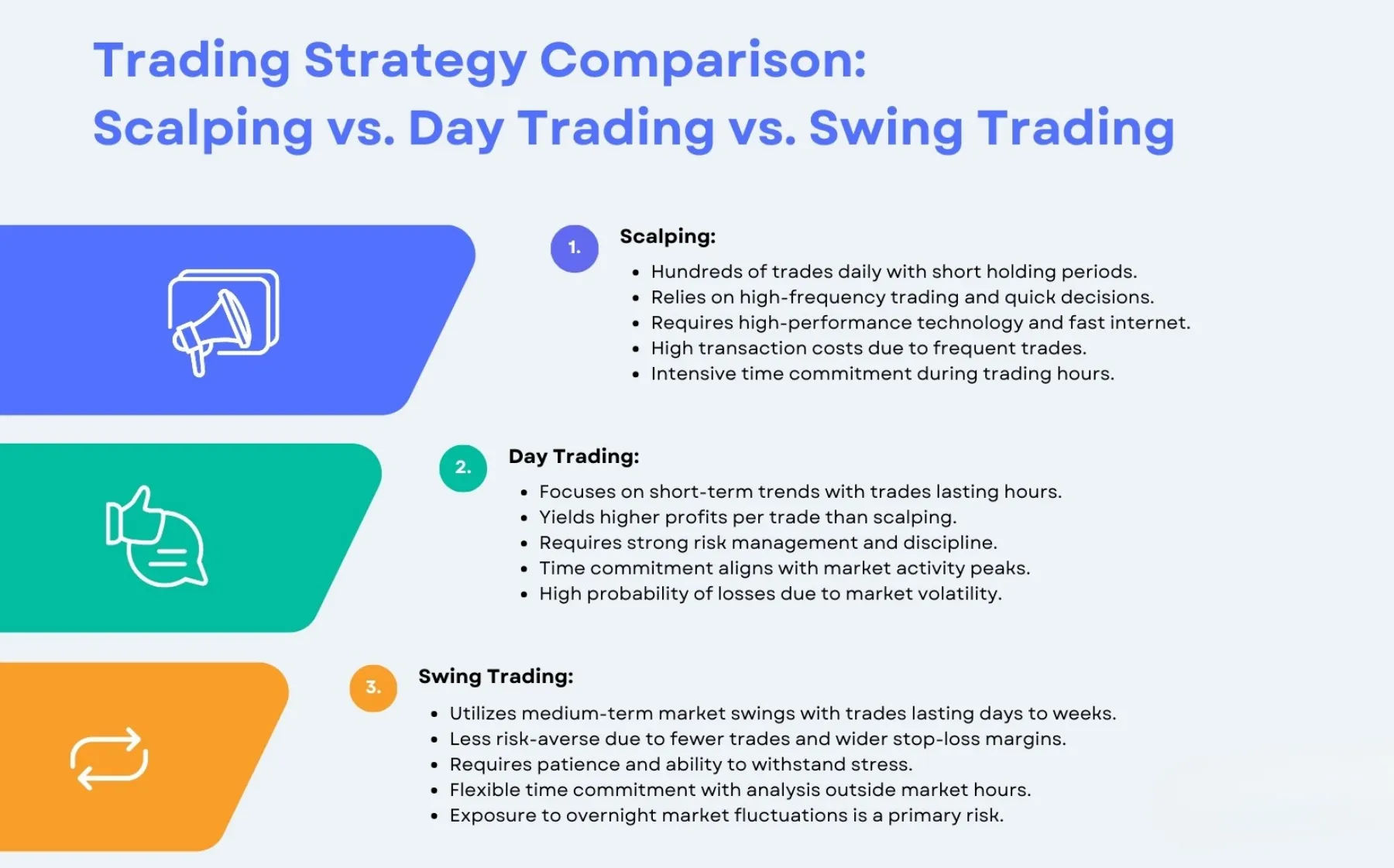
Scalping focuses on high volume and small profits over minutes, while swing trading targets larger profits from fewer trades held for days or weeks. This fundamental difference in trade duration and profit objective is the source of all other distinctions between the two styles, impacting everything from time commitment and psychological profile to risk management and capital requirements. A trader’s choice between them is less about which one is “better” and more about which one is a better fit for their individual circumstances and personality.
To understand this better, let’s explore the distinctions across several key areas. The most apparent difference lies in the analytical approach and tools used. Scalpers require real-time data and lightning-fast execution, whereas swing traders prioritize clear trend identification and patience. This contrast in operational needs creates two vastly different trading experiences.
How Do Their Trading Timeframes Compare?
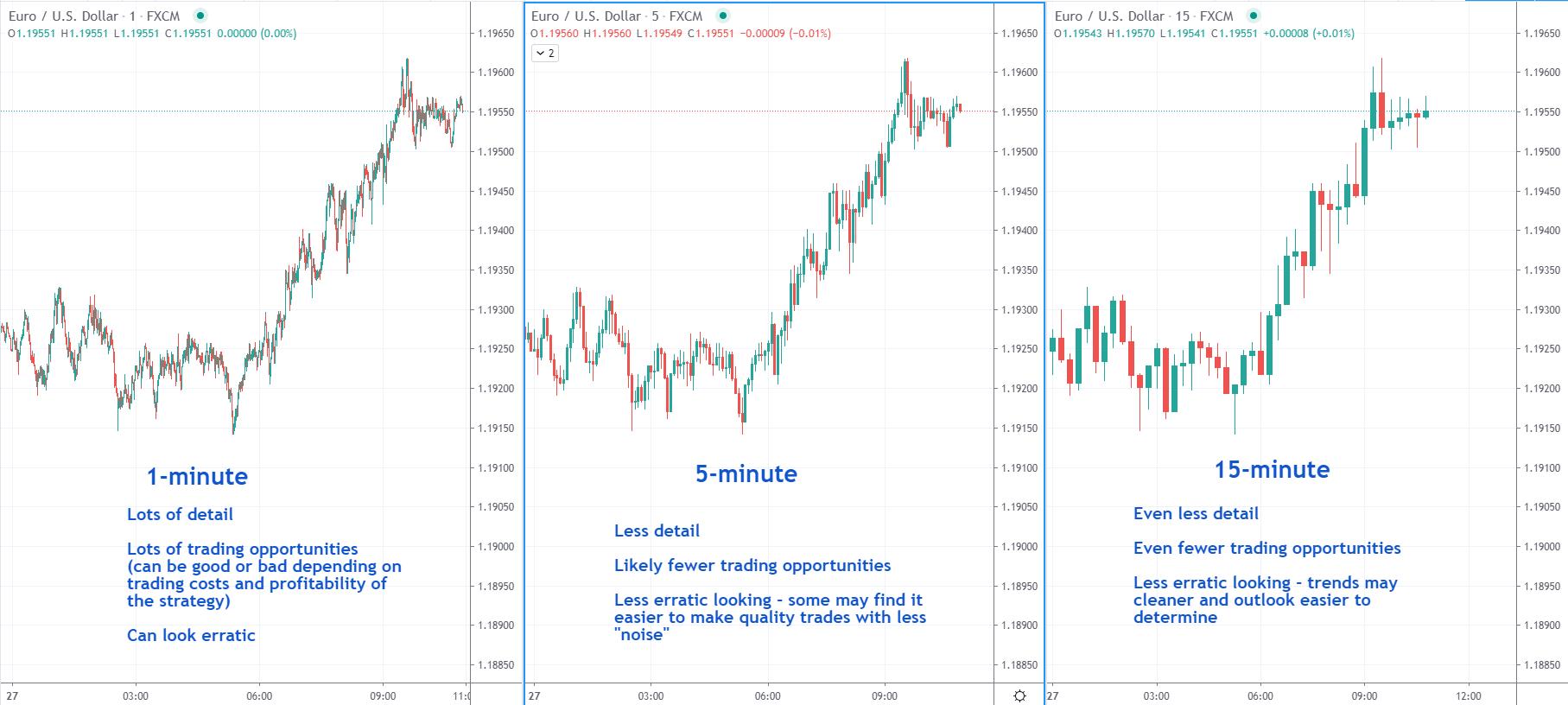
The trading timeframe is the most immediate and defining difference between scalping and swing trading. Scalpers operate on very short timeframes like the one-minute (M1) and five-minute (M5) charts, while swing traders use longer timeframes such as the four-hour (H4), daily (D1), and weekly (W1) charts.
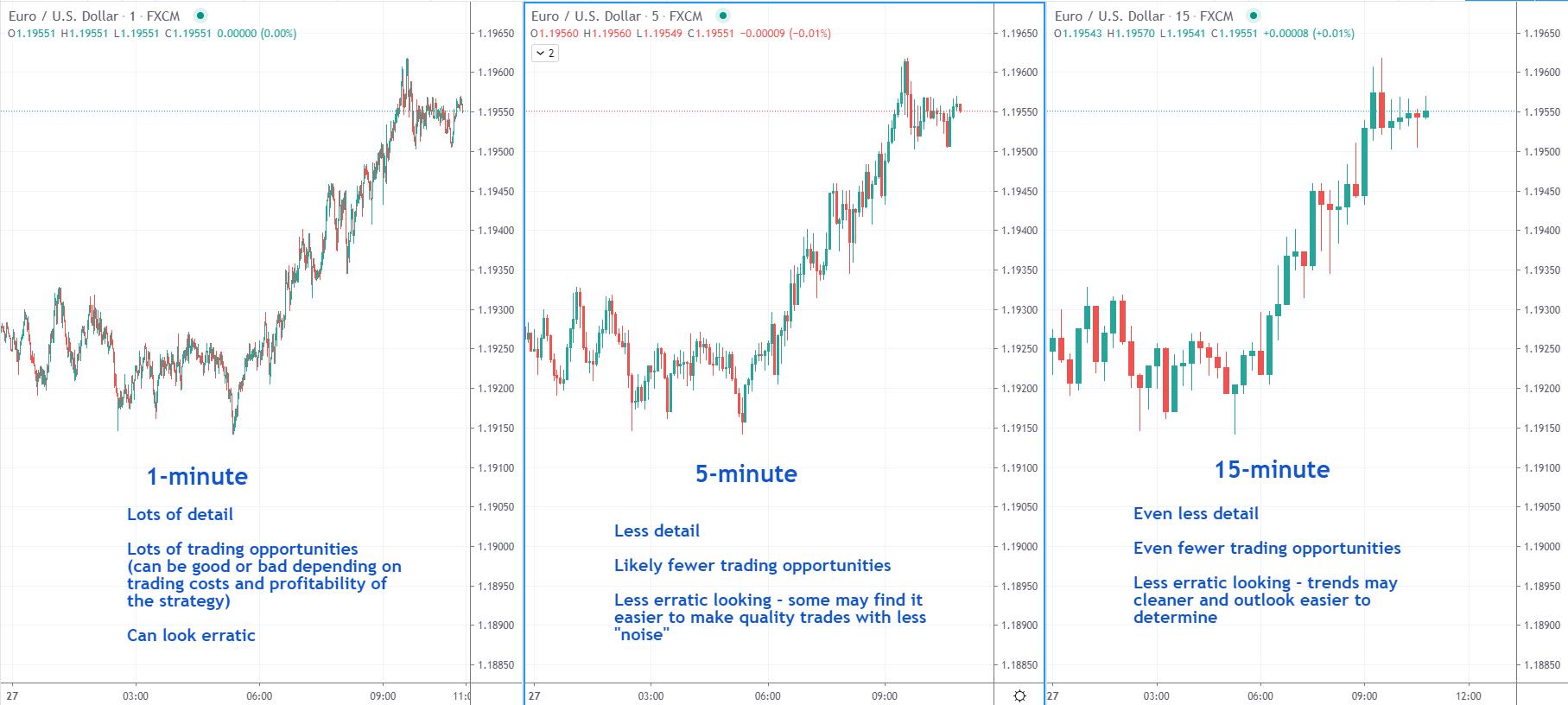
Specifically, a scalper needs the M1 or M5 chart to see the market at a microscopic level. Their goal is to identify tiny, fleeting patterns and momentum bursts that last for only a few minutes. Looking at a daily chart would be useless for them, as it would show just one or two candlesticks for an entire day’s worth of thousands of potential scalping opportunities. Their entire strategy is built on exploiting the small-scale volatility, or “noise,” that higher timeframes are designed to filter out.
In contrast, a swing trader uses the H4, D1, and W1 charts to gain a bird’s-eye view of the market. They want to identify the major trend, not the noise. For instance, by looking at a daily chart, a swing trader can spot a clear uptrend that has been developing for weeks, identify a temporary pullback to a key support level, and enter a trade to catch the next major “swing” upward. The minute-to-minute fluctuations are irrelevant to their strategy. Their holding period of days or weeks means their analysis must be based on a structure that is stable over that duration.
How Does Time Commitment Differ for Each Style?
The time commitment required for each style is profoundly different, both in intensity and duration. Scalping demands intense, focused screen time for short bursts, typically one to three hours per day, whereas swing trading requires less daily screen time, often just 30 to 60 minutes, but demands continuous mental awareness over several days or weeks.

A scalper must be completely dedicated to the screen during their trading session, which is usually timed to coincide with the most volatile market hours, like the London-New York session overlap. During this period, they cannot be distracted. They are making dozens of rapid-fire decisions, monitoring multiple charts, and managing active trades simultaneously. Once the session is over, they are done for the day and hold no open positions. It’s a high-octane sprint.
A swing trader’s time commitment is more like a marathon. They might spend 30 minutes in the evening analyzing daily charts, setting their orders, and then stepping away. They don’t need to watch every price tick. However, they must carry the mental load of having open positions for an extended period. They are exposed to overnight risk and must remain patient through periods where the market moves against them before hopefully turning in their favor. Their commitment is less about active screen time and more about passive, long-term management and patience.
What Psychological Traits Suit Scalping vs Swing Trading?
The psychological profiles best suited for each style are nearly opposite. Scalping is ideal for traders who are highly disciplined, decisive, and thrive on constant action and immediate feedback, while swing trading is better for patient, analytical thinkers who can detach emotionally and wait for a strategy to play out over time.

Scalpers must be able to handle stress and make split-second decisions without hesitation. They take many small losses, so they need the discipline to cut a losing trade instantly without emotion. They are adrenaline seekers who enjoy the fast-paced, game-like nature of the market. Any indecision or emotional attachment to a trade can be fatal to their account.
Swing traders, on the other hand, must possess immense patience. Their trade setups can take days to form, and once in a trade, they may have to wait weeks for it to reach its profit target. They need the emotional fortitude to watch a position go into a temporary loss without panicking. They are typically more reflective and enjoy the process of deep analysis and strategic planning. They prefer a calm, calculated approach over a chaotic, high-energy environment.
How Do Capital Requirements and Risk Management Vary?
Capital needs and risk strategies diverge significantly between the two styles. Scalping can be started with smaller capital due to high leverage but demands extremely tight stop-losses and careful management of transaction costs, while swing trading often requires a larger capital base to withstand market volatility with wider stop-losses.
A scalper might use high leverage to make small price moves meaningful, but their risk on any single trade is tiny. For example, they might risk only 0.5% of their account with a 5-pip stop-loss. The biggest financial threat to a scalper isn’t a single large loss but the cumulative effect of commissions and spreads. Because they trade so frequently, these costs can quickly add up and erase profits.
A swing trader needs more capital to manage their risk effectively. Their stop-losses are much wider, perhaps 50 to 100 pips, to avoid being stopped out by daily market noise. To keep their risk per trade at a reasonable level (e.g., 1-2% of their account), a wider stop necessitates a smaller position size. This, in turn, requires a larger overall account balance to make the potential profits worthwhile. For a swing trader, transaction costs are a minor concern since they trade infrequently, but managing exposure to weekend gaps and major news events is a primary risk factor.
What Are the Pros and Cons of Each Trading Style?
Scalping offers numerous trading opportunities and eliminates overnight risk but is accompanied by high stress and transaction costs, whereas swing trading provides larger profit potential per trade and less stress but requires significant patience and exposure to weekend risk. Neither style is inherently superior. The best choice depends on which set of advantages a trader values more and which set of disadvantages they are better equipped to handle. Evaluating these trade-offs objectively is key to selecting a style that you can execute consistently.
Let’s examine the specific advantages and disadvantages for each approach. By understanding the inherent strengths and weaknesses, you can better align your expectations and resources with the demands of the strategy you choose. This balanced view helps prevent frustration and allows you to build a trading plan that plays to your personal strengths.
What Are the Main Advantages and Disadvantages of Scalping?
Scalping appeals to many traders because of its fast-paced nature and potential for quick feedback. However, its demands can also make it one of the most challenging styles to master.

Main Advantages of Scalping:
- High Number of Trading Opportunities: Because scalpers look for tiny price movements, they can find dozens, if not hundreds, of potential trades in a single trading session. This constant action can be very appealing for active traders.
- Reduced Market Exposure: Trades are held for a very short time, significantly limiting exposure to adverse market events. Scalpers are flat at the end of their session, so they face zero overnight or weekend risk.
- Potential for High Win Rate: Many scalping strategies are designed to have a high win rate. Catching small, predictable movements can lead to a long string of small profits, which can be psychologically rewarding.
- Compounding Works Quickly: With many small profits being made daily, the effects of compounding can build up an account relatively quickly compared to longer-term strategies.
Main Disadvantages of Scalping:
- High Stress and Intense Focus Required: Scalping is mentally exhausting. It requires unwavering concentration and rapid decision-making under pressure for hours at a time.
- Transaction Costs Are a Major Factor: Spreads and commissions can have a huge impact on profitability. A 1-pip spread on a trade targeting a 5-pip profit immediately consumes 20% of the potential gain.
- Sensitivity to Execution Speed and Slippage: A fast and reliable broker is non-negotiable. Any delay in execution (slippage) can turn a winning trade into a losing one instantly.
- Difficult for Beginners: The speed, precision, and emotional control required make scalping a very difficult style for new traders to learn and execute successfully.
What Are the Main Advantages and Disadvantages of Swing Trading?
Swing trading is often favored by those who want to participate in the markets without being tied to their screens all day. It allows for a more balanced approach but comes with its own set of challenges.

Main Advantages of Swing Trading:
- Less Time-Intensive: Swing traders do not need to monitor the market constantly. They can analyze charts and place orders once a day, making it highly compatible with a full-time job or other commitments.
- Potential for Larger Gains Per Trade: By capturing major price swings, the profit from a single winning trade can be substantial and can often cover several small losses.
- Reduced Stress: The slower pace of swing trading removes the need for split-second decisions, leading to a much calmer and less stressful trading experience.
- Transaction Costs Are Less Impactful: Since trades are infrequent, the spread and commissions represent a very small percentage of the potential profit, making them almost negligible.
Main Disadvantages of Swing Trading:
- Exposure to Overnight and Weekend Risk: Holding positions overnight or over the weekend exposes the trader to the risk of negative news causing a significant price gap against their position.
- Requires Significant Patience: Swing traders must wait patiently for high-probability setups to form and then wait again for the trade to play out. This can lead to long periods of inactivity or drawdown.
- Capital Is Tied Up for Longer: Open positions can tie up trading capital for days or weeks, potentially causing traders to miss other opportunities.
- Can Incur Losing Streaks: A swing trader might go through several consecutive losing trades over a period of weeks, which can be psychologically challenging to endure.
Which Trading Style Is Better For You?
The better trading style is the one that aligns seamlessly with your personality, schedule, risk tolerance, and long-term goals. There is no universally “best” style. A strategy that generates millions for one person could lead to ruin for another if it doesn’t fit their psychological makeup. Therefore, the decision requires honest self-assessment rather than a search for the most profitable system on paper. Your task is to find the approach that you can execute consistently and without undue stress.
To help you decide, let’s look at who each style is best suited for. The following sections will provide a clear profile of the ideal candidate for each approach, allowing you to see which one resonates more with your own characteristics. Think of this as a fitting session. You want to find the trading style that feels comfortable and natural, not one that forces you to be someone you’re not.
Should You Choose Scalping if You Are a Beginner?
As a general rule, scalping is not recommended for beginners due to its demanding nature, which requires high speed, extreme discipline, and flawless execution under pressure. New traders typically lack the experience to make the rapid, objective decisions that scalping demands. The learning curve is incredibly steep, and the fast-paced environment leaves no room for hesitation or analysis paralysis, which are common traits among newcomers.
For instance, a beginner might see a setup and take several seconds to confirm it against their rules. In the world of scalping, the opportunity is gone by then. Furthermore, beginners are more susceptible to emotional trading, like revenge trading after a quick loss, which is a death sentence in a high-frequency style. The constant pressure can lead to burnout very quickly. Most importantly, beginners often underestimate the impact of transaction costs. The spread and commissions, which are a minor factor for swing traders, become the primary hurdle for scalpers. A new trader can have a strategy that is technically profitable but still lose money because the costs eat all the gains. It’s far more productive for a beginner to start with a slower style, like swing trading, to learn market dynamics, risk management, and emotional control in a more forgiving environment.
Who Is the Ideal Candidate for Swing Trading?
The ideal candidate for swing trading is someone who fits a specific profile defined by their schedule, temperament, and analytical approach. An ideal swing trader is often a patient and analytical individual with a full-time job or other commitments who prefers making fewer, well-researched decisions to capture larger market moves. This style is perfectly suited for those who cannot or do not want to dedicate several consecutive hours to watching charts every day.
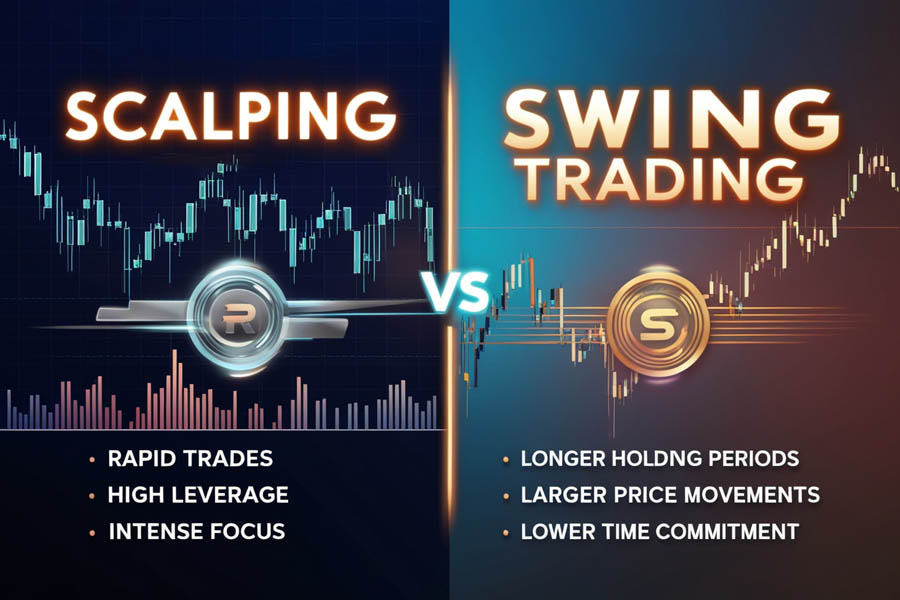
Consider someone with a 9-to-5 job. They can spend 30-60 minutes in the evening reviewing daily charts, identifying potential setups, and placing their entry orders, stop-losses, and take-profit targets. Once the orders are set, they can let the market do the work. Psychologically, this person is not an adrenaline junkie. They find satisfaction in crafting a well-thought-out trade plan and having the patience to see it through over days or weeks. They are comfortable with the idea of delayed gratification and can handle the mental challenge of holding a position through minor pullbacks without panicking. Their analytical preference leans towards understanding the bigger picture, using technical analysis on higher timeframes to identify the dominant trend and key price levels. They are planners, not impulse reactors, making swing trading a natural fit for their methodical disposition.
What Other Factors Should You Consider for Scalping and Swing Trading?
Beyond your personality and goals, you must evaluate technical indicators, broker conditions, and how your chosen style compares to alternatives like day trading. Furthermore, understanding how to leverage different trading approaches together can provide a powerful advantage, regardless of the primary style you choose. These elements directly impact profitability, efficiency, and your ability to execute your strategy as intended.
What Are the Best Technical Indicators for Scalping?
For scalping, indicators must provide immediate, actionable signals on very short timeframes, such as the one-minute (M1) or five-minute (M5) charts. The goal is to capture tiny price movements, so tools that measure immediate momentum and volatility are paramount. Scalpers do not have time to wait for long-term trends to develop; they need information right now.
Three indicators are particularly well-suited for this fast-paced environment.
- Exponential Moving Averages (EMAs): Scalpers often use a combination of fast EMAs, like the 5-period and 10-period. When the shorter-term EMA crosses above the longer-term one, it can signal a quick buying opportunity. A cross below signals a potential sell. The responsiveness of EMAs makes them ideal for confirming micro-trends.
- Stochastic Oscillator: This momentum indicator is excellent for identifying overbought and oversold conditions in a tight range. A scalper might look to sell when the Stochastic is above 80 and buy when it is below 20, anticipating a swift price reversion.
- Bollinger Bands: These bands expand and contract with market volatility. A scalper might buy when the price touches the lower band and sell when it touches the upper band, betting on a return toward the middle average line.
What Are the Best Technical Indicators for Swing Trading?
Swing traders need indicators that identify medium-term trends and momentum shifts on higher timeframes like the four-hour (H4) or daily (D1) charts. Their objective is to capture a significant portion of a price “swing” that unfolds over several days or weeks. Therefore, their tools must filter out short-term market noise and highlight the underlying market direction.
These three indicators are staples in a swing trader’s toolkit.
- Relative Strength Index (RSI): Unlike a scalper who uses it for quick reversals, a swing trader uses the RSI to confirm the strength of a trend. An RSI reading that stays above 50 during an uptrend suggests sustained buying pressure, giving the trader confidence to hold their position.
- Moving Average Convergence Divergence (MACD): The MACD is perfect for spotting changes in momentum that can signal the beginning of a new swing. A bullish crossover, where the MACD line crosses above its signal line, can be a powerful entry signal for a long position on a daily chart.
- Fibonacci Retracement: This tool helps swing traders identify logical entry points during a market pullback. After a strong upward move, a trader can draw Fibonacci levels to find potential support where the price might bounce, often at the 38.2% or 61.8% retracement levels.
How Important Are Broker Conditions for Each Style?
Broker conditions are a deciding factor in a trader’s success, but their importance varies dramatically between scalping and swing trading. For a scalper, the broker’s performance is an integral part of every single trade’s profitability. Because scalpers aim for very small profits, typically just 5 to 15 pips, any additional cost or delay can wipe out their earnings. Low spreads are absolutely essential, as a 2-pip spread on a 5-pip target immediately consumes 40% of the potential profit. Likewise, fast execution and minimal slippage are non-negotiable. A delay of even a second can cause a scalper to miss their precise entry or exit point, turning a winning trade into a losing one.
For a swing trader, broker conditions are less of a primary concern. While everyone prefers low costs, a 2-pip spread is almost negligible when the profit target is 150 pips. Similarly, a minor delay in execution is unlikely to alter the outcome of a trade designed to capture a multi-day price move. Instead, a swing trader might be more focused on other broker features, such as low overnight swap fees, since they will be holding positions for extended periods. Their choice of broker is influenced more by reliability and financial stability than by split-second execution speeds.
How Does Day Trading Compare to Scalping and Swing Trading?
Day trading occupies the middle ground between the hyperactive nature of scalping and the patient approach of swing trading. As the name implies, a day trader opens and closes all positions within a single trading day, avoiding the risks and costs associated with holding trades overnight. This strategy blends elements from both scalping and swing trading. A day trader’s timeframe is typically longer than a scalper’s, often using 15-minute (M15) or one-hour (H1) charts to analyze the market.
Compared to a scalper who might make dozens of trades daily, a day trader is more selective, executing perhaps two to five trades based on the market’s behavior during the day. Their profit targets are also larger, aiming for 20 to 50 pips per trade instead of just a handful. Unlike a swing trader, who analyzes daily or weekly charts to capture a trend over several days, a day trader is focused solely on intraday price action. They must have a clear plan for the day and be disciplined enough to close out all positions, whether in profit or loss, before the market closes. This makes day trading a distinct style that requires a unique balance of patience and decisiveness.
Can You Combine Scalping and Swing Trading Approaches?
Yes, combining these two styles is a highly effective strategy known as multi-timeframe analysis. This hybrid approach allows a trader to leverage the strategic, big-picture view of swing trading to guide the tactical, precision entries of scalping. The core idea is to use the higher timeframes to determine the dominant market trend and then use the lower timeframes to find low-risk entry points in the direction of that trend. This method helps to filter out counter-trend trades, which generally have a lower probability of success.

For example, a trader might start by analyzing the daily chart to identify a strong uptrend. This is the “swing trading” part of the analysis. With the overall market direction established as bullish, the trader then zooms into a five-minute (M5) chart. On this lower timeframe, they act like a “scalper,” but with a specific rule: they only look for buying opportunities. They might wait for a temporary price dip to a support level or a bullish signal from an oscillator to enter a long position. By aligning short-term actions with the long-term trend, the trader increases their chances of success on each small trade. This method offers the best of both worlds: the high-level perspective of a swing trader and the execution timing of a scalper.