

Blog
What Are the Most Effective Day Trading Strategies for Forex Traders?

The most effective day trading strategies for forex traders are scalping, breakout trading, trend following, and range trading, as each approach is tailored to capitalize on specific market conditions and aligns with different trader risk profiles. These strategies provide a structured framework for making entry and exit decisions within a single trading day, helping to remove emotional guesswork and focus on repeatable patterns. The best strategy for any individual trader ultimately depends on their personality, available time, and the volatility of the currency pairs they choose to trade.
Forex day trading itself is the practice of buying and selling currency pairs within the same trading session, with the goal of profiting from short-term price fluctuations. Unlike longer-term trading, a day trader closes all positions before the market closes for the day. This approach completely avoids the risks associated with overnight market movements, such as unexpected economic news from a different time zone that could cause a significant price gap when the market reopens.
To execute these strategies, a day trader relies on essential tools like charting software from platforms such as MetaTrader 4 or TradingView, along with a core set of technical indicators. These indicators, including Moving Averages (MAs), the Relative Strength Index (RSI), and Bollinger Bands, help traders identify potential entry points, gauge market momentum, and spot overbought or oversold conditions. Combined with disciplined risk management, these tools form the foundation of a consistent trading plan.
Understanding these strategies is only the first step. Success in day trading hinges on rigorous backtesting, disciplined execution, and an unwavering commitment to risk management. This guide will break down each strategy, explain the necessary tools, and outline the critical risk control techniques you need to navigate the fast-paced world of forex day trading.
What Is Forex Day Trading?
Forex day trading is a short-term trading style where currency pairs are bought and sold within a single trading day, with all positions closed before the market closes. This method aims to generate profits from small, intraday price movements rather than long-term trends. A forex day trader might hold a position for a few minutes or several hours, but never overnight. This distinction is critical, as it eliminates exposure to overnight risk, also known as gap risk, which can occur when major news events happen while the markets are closed, causing a currency’s price to open significantly higher or lower than its previous close. Day trading is characterized by a high volume of trades and requires intense focus during active trading sessions, such as the London or New York sessions, when market liquidity and volatility are typically at their highest. The entire premise is built on capitalizing on the predictable, short-term ebbs and flows that happen within a 24-hour cycle.
To understand this better, let’s explore the core principles and what it takes to be a day trader.
What Are the Key Characteristics of a Day Trader?
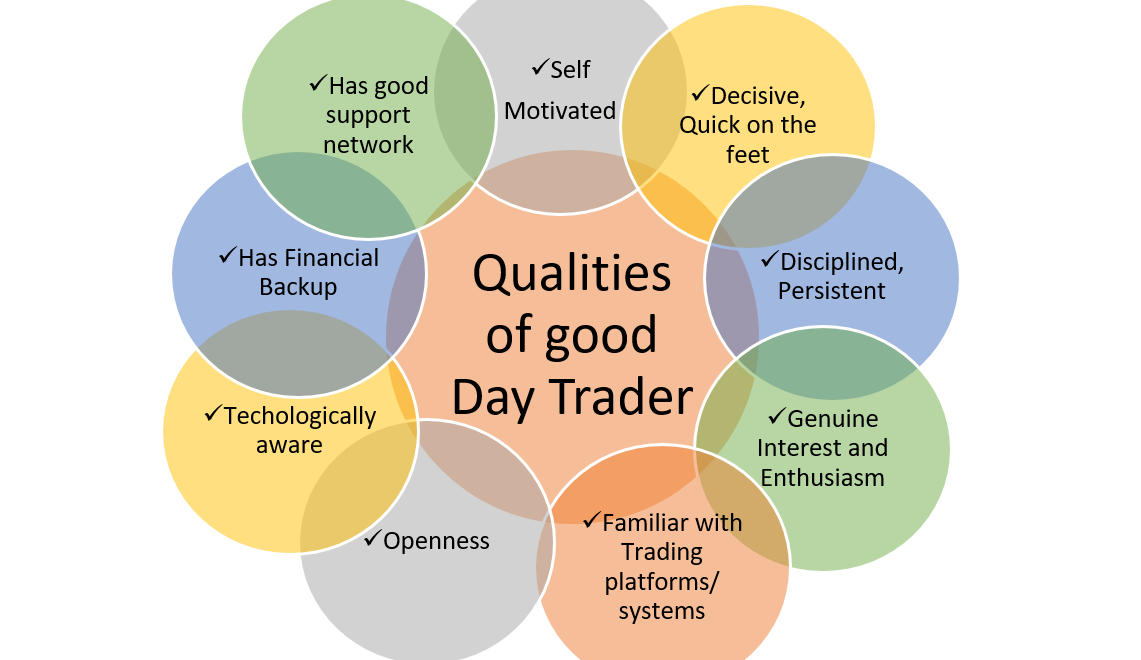
A successful day trader possesses a unique combination of mindset, discipline, and adequate capital. It’s less about having a secret formula and more about cultivating specific personal and financial traits. First and foremost is emotional control. The forex market is fast and often unpredictable, leading to both quick gains and sudden losses. A successful trader remains calm and objective, avoiding emotionally driven decisions like “revenge trading” after a loss or becoming overconfident after a win. They treat trading as a business, not a game.

Next is unwavering discipline. This means creating a detailed trading plan and sticking to it no matter what. This plan should define which currency pairs to trade, which strategy to use, what criteria must be met for entry and exit, and how much capital to risk on each trade. Discipline is the bridge between a good strategy and consistent results. Without it, a trader is likely to deviate from their rules, leading to impulsive actions and preventable losses.
Finally, sufficient trading capital is a practical necessity. Day trading requires enough capital to not only place trades but also to withstand a series of losses, which are an inevitable part of the process. Trading with insufficient capital puts immense psychological pressure on a trader and can lead them to take oversized risks to chase profits. While there is no magic number, having enough capital to comfortably apply the 1% risk rule without being undercapitalized is a common benchmark for serious traders.
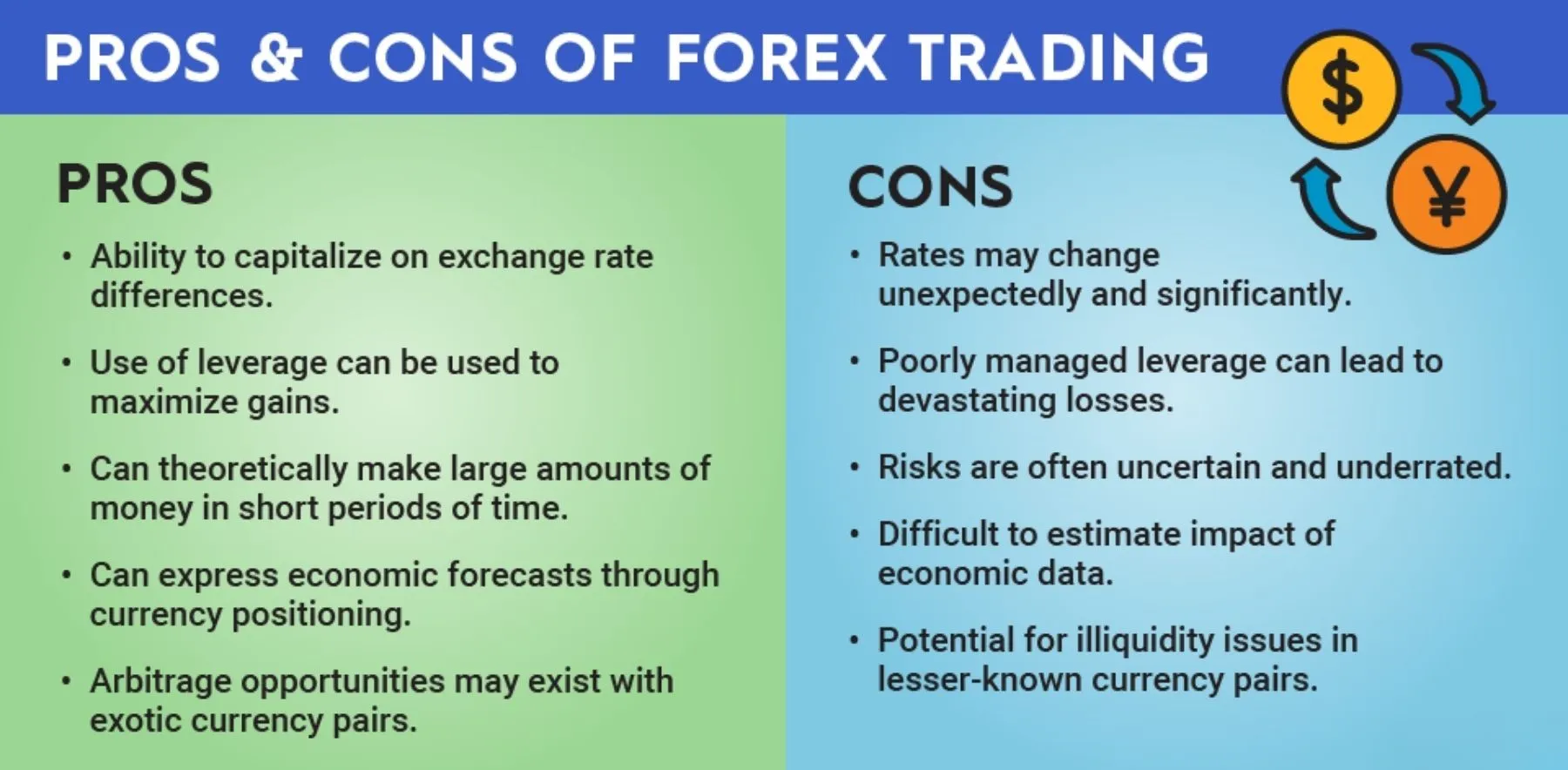
What Are the Pros and Cons of Day Trading Forex?
Day trading forex offers a distinct set of advantages and disadvantages that every aspiring trader should weigh carefully. It is not suitable for everyone, and understanding the trade-offs is fundamental to making an informed decision. Here’s a balanced look at the pros and cons you can expect.
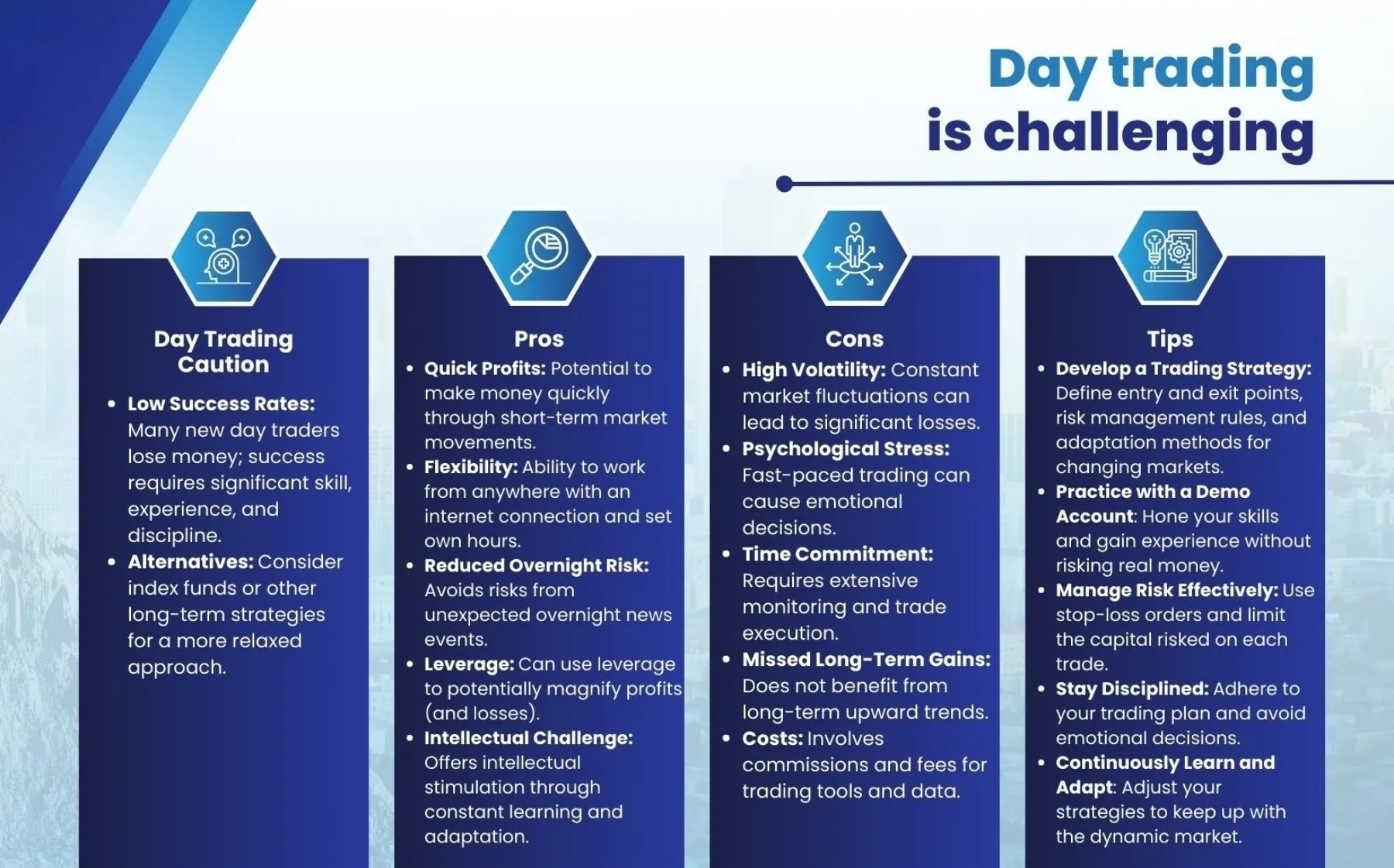
Pros of Day Trading Forex:
- No Overnight Risk: Since all positions are closed by the end of the day, you are not exposed to the risk of negative price gaps caused by economic news or events that occur while you are asleep. This provides peace of mind and protects your capital from unforeseen volatility.
- Potential for High Returns: The use of leverage in forex allows traders to control large positions with a relatively small amount of capital. Combined with the high number of trading opportunities in a single day, this creates the potential for significant profits in a short period.
- Frequent Trading Opportunities: The forex market is the largest and most liquid financial market in the world. Its constant price fluctuations provide numerous opportunities for day traders to enter and exit trades throughout the day, especially during the overlap of major market sessions like London and New York.
- Immediate Feedback: Day trading provides instant results. You know whether a trade was profitable or not within minutes or hours, which allows for rapid learning and strategy refinement.
Cons of Day Trading Forex:
- High Stress and Emotional Toll: Making rapid decisions under pressure can be mentally exhausting. The constant monitoring of charts and the financial risk involved can lead to high levels of stress, anxiety, and burnout.
- Requires a Significant Time Commitment: Successful day trading is not a part-time hobby. It requires you to be actively engaged with the markets for several hours a day, typically during peak volatility. This can be challenging to balance with a full-time job or other responsibilities.
- Transaction Costs Can Accumulate: Because day traders execute many trades, transaction costs like spreads and commissions can quickly add up and eat into profits. A strategy must be profitable enough to overcome these inherent costs.
- Steep Learning Curve: Becoming a consistently profitable day trader requires a deep understanding of technical analysis, market dynamics, and risk management. It is a skill that takes considerable time and practice to develop.
What Are the Most Common Day Trading Strategies for Forex?
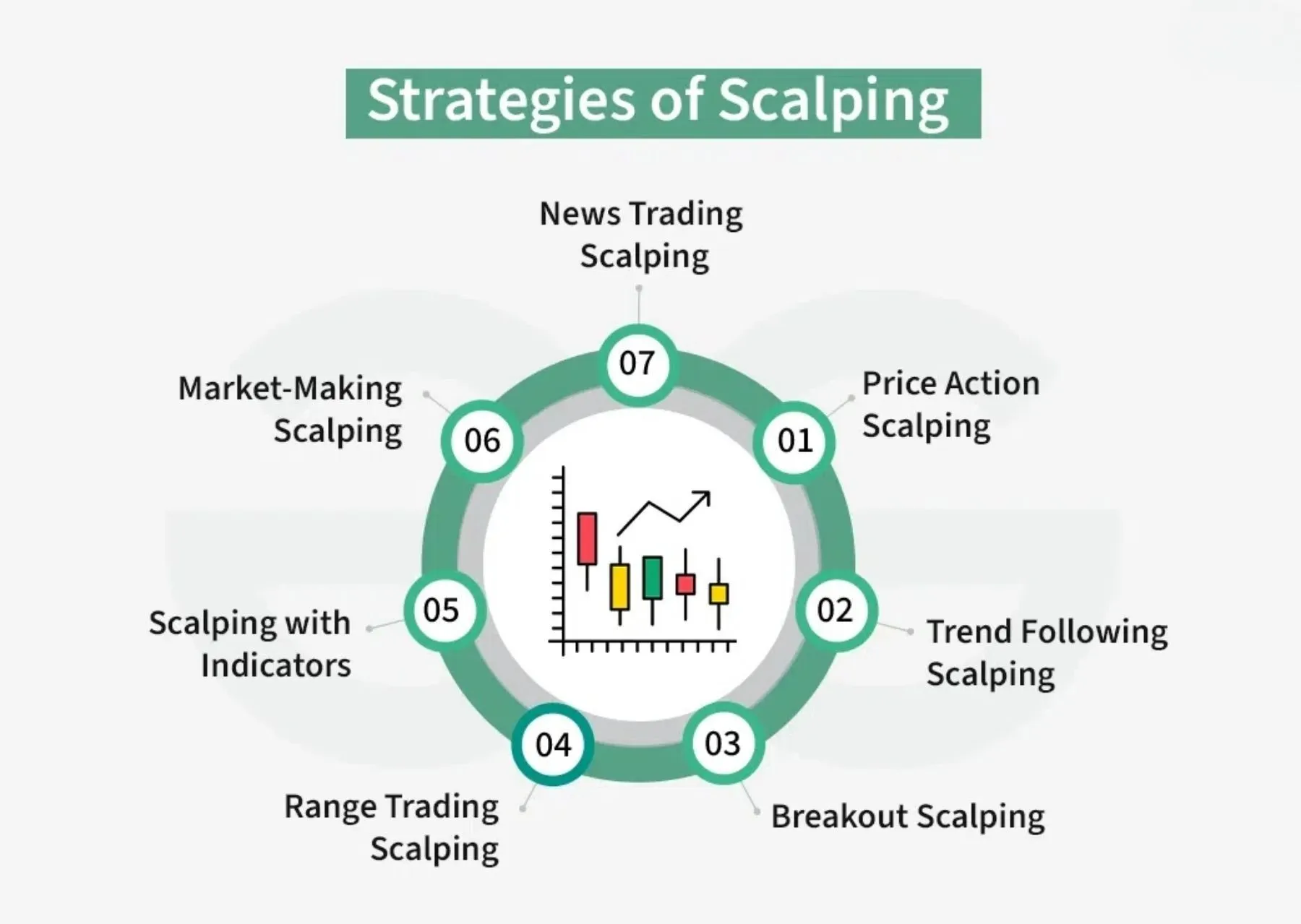
The four most common day trading strategies for forex are scalping, breakout trading, trend following, and range trading, each based on different market analysis techniques. These strategies provide a rule-based approach to navigating the market’s intraday movements. A trader might specialize in one or use a combination depending on the current market environment. For example, a trend-following strategy works well when a currency pair is moving strongly in one direction, while a range trading strategy is ideal for quiet, sideways markets. The key is to first identify the prevailing market condition and then apply the appropriate strategy. Each has its own specific entry triggers, exit rules, and ideal timeframes, making them distinct tools for different scenarios. Understanding the mechanics behind each one is the first step toward building a robust and adaptable trading plan.
Let’s break down how each of these powerful strategies works in practice.
How Does the Scalping Strategy Work?
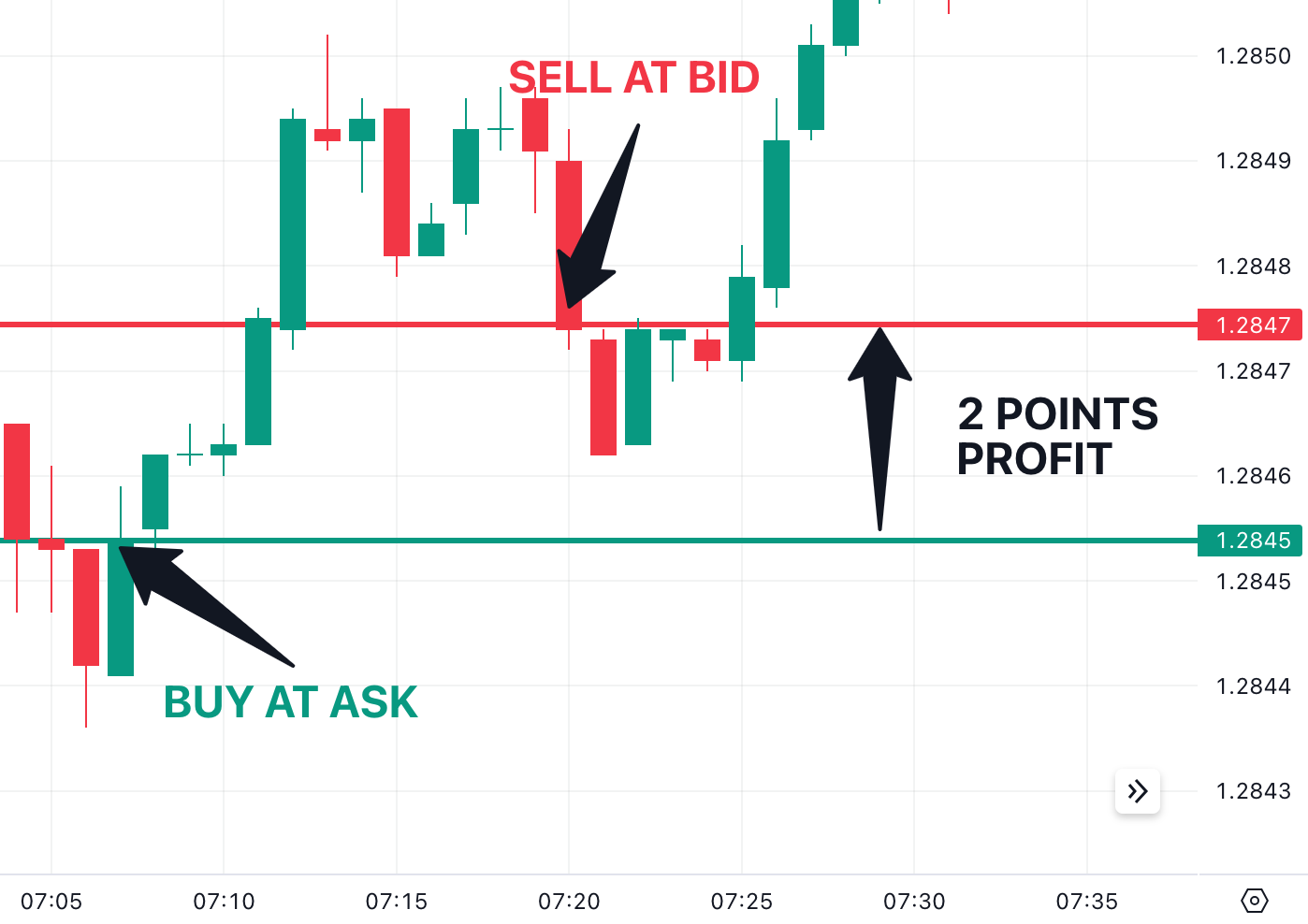
Scalping is an ultra-fast-paced trading strategy focused on making numerous small profits from minor price changes throughout the day. A scalper isn’t looking to catch a big market move; instead, they aim to skim just a few pips of profit from each trade, repeating the process dozens or even hundreds of times. The core idea is that small, frequent wins can accumulate into a substantial profit by the end of the trading session. This strategy demands intense focus and quick decision-making, as positions are often held for just a few seconds to a few minutes.
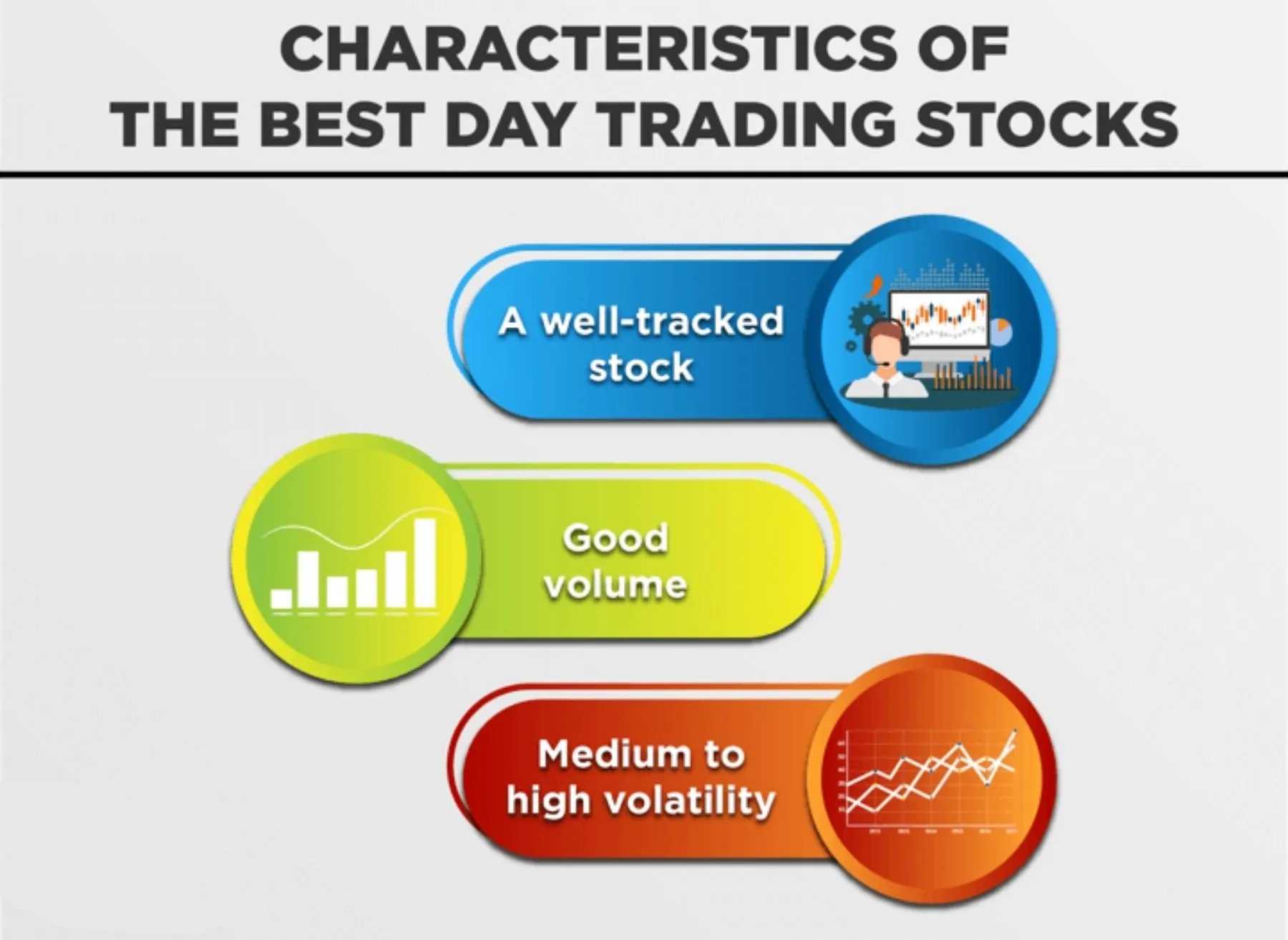
To execute this strategy, scalpers typically use very short timeframes, such as the 1-minute and 5-minute charts, as these provide the most detailed view of immediate price action. Common indicators used in scalping include the Stochastic Oscillator or RSI to identify fleeting overbought or oversold conditions, and Moving Averages (like a 5-period and 10-period EMA) to confirm short-term trend direction.
Entry and exit criteria are precise. For instance, a scalper might enter a long (buy) position on the EUR/USD when the 5-period EMA crosses above the 10-period EMA on the 1-minute chart, indicating bullish momentum. They would then aim to exit the trade as soon as they secure a small, predefined profit, perhaps just 5 to 10 pips. Because profit targets are so small, tight risk management, including a strict stop-loss, is absolutely essential.
How Does the Breakout Trading Strategy Work?
The breakout trading strategy involves identifying key price levels, known as support and resistance, and entering a trade when the price moves decisively beyond one of those levels. Support is a price level where a downtrend can be expected to pause due to a concentration of demand, while resistance is where an uptrend may pause due to a concentration of supply. A “breakout” occurs when the price pushes through these established boundaries, signaling that a new, strong trend may be starting in that direction. This strategy is popular because breakouts are often followed by periods of high volatility and significant price movement, offering substantial profit potential.

To identify these levels, traders analyze charts for areas where the price has repeatedly reversed in the past. They also look for chart patterns like triangles, flags, or channels, as the borders of these patterns often act as strong support or resistance. A crucial element in confirming a genuine breakout is trading volume. A breakout accompanied by a spike in volume suggests strong conviction from traders and a higher probability that the move will continue.
An entry signal for a breakout trader would be when the price closes firmly above a resistance level or below a support level. For example, if the GBP/USD pair has been unable to break past 1.2500, a trader might place a buy order just above this level, at 1.2510. Their stop-loss would typically be placed just back inside the broken level, perhaps at 1.2490, to protect against a “false breakout,” where the price briefly moves past the level only to reverse.
How Does the Trend Following Strategy Work?
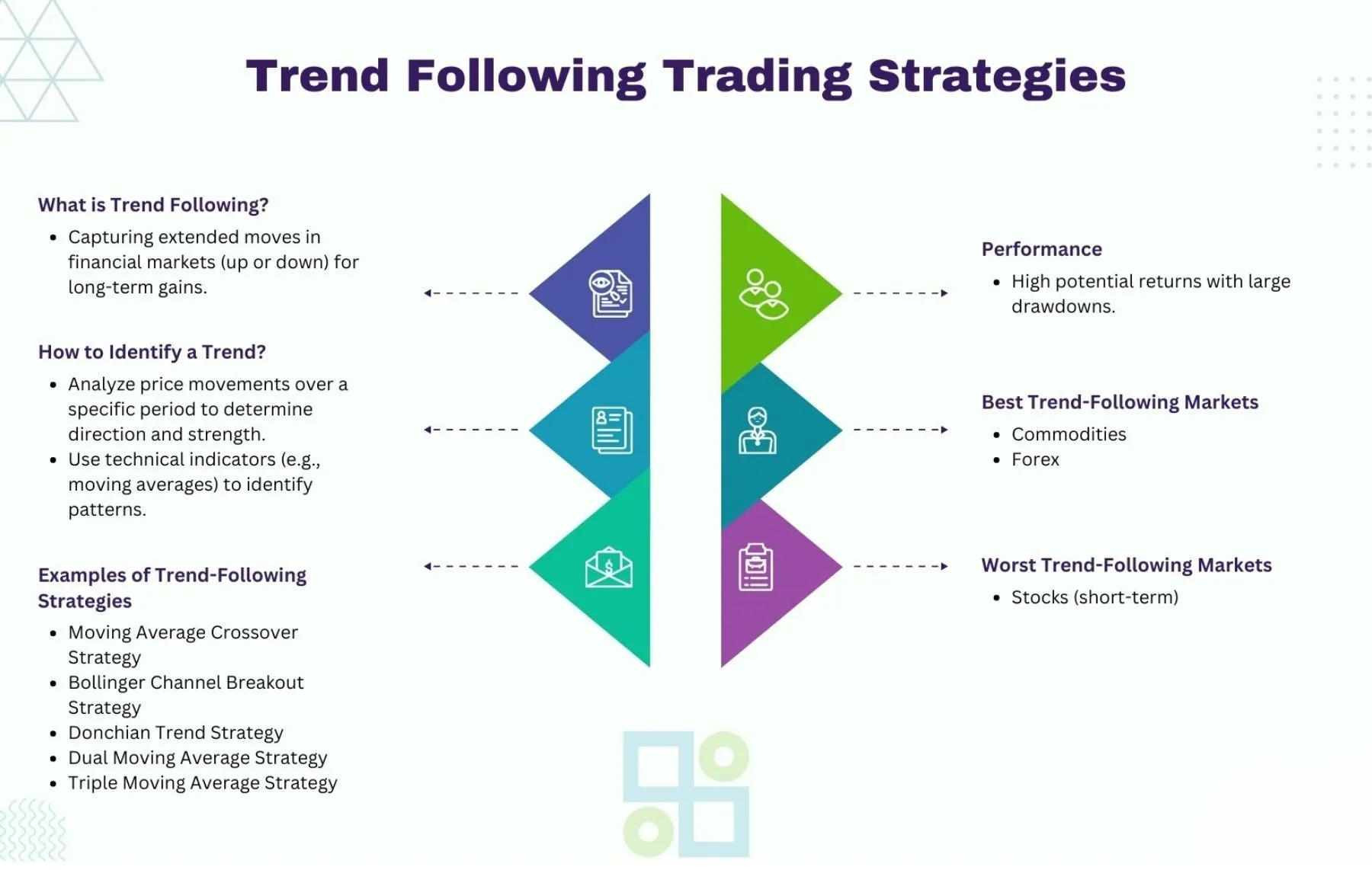
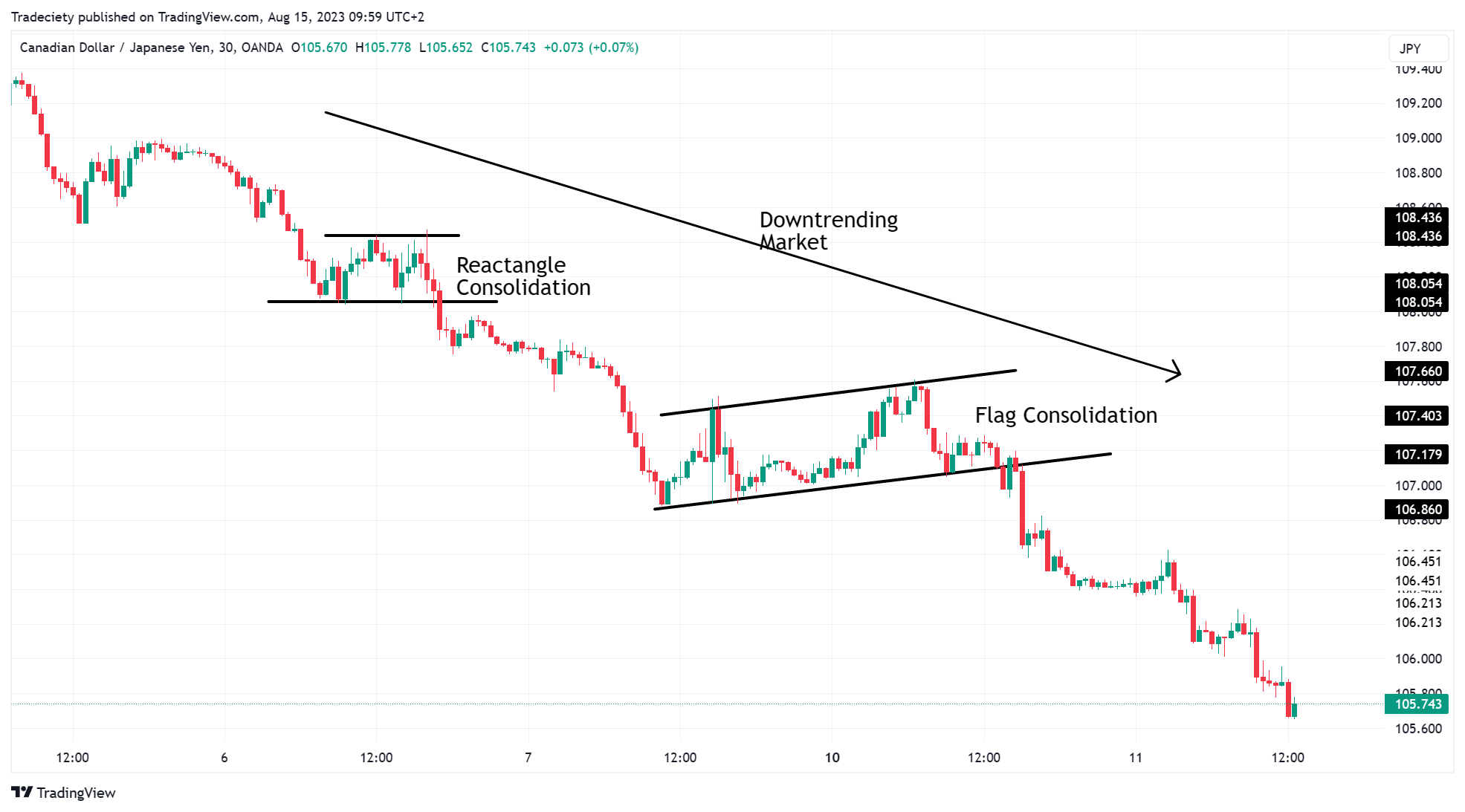
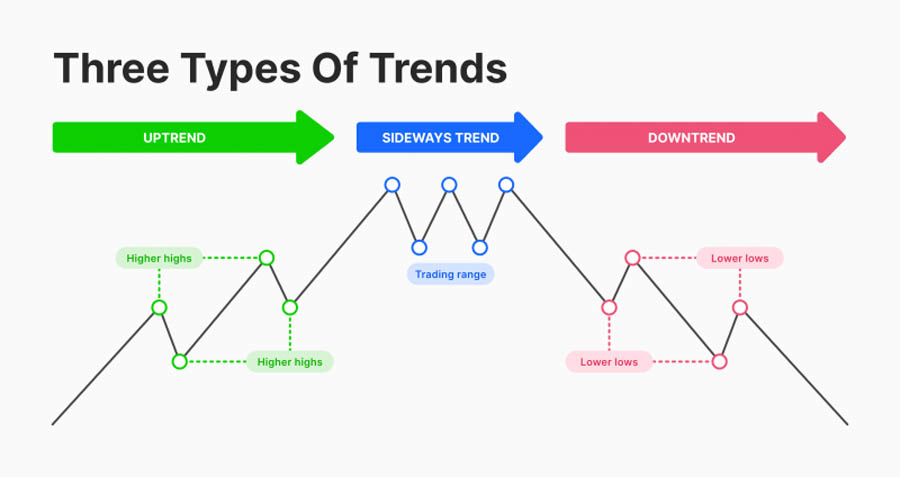
The trend following strategy is based on the classic trading adage, “the trend is your friend.” Its core principle is to identify the dominant direction of the market and place trades only in that same direction. If a currency pair is in a clear uptrend (making a series of higher highs and higher lows), a trend follower will only look for opportunities to buy. Conversely, in a downtrend (a series of lower lows and lower highs), they will only look to sell. This approach avoids fighting against the market’s momentum, instead aiming to ride the wave of the prevailing trend for as long as it lasts. It’s a less frantic style than scalping, with trades potentially lasting for several hours within the day.
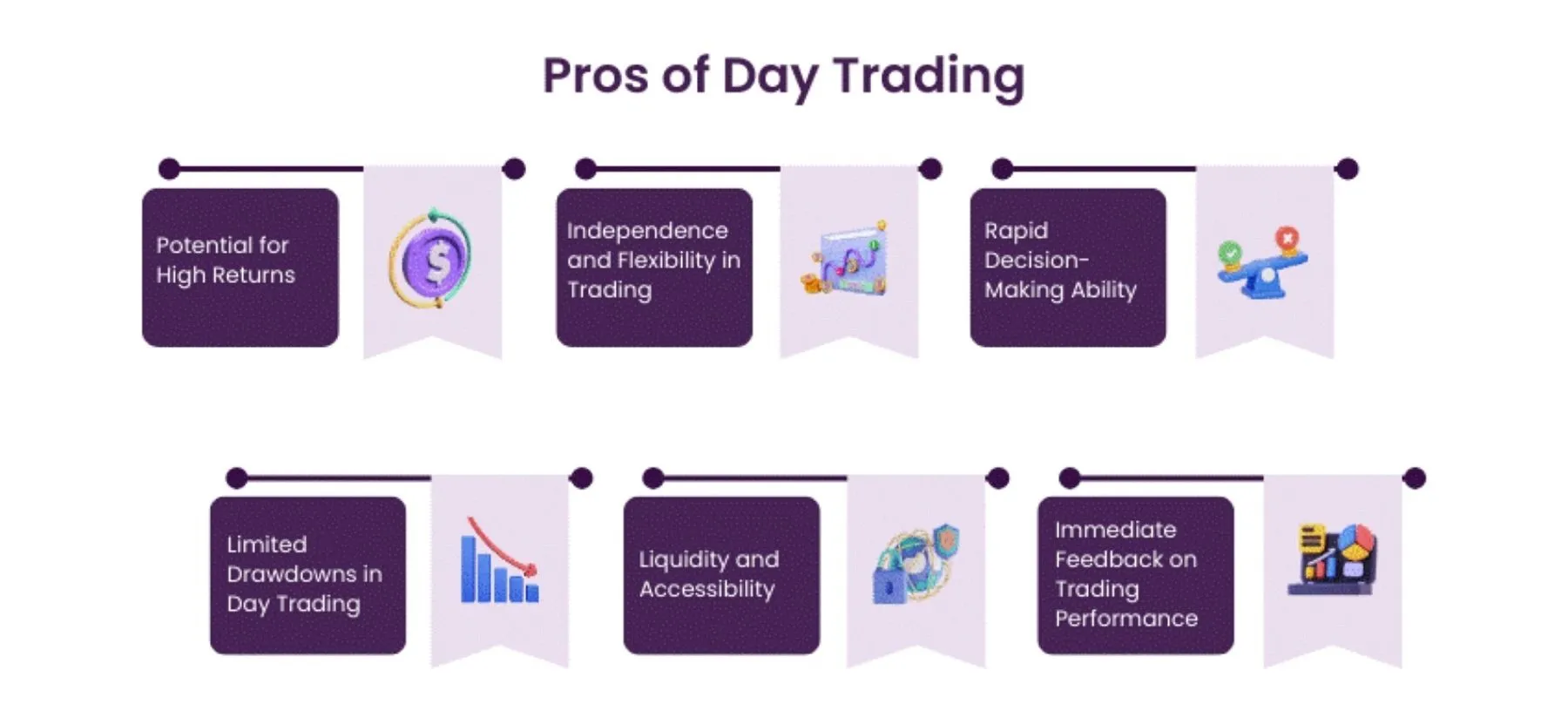
The most common tool for identifying trends is the Moving Average (MA). Traders often use two MAs on their charts, such as a faster 50-period Exponential Moving Average (EMA) and a slower 200-period EMA. When the 50 EMA is above the 200 EMA, it signals a general uptrend. When it’s below, it signals a downtrend.
A typical entry for a trend follower would be to wait for a pullback or a temporary price dip during an established trend. For instance, in an uptrend, they might wait for the price to pull back to the 50 EMA, which often acts as a dynamic support level. They would enter a buy trade once the price bounces off this moving average and resumes its upward movement. The stop-loss is usually placed just below the recent swing low or below the moving average itself, while the profit target can be set at a previous high or trailed to capture as much of the trend as possible.
How Does the Range Trading Strategy Work?
Range trading, also known as channel trading, is a strategy used when a currency pair is not showing a clear trend in either direction. Instead, its price is oscillating between two predictable levels: a high point (resistance) and a low point (support). This creates a “range” or “channel.” The goal of a range trader is to profit from these oscillations by buying near the support level and selling near the resistance level. This strategy is particularly effective in quieter market conditions when there is low volatility and no major economic news driving a strong trend.
Identifying a trading range is the first step. A trader will look at a chart, often on a 15-minute or 1-hour timeframe, and draw horizontal lines connecting the recent peaks (resistance) and troughs (support). The more times the price has touched and reversed from these levels, the more reliable the range is considered to be. To help confirm entry points, traders often use oscillators like the Relative Strength Index (RSI) or the Stochastic Oscillator. These indicators help identify overbought conditions near the top of the range (a signal to sell) and oversold conditions near the bottom (a signal to buy).
A typical execution would involve placing a buy order when the price approaches the support level and the RSI is below 30 (oversold). Conversely, a sell order would be placed as the price nears the resistance level and the RSI is above 70 (overbought). The stop-loss for a buy trade is set just below the support line, and for a sell trade, it’s placed just above the resistance line. The take-profit target is usually set near the opposite end of the range.
What Are the Essential Tools and Indicators for These Strategies?
Essential tools for forex day trading include specific chart timeframes like the 5-minute chart and key technical indicators such as Moving Averages, RSI, and MACD. No strategy can be executed effectively without the right analytical framework. These tools are the instruments a trader uses to read the market’s language, interpret price action, and make informed decisions about when to enter and exit a trade. Think of them as the dashboard of an airplane, providing critical data on momentum, volatility, and trend direction. While a strategy provides the flight plan, the indicators and timeframes provide the real-time feedback needed to navigate the journey successfully. Each tool serves a specific purpose, and knowing how to combine them is what separates a prepared trader from one who is simply guessing.
These tools are not just helpful, they are fundamental for analyzing market movements and executing strategies effectively.
Which Chart Timeframes Are Best for Day Trading?
The best chart timeframes for day traders are typically the shorter ones, as they provide a detailed, granular view of intraday price action. The most commonly used timeframes are the 1-minute (M1), 5-minute (M5), and 15-minute (M15) charts. Each serves a slightly different purpose depending on the strategy.
The 1-minute chart is the domain of scalpers. It displays price changes in real-time, allowing traders to capitalize on the smallest fluctuations. However, this timeframe is also filled with “market noise,” or random price movements that can be misleading. It requires extreme focus and rapid execution.
The 5-minute and 15-minute charts offer a better balance for most day traders. They filter out some of the noise of the 1-minute chart while still providing enough detail to identify clear intraday patterns, trends, and entry signals for strategies like breakout or trend following. Many traders consider the 15-minute chart the sweet spot for day trading.
While these short-term charts are used for trade execution, many day traders also keep an eye on a longer timeframe, like the 1-hour (H1) or 4-hour (H4) chart. This helps them identify the overall intraday trend and context. For example, if the 1-hour chart shows a strong uptrend, a trader using a 15-minute chart will focus exclusively on finding buying opportunities, aligning their short-term trades with the more powerful, underlying market direction.
Which Technical Indicators Are Most Important for Day Traders?
While there are hundreds of technical indicators available, a handful have become staples for day traders due to their reliability and the clear signals they provide. The most important ones help identify trend, momentum, and volatility.
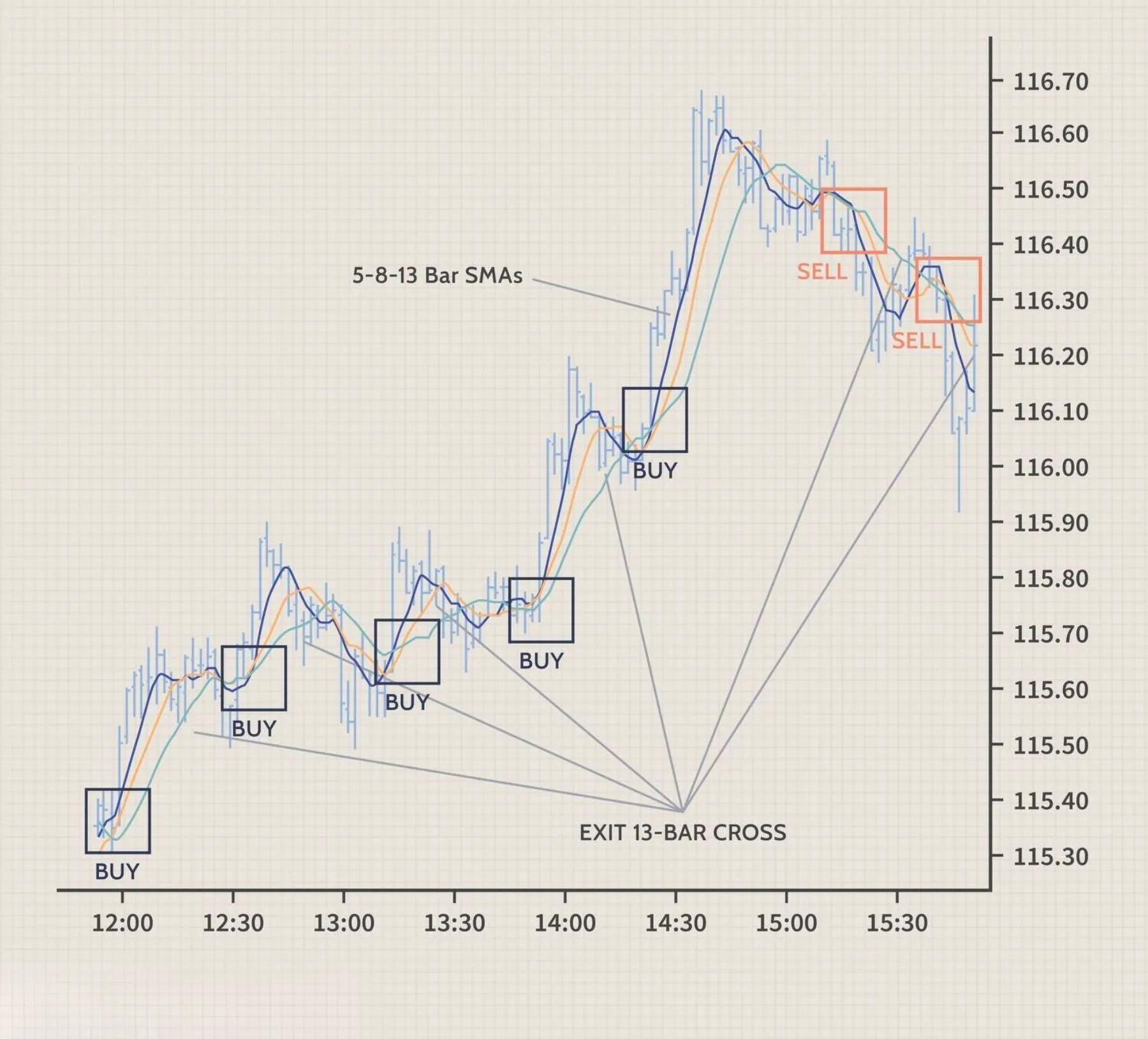
1. Moving Averages (MAs): These are the most fundamental trend-following indicators. They smooth out price data to create a single flowing line, making it easier to see the underlying trend direction. The Simple Moving Average (SMA) gives equal weight to all prices, while the Exponential Moving Average (EMA) gives more weight to recent prices, making it more responsive. Traders often use a crossover system, such as a 9-period EMA crossing over a 21-period EMA, as an entry signal.
2. Relative Strength Index (RSI): The RSI is a momentum oscillator that measures the speed and change of price movements. It oscillates between 0 and 100. A reading above 70 is generally considered overbought, suggesting a potential reversal or pullback, while a reading below 30 is considered oversold, signaling a potential bounce. It is extremely useful for range-bound and trend-following strategies.
3. MACD (Moving Average Convergence Divergence): This versatile indicator shows the relationship between two moving averages of a security’s price. The MACD consists of the MACD line, a signal line, and a histogram. When the MACD line crosses above the signal line, it’s a bullish signal. When it crosses below, it’s bearish. The histogram represents the distance between the two lines and indicates the strength of the momentum.
4. Bollinger Bands: This tool consists of three lines: a middle band (typically a 20-period SMA) and two outer bands representing standard deviations from the middle band. The bands widen during periods of high volatility and contract during low volatility. Price touching the upper band can signal an overbought condition, while touching the lower band can signal an oversold one. They are excellent for identifying dynamic support and resistance levels.
How Should You Manage Risk When Day Trading Forex?
You should manage risk when day trading forex by implementing strict rules, such as the 1% risk rule, and consistently using automated orders like stop-loss and take-profit. Effective risk management is the single most important factor that separates successful traders from those who fail. No matter how profitable a trading strategy appears to be, a few large, unmanaged losses can wipe out an entire account. Risk management is not about avoiding losses altogether, as they are a natural part of trading. Instead, it is about ensuring that the impact of any single loss is small and manageable, preserving your capital so you can continue to trade another day. This discipline provides the psychological stability and financial runway needed to let your strategy’s edge play out over the long term.
Without a solid risk management plan, even the most effective strategy can lead to significant losses. Let’s look at the foundational techniques.
What Is the 1% Risk Rule?
The 1% risk rule is a foundational principle of money management in trading. It dictates that you should never risk more than 1% of your total trading capital on any single trade. This rule is designed to protect your account from the devastating impact of a string of consecutive losses. Even the best trading strategies will have losing streaks, and this rule ensures that you can survive them without losing a significant portion of your capital. It removes the temptation to place one large, risky trade to “make it all back,” which is a common and destructive emotional mistake.
Here is a simple calculation example. Let’s say you have a trading account with $10,000. According to the 1% rule, the maximum amount you can risk on your next trade is 1% of $10,000, which is $100. This $100 is your risk, not your position size. The actual size of your position will depend on where you place your stop-loss. For instance, if your strategy requires a stop-loss of 20 pips on the EUR/USD pair, you would calculate your position size so that if the trade hits your stop-loss, your total loss is exactly $100. This systematic approach forces discipline and ensures longevity in the market.
How Do You Set a Stop-Loss and Take-Profit Order?
Setting a stop-loss and a take-profit order are non-negotiable components of risk management. These are automated orders you place with your broker to close your position at a predetermined price, removing emotion from your in-trade decisions.
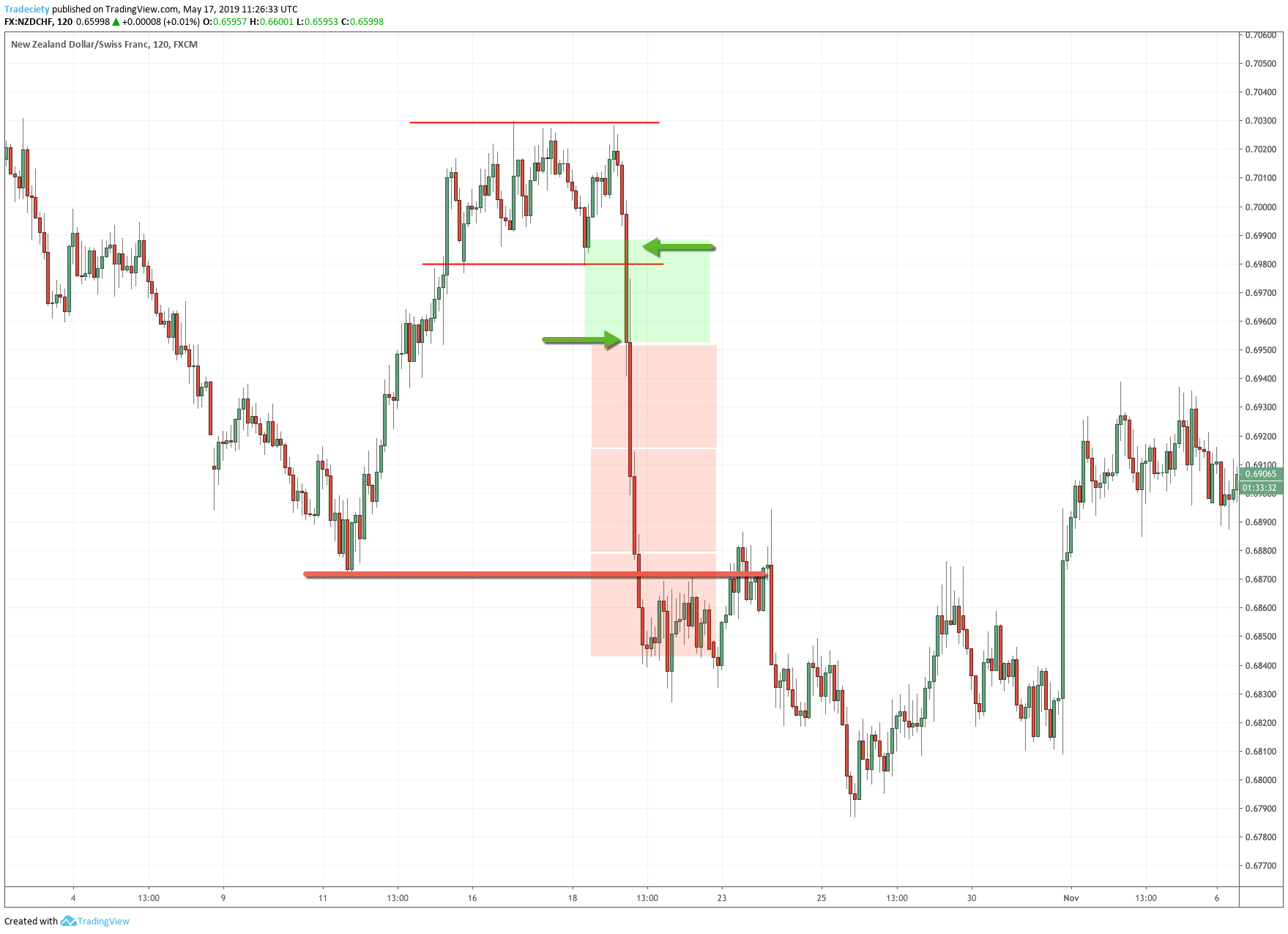
A stop-loss (SL) order is an instruction to close your trade if the price moves against you to a specific level. Its primary function is to limit your potential loss on a single trade. For example, if you buy GBP/USD at 1.2550 because you expect it to rise, you might place a stop-loss order at 1.2530. If the market unexpectedly turns and the price drops to 1.2530, your broker will automatically close the trade for a 20-pip loss, preventing any further damage to your account.
A take-profit (TP) order is the opposite. It’s an instruction to automatically close your trade once it reaches a certain level of profit. Continuing the example above, you might set a take-profit order at 1.2590. If the trade moves in your favor and the price hits 1.2590, the position is closed, and you lock in your 40 pips of profit.
Using both orders together allows you to define your risk-to-reward ratio before you even enter a trade. In this scenario, you were risking 20 pips to potentially make 40 pips, a healthy 1:2 risk-to-reward ratio. These automated orders ensure you stick to your trading plan, protecting you from both excessive losses and the greed that might prevent you from taking profits when you should.
What Other Factors Should a Forex Day Trader Consider?
Beyond specific strategies, a forex day trader must also consider trading style comparisons, currency pair selection, market sessions, economic news, automation, and trading psychology. Additionally, these factors directly influence how and when a chosen strategy can be applied for optimal results.
What Is the Difference Between Day Trading and Swing Trading in Forex?
Day trading and swing trading are two distinct short term approaches to the forex market, differing mainly in trade duration and time commitment. Day traders open and close all positions within a single trading day, never holding trades overnight. This style requires intense focus during active market hours, often demanding several hours per day in front of the screen. In contrast, swing traders hold positions for several days or even weeks, aiming to capture larger price swings or “swings” in the market. Their time commitment is more flexible, as they check their trades less frequently, perhaps once or twice a day.

The type of analysis used also varies between these two styles.
- Timeframe Focus: Day traders primarily operate on lower timeframes, such as the 1 minute, 5 minute, or 15 minute charts, to find multiple entry and exit points throughout the day. Swing traders rely on higher timeframes like the 4 hour, daily, or weekly charts to identify longer term trends.
- Analysis Method: While both use technical analysis, day traders are more focused on intraday price action, momentum indicators, and short term chart patterns. Swing traders often incorporate more fundamental analysis, looking at economic trends that could influence a currency’s value over several days.
- Risk Exposure: Day traders avoid overnight risk, which is the chance of a significant price gap occurring when the market opens. Swing traders accept this risk but typically use wider stop losses to account for daily volatility.
Which Forex Currency Pairs Are Best for Day Trading?
The best currency pairs for day trading are those with high liquidity and consistent volatility, which are primarily the major pairs. These pairs involve the U.S. dollar and another major global currency, offering tight spreads and predictable price movements. The most popular choice is EUR/USD (Euro/U.S. Dollar) because it has the highest trading volume in the world, leading to very low transaction costs and smooth chart patterns. Other excellent choices include GBP/USD (British Pound/U.S. Dollar), known for its higher volatility, and USD/JPY (U.S. Dollar/Japanese Yen).

Currency pairs can be broken down into three main categories.
- Major Pairs: These include pairs like EUR/USD, USD/JPY, GBP/USD, and USD/CHF. They are highly recommended for day traders, especially beginners, due to their stability, high liquidity, and narrow spreads. This means you can enter and exit trades easily with minimal cost.
- Minor Pairs (Crosses): These pairs do not involve the U.S. dollar, such as EUR/GBP or AUD/JPY. They can also be good for day trading but often have wider spreads and slightly lower liquidity than the majors. They may offer unique opportunities when the major pairs are not moving.
- Exotic Pairs: These pair a major currency with one from an emerging economy, like USD/TRY (U.S. Dollar/Turkish Lira). These pairs are generally not recommended for day trading due to their extremely wide spreads, low liquidity, and unpredictable, sharp price movements.
How Do Trading Sessions Affect Day Trading Strategies?
The forex market operates 24 hours a day, but it is segmented into three main trading sessions: Tokyo, London, and New York. The volatility and liquidity of currency pairs change dramatically depending on which session is active, directly affecting a day trader’s strategy. For instance, the Tokyo session is typically characterized by lower volatility, which might be suitable for range trading strategies. When the London session opens, volume and volatility surge, creating ideal conditions for breakout and trend following strategies, especially for European currency pairs like EUR/USD and GBP/USD.
The most active period for day trading is during session overlaps.
- London and New York Overlap: This four hour window (approximately 8:00 AM to 12:00 PM EST) is often called the “golden hours” of forex trading. With both of the world’s largest financial centers active, trading volume is at its peak. This leads to high liquidity and strong, clear trends, providing numerous opportunities for day traders.
- Tokyo and London Overlap: This is a much shorter overlap with less activity. However, it can still present opportunities, particularly in pairs involving the Japanese yen and European currencies, like EUR/JPY and GBP/JPY. A trader must adapt their strategy to match the expected market behavior of the active session.
How Does Economic News Impact a Day Trading Strategy?
High-impact economic news releases can introduce extreme volatility into the forex market, potentially derailing even the most well planned day trading strategy. Announcements such as the U.S. Non-Farm Payrolls (NFP) report, Consumer Price Index (CPI) data, or interest rate decisions from central banks can cause currency pairs to move hundreds of pips in a matter of seconds. This sudden and often unpredictable price action can trigger stop losses or create “slippage,” where a trade is executed at a much worse price than intended. For this reason, many experienced day traders choose to avoid trading immediately before and after these major announcements.
Some traders, however, build strategies specifically around these events.
- News Trading: This approach involves trying to predict the market’s reaction to an economic report and entering a trade just before or after the release. This is a high risk, high reward strategy that requires deep understanding of market sentiment and quick execution.
- Post-News Trading: A more conservative approach is to wait for the initial volatility to subside and then trade the new trend that forms in the aftermath of the news. This allows a trader to capitalize on the increased momentum without being exposed to the initial chaotic price swings.
- Risk Management: Regardless of the approach, anyone trading around news events must use strict risk management, including setting predefined stop losses and being prepared for wider than usual spreads.
Is It Better to Automate a Day Trading Strategy?
Deciding whether to automate a day trading strategy is a choice between leveraging technology for efficiency and maintaining direct human control. Automated systems, often called Expert Advisors (EAs) or trading bots, can execute trades based on a pre-programmed set of rules without any human intervention. This offers a major advantage in removing emotion from trading; a bot will not hesitate due to fear or hold a losing trade out of hope. Automation also allows for rigorous backtesting, where a strategy can be tested against historical price data to gauge its potential performance before risking real capital.
However, manual trading retains the benefit of human intuition and adaptability.
- Pros of Automation: An automated system can monitor the markets 24/7, execute trades faster than any human, and strictly adhere to the trading plan. It is ideal for strategies that rely on complex calculations or require constant market scanning.
- Cons of Automation: Bots are rigid and cannot adapt to unforeseen market conditions or nuances that a human trader might notice. They require technical skill to program and maintain, and a poorly designed bot can lead to rapid and substantial losses.
- Manual Trading Advantages: A manual trader can interpret contextual information, such as political events or subtle shifts in market sentiment, and adjust their strategy accordingly. This flexibility is something a purely mechanical system lacks. Ultimately, the best approach may be a hybrid model, using automated tools for analysis and alerts while making the final trading decisions manually.
What Role Does Trading Psychology Play in Day Trading?
Trading psychology is one of the most powerful and often underestimated factors in a day trader’s success. Even a trader with a profitable strategy can fail if they cannot manage their emotions. The fast paced nature of day trading magnifies psychological pressures, making it easy for emotions like greed and fear to take over. Greed might cause a trader to over-leverage their account or hold onto a winning trade for too long, only to see the profits evaporate. Fear can lead to closing a good trade too early or being too hesitant to enter a trade that meets all the criteria of their strategy.

Developing a disciplined mindset is essential for long term consistency.
- Discipline and Patience: Successful day trading requires the discipline to follow a trading plan without deviation, even after a series of losses. It also demands patience to wait for high probability setups rather than forcing trades out of boredom or a desire for action.
- Managing Expectations: Many new traders have unrealistic expectations of quick and easy profits. Acknowledging that losses are an unavoidable part of trading helps in developing resilience and prevents emotional reactions to individual trade outcomes.
- Maintaining a Trading Journal: A journal is a tool for self reflection. By recording every trade along with the thoughts and emotions behind it, a trader can identify recurring psychological patterns and work on correcting destructive behaviors. Mastering one’s own psychology is as important as mastering any technical strategy.