

Blog
Risk-Reward Ratio: What Is It and How Do You Use It in Forex Trading?

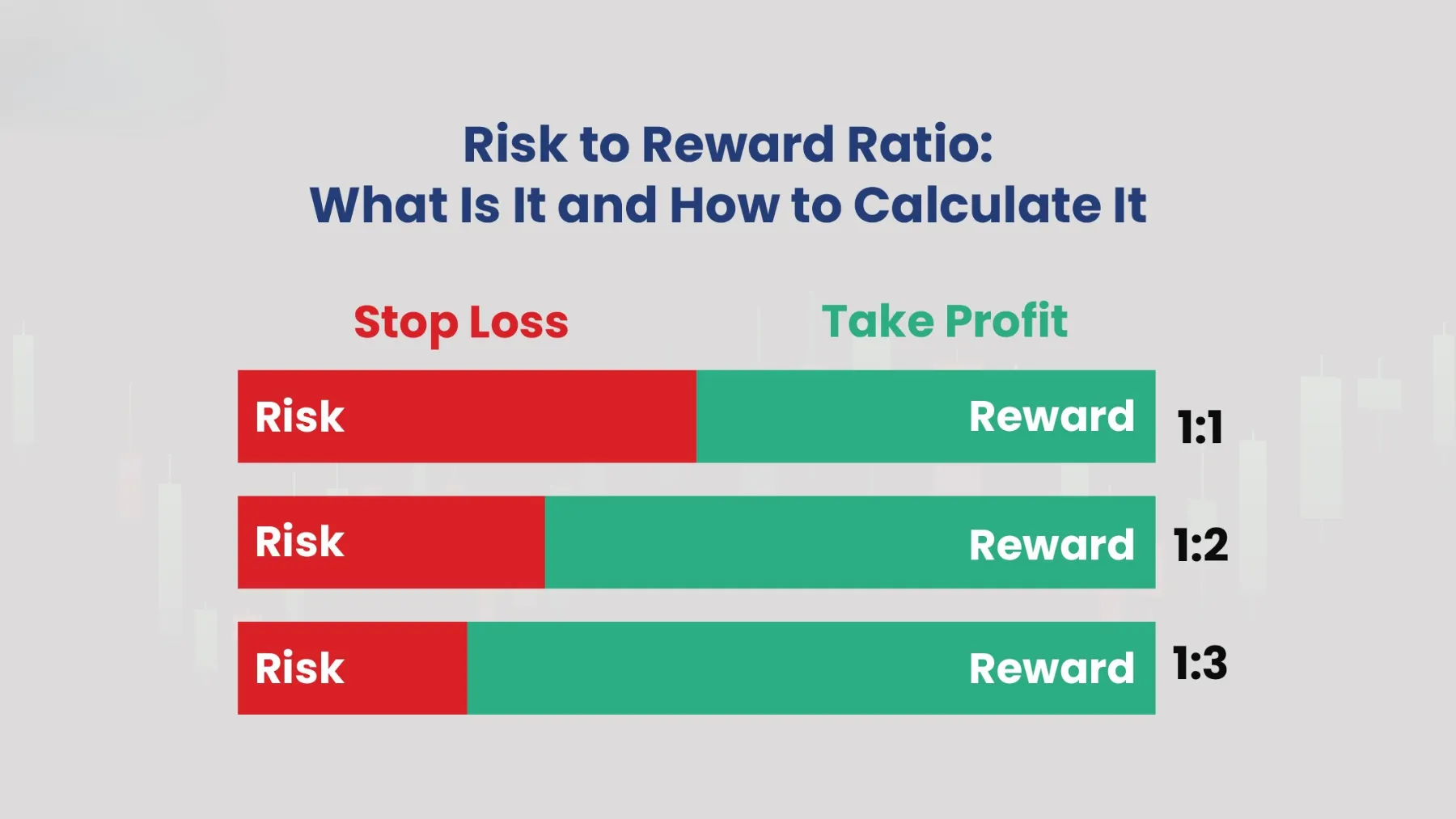
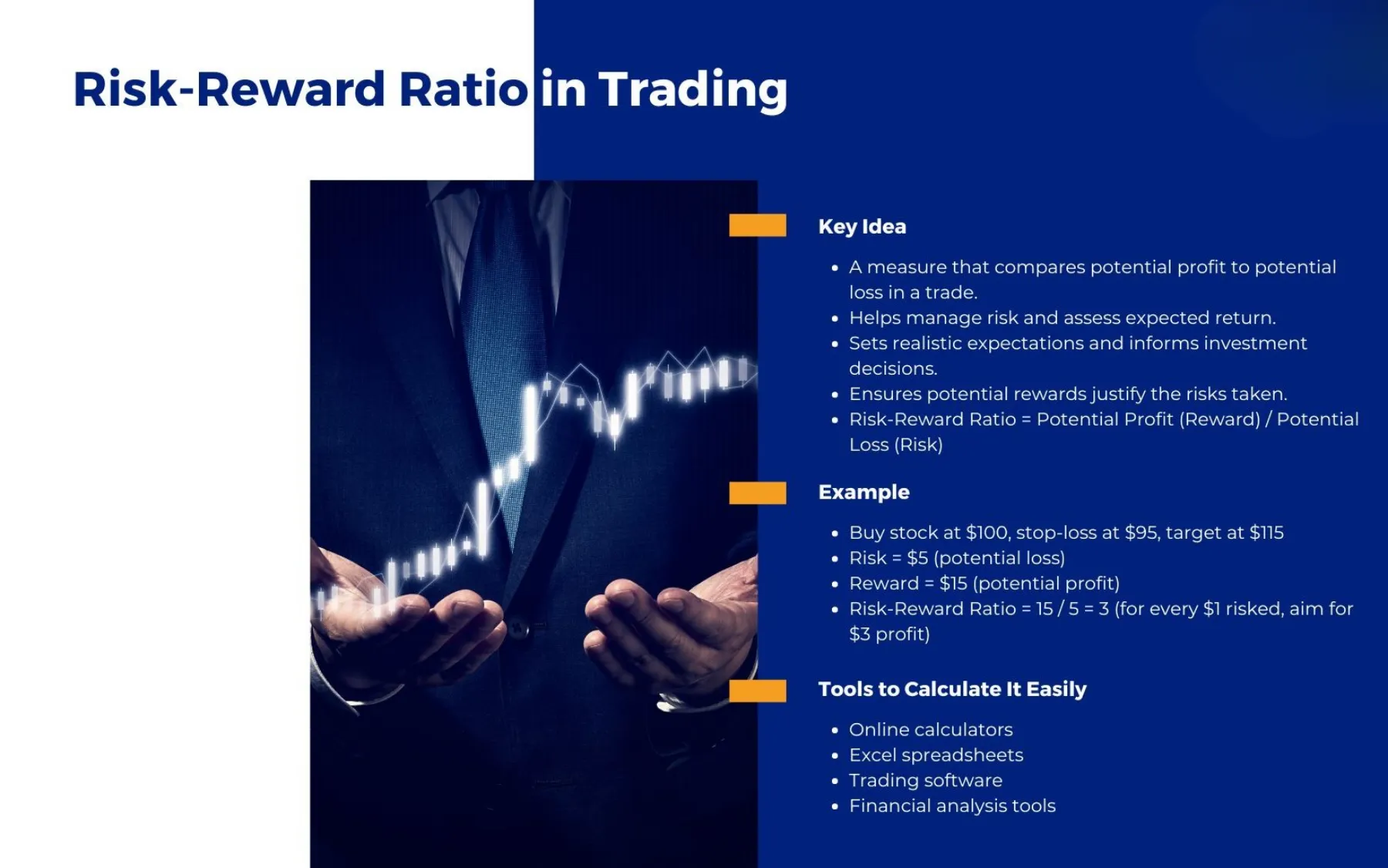
The risk-reward ratio is a fundamental risk management tool that measures the potential profit of a trade in relation to its potential loss. Specifically, the risk-reward ratio compares the amount of money a trader stands to gain on a trade if the price reaches their take-profit target against the amount they stand to lose if the price hits their stop-loss level. For example, a ratio of 1:3 means a trader is risking $1 for the chance to make $3. This simple calculation is a cornerstone of a sustainable trading plan, helping to quantify and control exposure on every position.
To use the risk-reward ratio effectively in Forex trading, you must first define your exit points before entering a position. Traders use the risk-reward ratio by setting a stop-loss order to define their maximum acceptable loss and a take-profit order to define their target profit, then only taking trades that meet their minimum predefined ratio. This acts as a filter, preventing traders from entering trades where the potential gain does not justify the potential loss, thereby instilling discipline and a systematic approach to market entry.
This ratio is a foundational concept because it directly impacts long-term profitability, often more than the win rate alone. The ratio is critical because it allows a trader to be consistently profitable even if they lose more trades than they win, a mathematical edge that protects trading capital and removes emotion from decision-making. A trader with a 1:3 risk-reward ratio can be profitable by winning just one out of every four trades, demonstrating how effective risk management can overcome an imperfect win-loss record.
By calculating this ratio for every potential setup, you transform trading from a game of chance into a strategic business. It forces you to think critically about not just where to get in, but more importantly, where to get out. In the following sections, we will explore exactly how to calculate this ratio, how to integrate it into your trading strategy, and what constitutes a “good” ratio for your specific trading style.
What Is the Risk-Reward Ratio in Forex Trading?
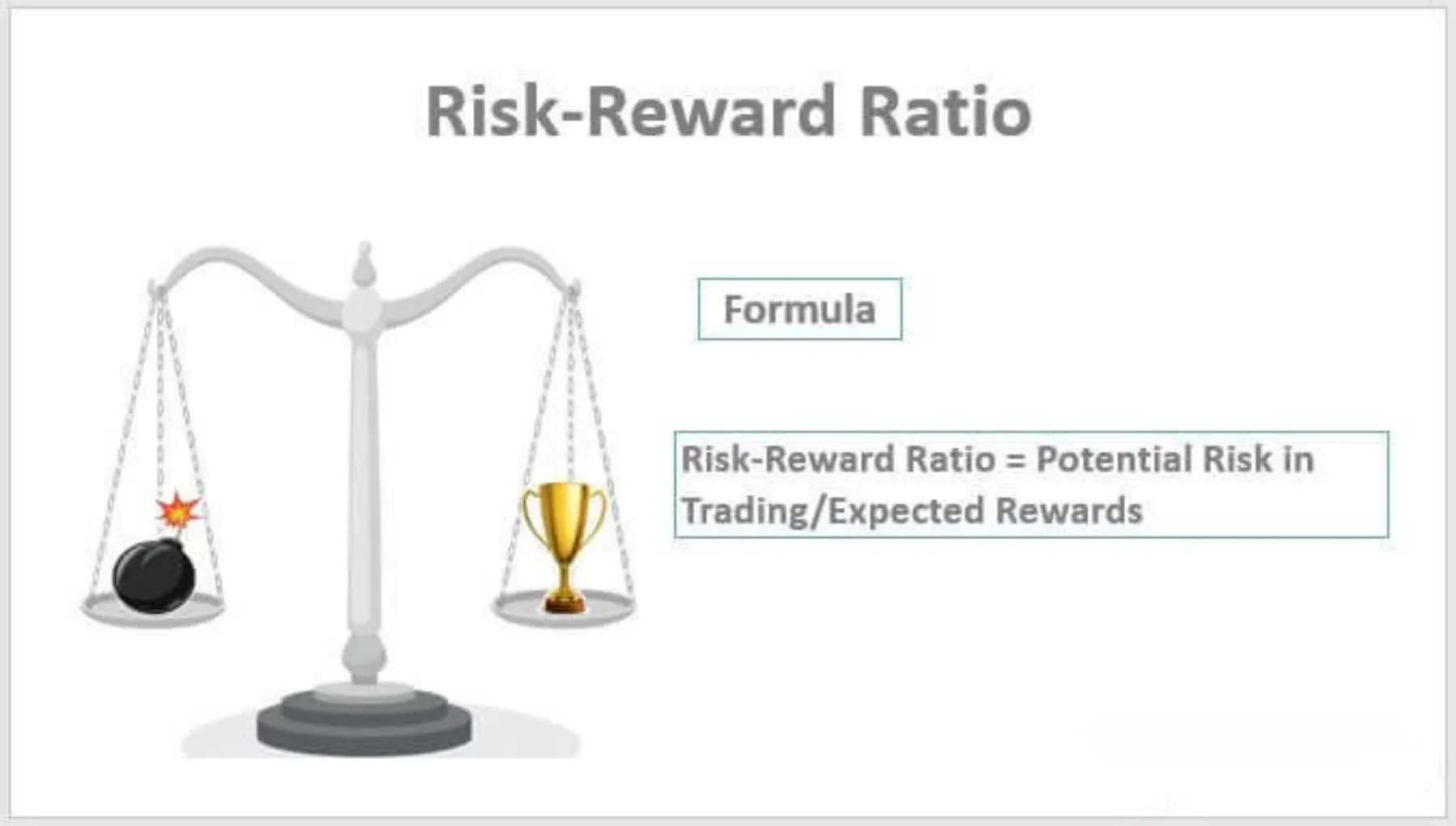
The risk-reward ratio in Forex trading is a metric that quantifies the potential profit of a trade relative to its potential loss, determined by the stop-loss and take-profit levels. This simple but powerful measure serves as a primary tool for risk management, allowing traders to assess the viability of a trade before committing any capital. In essence, it answers the question, “Is the potential gain worth the potential pain?” By comparing the distance from your entry point to your profit target with the distance from your entry point to your protective stop-loss, you create a clear, numerical value that guides your trading decisions and helps you manage your account equity with discipline and foresight.
To understand this better, let’s break down its core components and why it’s so fundamental to successful trading.
What Are the Core Components of the Risk-Reward Ratio?
The risk-reward ratio is built upon two simple but critical inputs: your potential risk and your potential reward. These are not abstract concepts, they are defined by specific price levels that you determine before you ever place a trade.
The first component is the potential risk. This is the amount of money you are prepared to lose if the trade moves against you. In practical terms, this is determined by the distance between your entry price and your stop-loss price. A stop-loss is an order you place with your broker to automatically close a trade when it reaches a certain price, preventing further losses. For example, if you buy the EUR/USD pair at 1.0800 and place your stop-loss at 1.0750, your potential risk is 50 pips. This is the “risk” part of the equation, a predefined and accepted loss.
The second component is the potential reward. This is the amount of profit you aim to make if the trade moves in your favor. It is determined by the distance between your entry price and your take-profit price. A take-profit order is similar to a stop-loss, but it automatically closes your trade when it reaches a specific profit target. Continuing the example, if you buy EUR/USD at 1.0800 and set your take-profit target at 1.0950, your potential reward is 150 pips. This is the “reward” part of the equation. By having both a stop-loss and a take-profit, you have defined the boundaries of your trade and can now assess its merits.
Why Is the Risk-Reward Ratio a Foundational Trading Concept?
The risk-reward ratio is a foundational concept because it shifts the focus from trying to win every single trade to managing risk in a way that ensures long-term profitability. Many new traders mistakenly believe that a high win rate is the key to success. However, professional traders understand that managing losses is far more important. The risk-reward ratio is the primary tool for achieving this.
First, it is essential for capital management. Without a predefined risk on each trade, a single bad position could wipe out a significant portion of your account. The ratio forces you to quantify your risk before entering, ensuring that no single loss is catastrophic. This structured approach helps preserve your trading capital, which is the lifeblood of your business.
Second, it promotes trading discipline. Emotions like greed and fear are a trader’s worst enemies. The risk-reward framework requires you to set your exit points based on logical analysis before you enter a trade, when you are objective and calm. This prevents you from making impulsive decisions in the heat of the moment, like closing a winning trade too early out of fear or letting a losing trade run in the hope it will turn around.
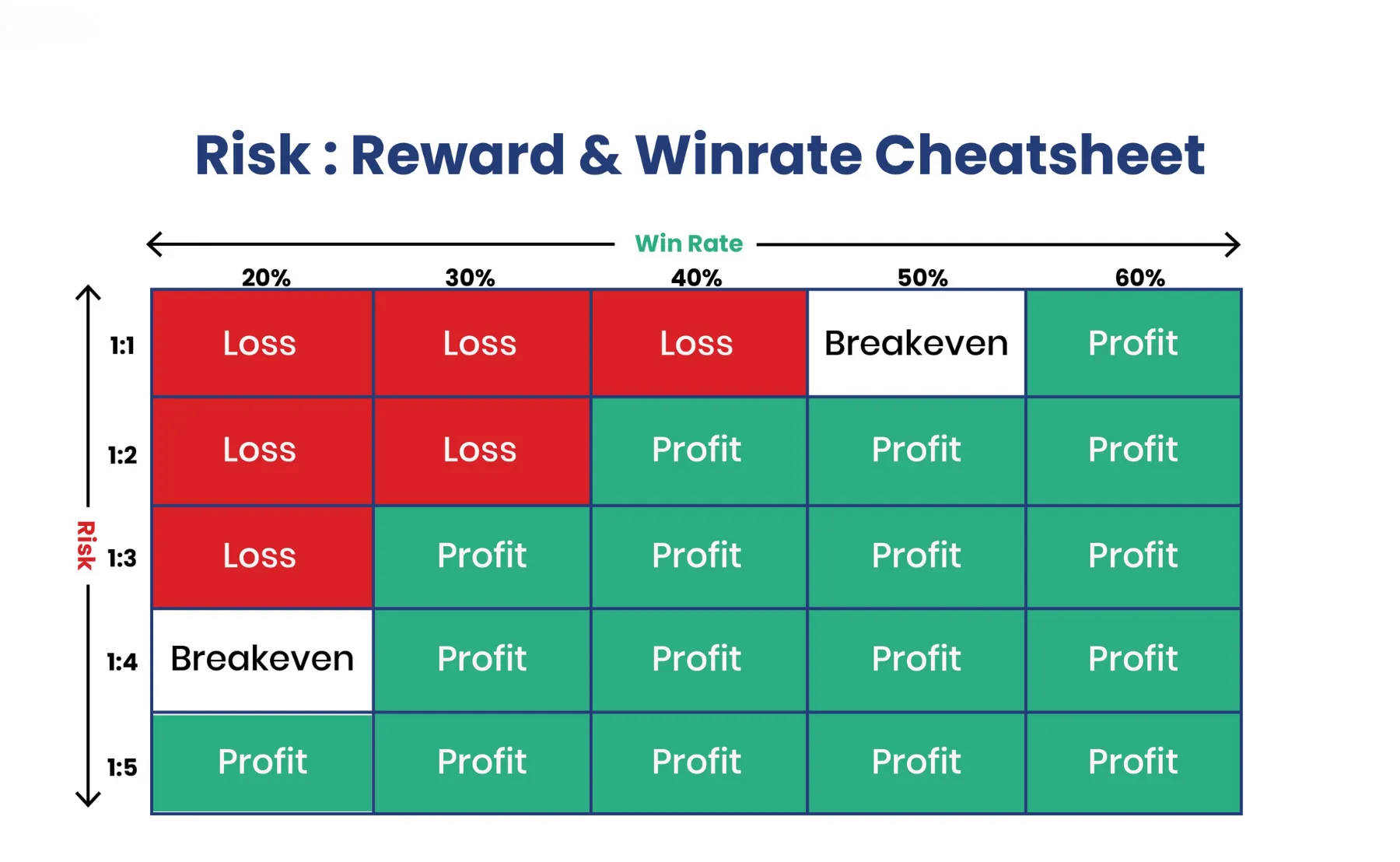
Finally, and most importantly, it highlights that you don’t need to win every trade to be profitable. This is a mathematical certainty. For instance, if you consistently use a 1:2 risk-reward ratio, you only need to be right more than 33% of the time to be profitable. With a 1:3 ratio, your required win rate drops to just over 25%. This allows you to withstand strings of small, manageable losses while waiting for the larger winning trades that ultimately grow your account. This mathematical edge is what separates amateur gambling from professional trading.
How Do You Calculate the Risk-Reward Ratio?
You calculate the risk-reward ratio by dividing your potential reward, which is the distance from entry to your take-profit, by your potential risk, the distance from entry to your stop-loss. This simple division gives you a number that represents how many dollars you stand to gain for every one dollar you risk. The calculation is straightforward and should be performed before you enter any trade, as it is a key part of your pre-trade analysis. It transforms an abstract trade idea into a quantifiable opportunity, allowing you to compare different setups objectively and decide which ones offer the best potential returns for the risk involved.
Let’s walk through the exact formula and a practical example to make this calculation crystal clear.
What Is the Formula for the Risk-Reward Ratio?
The formula to calculate the risk-reward ratio is simple arithmetic based on your predetermined entry, stop-loss, and take-profit price levels. You must first determine the value of your potential risk and your potential reward in terms of pips or price points.

For a long trade (buying a currency pair), the formula is:
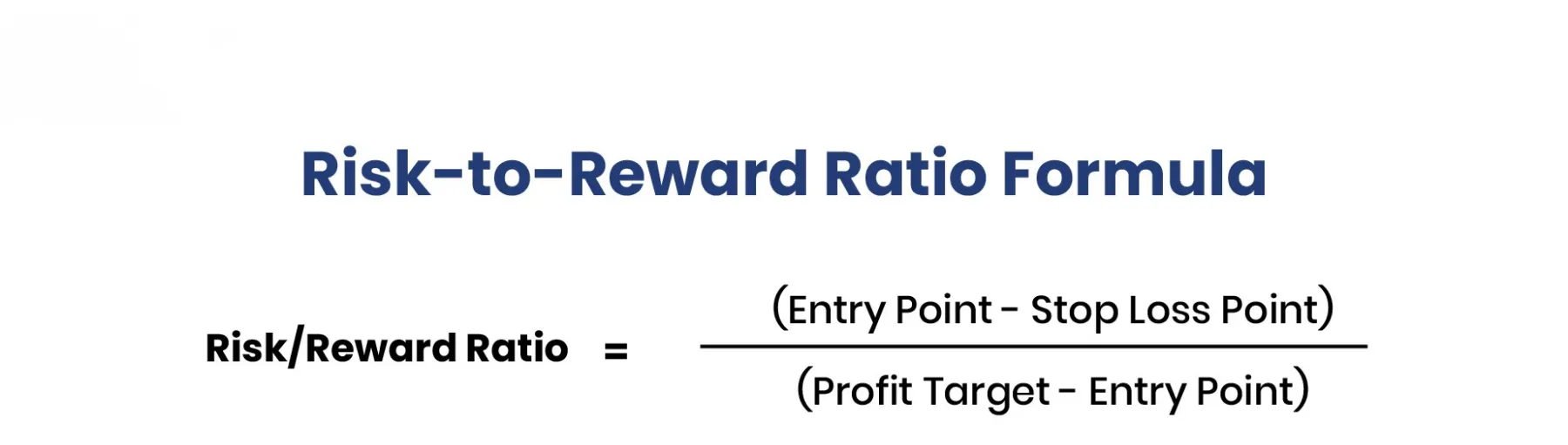
Risk-Reward Ratio = (Take Profit Price – Entry Price) / (Entry Price – Stop Loss Price)
Let’s break down each variable:
- Entry Price: The price at which you buy the currency pair.
- Stop Loss Price: The price below your entry where you will exit the trade for a loss.
- Take Profit Price: The price above your entry where you will exit the trade for a profit.
The numerator, (Take Profit Price – Entry Price), calculates your potential reward in pips. The denominator, (Entry Price – Stop Loss Price), calculates your potential risk in pips.
For a short trade (selling a currency pair), the formula is slightly adjusted to account for the downward price movement:
Risk-Reward Ratio = (Entry Price – Take Profit Price) / (Stop Loss Price – Entry Price)
In this case:
- Entry Price: The price at which you sell the currency pair.
- Stop Loss Price: The price above your entry where you will exit for a loss.
- Take Profit Price: The price below your entry where you will exit for a profit.
The result of this calculation is typically expressed as a ratio. If the formula gives you a result of 3, you would refer to this as a 1:3 risk-reward ratio.
Can You Provide an Example of a Risk-Reward Calculation?
Walking through a hypothetical Forex trade makes the calculation easy to understand. Let’s assume you are looking to place a long trade on the EUR/USD currency pair based on your technical analysis.
Here are the specific price points for your trade setup:
- Currency Pair: EUR/USD
- Position: Long (Buy)
- Entry Price: 1.08500
- Stop Loss Price: 1.08000
- Take Profit Price: 1.10000
First, let’s calculate the potential risk. This is the distance between your entry price and your stop-loss price.
- Potential Risk = Entry Price – Stop Loss Price
- Potential Risk = 1.08500 – 1.08000 = 0.00500, or 50 pips.
Next, let’s calculate the potential reward. This is the distance between your take-profit price and your entry price.
- Potential Reward = Take Profit Price – Entry Price
- Potential Reward = 1.10000 – 1.08500 = 0.01500, or 150 pips.
Now, you can use these values to calculate the risk-reward ratio:
- Risk-Reward Ratio = Potential Reward / Potential Risk
- Risk-Reward Ratio = 150 pips / 50 pips = 3
The result is 3. We express this as a ratio of 1:3. This means that for every one unit of risk you are taking (50 pips), you have the potential to gain three units of reward (150 pips). If you were risking $100 on this trade, your potential profit would be $300. This is generally considered a favorable risk-reward ratio, as the potential gain significantly outweighs the potential loss.
How Do You Use the Risk-Reward Ratio in a Trading Strategy?
Traders use the risk-reward ratio by integrating it into their strategy as a non-negotiable filter, only taking trades that meet a minimum predefined ratio based on logical technical analysis. This moves the concept from a theoretical calculation to a practical, decision-making tool that governs which trade setups you act on and which you ignore. Instead of just looking for a good entry signal, you must also confirm that the trade offers a favorable risk-to-reward profile. This disciplined application is what transforms a trader’s approach from reactive to proactive, ensuring that every position taken aligns with a sound risk management framework.
Putting this theory into practice involves two key steps: setting logical exit points and using the ratio to make disciplined decisions.
How Do You Set Stop-Loss and Take-Profit Levels?
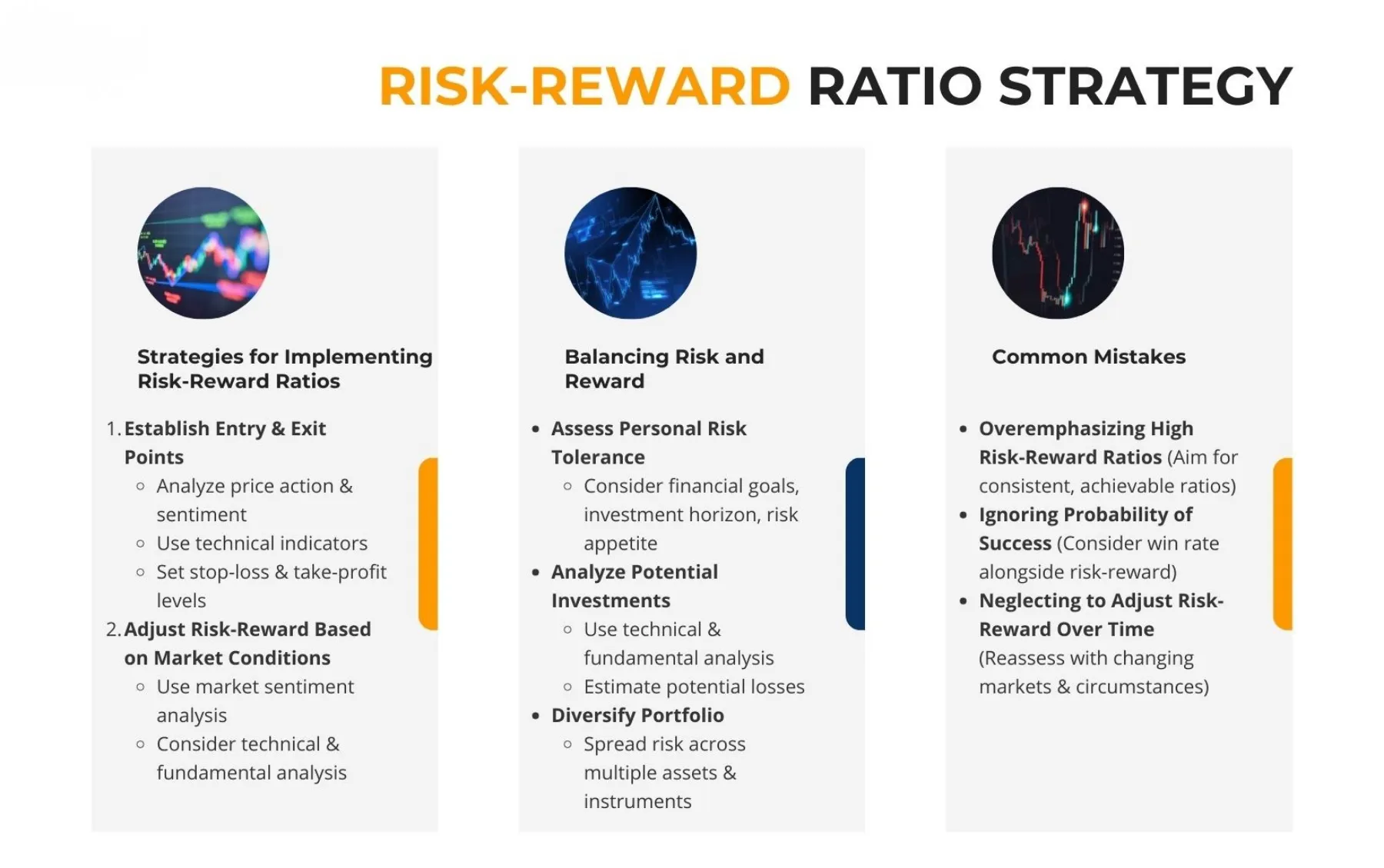
The effectiveness of your risk-reward ratio depends entirely on setting your stop-loss and take-profit levels logically. These levels should never be arbitrary numbers based on how much money you want to make or lose. Instead, they must be determined by the market’s structure and your technical analysis.
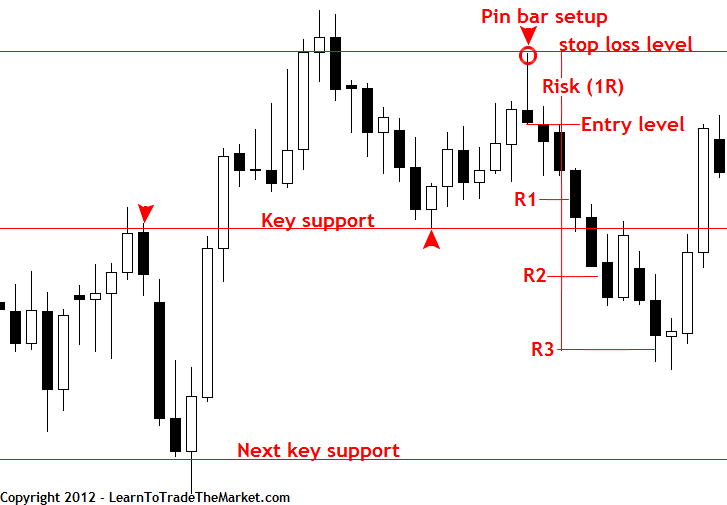
To set a logical stop-loss, you should identify a price level where, if reached, your original trade idea would be proven wrong. For a long (buy) position, this is often placed just below a key support level, a recent swing low, or the low of a bullish chart pattern. For a short (sell) position, it would be placed just above a key resistance level or a recent swing high. Some traders also use volatility-based indicators like the Average True Range (ATR) to set a stop-loss that respects the currency pair’s recent price behavior. Placing a stop-loss based on market structure ensures you are not stopped out by normal market noise.
Similarly, your take-profit level should be set at a logical price where the market is likely to face opposition. For a long trade, this could be the next major resistance level, a previous swing high, or a price target derived from a chart pattern like a head and shoulders. For a short trade, the target would be the next major support level. Technical tools like Fibonacci retracement and extension levels are also commonly used to identify high-probability profit targets. By basing your exits on technical analysis, you ensure your risk and reward are defined by the market itself, not by wishful thinking.
How Does the Ratio Influence Which Trades You Take?
Once you can set logical stop-loss and take-profit levels, the risk-reward ratio becomes your primary trade filter. Many successful traders establish a minimum acceptable risk-reward ratio as part of their trading plan. For example, a trader might decide to only take trades that offer a minimum ratio of 1:2. This means for every dollar they risk, they must have the potential to make at least two dollars.
Here’s how this works in practice. Imagine you identify a perfect buy signal on the GBP/JPY. Your analysis suggests an entry at 195.50. Based on market structure, the most logical place for your stop-loss is at 194.50 (a 100-pip risk). However, you also see a major resistance level at 196.50, making it the most logical take-profit target (a 100-pip reward). When you calculate the ratio, you get 100 pips / 100 pips = 1. Your risk-reward ratio is 1:1.
If your trading plan requires a minimum 1:2 ratio, you must skip this trade. Even though the entry signal was strong, the risk-reward profile does not meet your criteria. The potential reward does not justify the risk you would have to take. This filtering process is incredibly powerful. It forces you to be patient and selective, waiting only for the highest quality setups where the potential payout is large enough to compensate for the risk and the inevitable losing trades. This discipline is a hallmark of professional trading.
What Is a Good Risk-Reward Ratio for Forex Traders?
There is no single “best” risk-reward ratio for all traders; a good ratio is one that aligns with your specific trading strategy’s historical win rate and your personal risk tolerance. A scalper who wins 70% of their trades might be highly profitable with a 1:0.8 ratio, while a trend follower who wins only 30% of their trades would need a ratio of 1:3 or higher to succeed. The ideal ratio is therefore subjective and depends entirely on the mathematical expectancy of your trading system. The key is to find a balance where the win rate and the risk-reward ratio work together to produce a positive outcome over a large series of trades.
However, different ratios come with distinct trade-offs between win rate and the size of winning trades. Let’s explore the pros and cons of common approaches.
What Are the Pros and Cons of a Low Risk-Reward Ratio (e.g., 1:1)?
A low risk-reward ratio, such as 1:1 or even less (like 1:0.7), is characterized by profit targets that are as close as, or closer than, the stop-loss. This approach is common among scalpers and some day traders who aim for small, frequent profits.
The primary advantage of a low risk-reward ratio is that it generally leads to a higher win rate. Because the profit target is closer to the entry price than the stop-loss, it is statistically more likely to be hit. This can be psychologically beneficial for many traders, as frequent wins build confidence and make it easier to stick to a trading plan. Strategies that thrive in range-bound markets or aim to capture small, quick price movements often utilize this model.
However, the main disadvantage is that it requires a very high win rate to be profitable. With a 1:1 ratio, you need to win more than 50% of your trades just to break even, not accounting for spreads and commissions. If the ratio is 1:0.8, you might need a win rate of 60% or more. This leaves very little room for error. A short string of losses can quickly wipe out the profits from many winning trades. For example, if you have five wins of $10 each ($50 total) and then three losses of $10 each ($30 total), your net profit is only $20. A few more losses would turn your account negative. This model is unforgiving of losing streaks.
What Are the Pros and Cons of a High Risk-Reward Ratio (e.g., 1:5)?
A high risk-reward ratio, such as 1:3, 1:5, or even higher, is defined by having a profit target that is significantly larger than the potential risk. This approach is favored by swing traders and trend followers who aim to capture large market moves that unfold over days or weeks.
The most significant advantage is that you can be profitable with a low win rate. This provides a powerful mathematical edge. With a 1:5 risk-reward ratio, you only need to win one out of every six trades (a win rate of just over 16.7%) to break even. Any win rate above that small threshold generates profit. This means you can be wrong most of the time and still make money. A single large winning trade can erase a long series of small losses and still leave you with a substantial net gain. This resilience makes it a very robust model for long-term account growth.
The primary con is psychological. A low win rate means you will experience frequent, consecutive losses. It can be mentally challenging to stick with a strategy when you lose five, six, or even more trades in a row. Many traders abandon their strategy during these drawdowns, right before the next big winning trade comes along. Furthermore, market conditions do not always present opportunities for such large rewards. It requires immense patience to wait for these high-quality setups and immense discipline to endure the inevitable losing streaks.
What Are Advanced Concepts Related to the Risk-Reward Ratio?
Advanced concepts go beyond the basic calculation to integrate the risk-reward ratio with win rate, trading psychology, market conditions, and position sizing for a complete risk management framework. Furthermore, experienced traders understand that the ratio is not a standalone tool but one piece of a larger strategic puzzle. By exploring its relationship with other variables, you can refine your approach and make more informed decisions that align with your trading style and the current market environment.
What Is the Relationship Between Risk-Reward Ratio and Win Rate?
The risk-reward ratio and win rate have a critical inverse relationship that determines a trading strategy’s long-term profitability. A high risk-reward ratio means you can be profitable with a low win rate, while a low risk-reward ratio demands a much higher win rate. For example, a trader using a 1:4 risk-reward ratio only needs to win more than 20% of their trades to be profitable over time. In contrast, a scalper using a 1:0.5 ratio would need to win over 67% of their trades just to break even. This dynamic allows for different trading styles, from trend followers who catch large moves infrequently to scalpers who capture small profits very often.
To understand this balance, traders can calculate their break-even win percentage. The formula is:
- Break-Even Win Rate = 1 / (1 + Reward-to-Risk Ratio)
- For a 1:3 ratio, the break-even win rate is 1 / (1 + 3), which equals 0.25 or 25%. Any win rate above 25% will be profitable.
- For a 1:1 ratio, the break-even win rate is 1 / (1 + 1), which equals 0.50 or 50%. You must win more than half your trades to make money.
Are There Disadvantages to Using the Risk-Reward Ratio?
While the risk-reward ratio is a fundamental risk management tool, its misuse can lead to poor trading decisions. A primary disadvantage is the temptation to set unrealistic profit targets simply to achieve an attractive ratio. For instance, a trader might see a potential trade and set a stop-loss 20 pips away. To get a 1:5 risk-reward ratio, they would need a profit target 100 pips away. If there is no logical price structure, like a major resistance level, at that 100-pip mark, the target is arbitrary and unlikely to be hit. This turns a disciplined strategy into wishful thinking.

Another pitfall is rigidly applying the same ratio to every trade, regardless of the market context. This can lead to several problems.
- Ignoring Market Volatility: In highly volatile markets, a wider stop-loss may be necessary, which would change the ratio.
- Missing Good Opportunities: A quality setup might only offer a 1:1.5 risk-reward potential. A trader who only accepts 1:3 trades would miss this otherwise profitable opportunity.
- Forcing Trades: Believing every trade must fit a predefined ratio can cause a trader to force setups that are not actually present in the market.
How Does Trading Psychology Affect Your Risk-Reward Strategy?
Trading psychology presents significant challenges to consistently applying a risk-reward strategy. The human mind is often not wired to handle the probability distributions common in trading. For example, a strategy with a high risk-reward ratio, such as 1:5, often comes with a low win rate. This means a trader might have to endure a string of five, six, or even more consecutive losses before hitting a single large winning trade that covers all the losses and generates a profit. Psychologically, absorbing this many losses in a row is extremely difficult and can lead to self-doubt, fear, and the premature abandonment of a perfectly valid strategy.
Conversely, greed and fear can compel traders to sabotage their own predefined risk-reward parameters mid-trade. Here are common psychological errors.
- Moving the Stop-Loss: When a trade moves against them, a trader might move their stop-loss further away to avoid taking a loss, which completely invalidates the initial risk amount.
- Closing Winners Too Early: Fear of a winning trade reversing can cause a trader to take profits prematurely, failing to reach the target and destroying the positive risk-reward ratio.
- Revenge Trading: After a loss, a trader might jump into a new trade without proper analysis to “make the money back,” ignoring all risk management rules.
Does the Ideal Risk-Reward Ratio Change in Different Market Conditions?
Yes, the ideal risk-reward ratio is not static and should adapt to different market conditions. A successful trader adjusts their strategy based on whether the market is trending, ranging, or experiencing high volatility. In a strong trending market, for example, it is often more feasible to aim for higher risk-reward ratios like 1:3, 1:4, or even higher. During a clear uptrend or downtrend, prices are more likely to make extended moves in one direction. A trend-following strategy allows a trader to set a reasonable stop-loss and let profits run, capturing a large portion of the move and achieving a superior reward relative to the risk.

In contrast, a ranging or sideways market is characterized by price action bouncing between well-defined support and resistance levels. In these conditions, aiming for a high risk-reward ratio is often impractical. Price is unlikely to break out and make a large directional move. Therefore, a more practical approach is to aim for smaller, more achievable targets. A lower risk-reward ratio, such as 1:1.5 or 1:2, might be more appropriate. Traders would look to buy near support and sell near resistance, capturing the smaller swings within the range. Failing to adapt the ratio to the market type can lead to frustration and missed opportunities.
What Is the Difference Between Risk-Reward Ratio and Position Sizing?
The risk-reward ratio and position sizing are two distinct but equally important components of a comprehensive risk management plan. The risk-reward ratio defines the potential profit of a trade relative to its potential loss, whereas position sizing determines the actual amount of capital you will risk on that single trade. The risk-reward ratio is about the quality and potential of a trade setup itself. For example, you might identify a trade where you risk 50 pips to potentially make 150 pips, giving you a 1:3 risk-reward ratio. This ratio remains the same whether you risk $10 or $1,000.
Position sizing connects that abstract ratio to your actual trading account. It answers the question: “How much money am I willing to lose if this trade hits my stop-loss?” This is typically expressed as a percentage of your total account equity, such as 1% or 2%. For example, on a $10,000 account, a 1% risk rule means you can lose a maximum of $100 on any single trade. These two concepts work together to manage risk.
- Risk-Reward Ratio: Evaluates if a trade is worth taking based on its potential.
- Position Sizing: Calculates the number of lots or shares to trade so that a potential loss does not exceed your predefined risk limit (e.g., $100).