

Blog
What are the Most Volatile Forex Pairs and How Do You Trade Them?

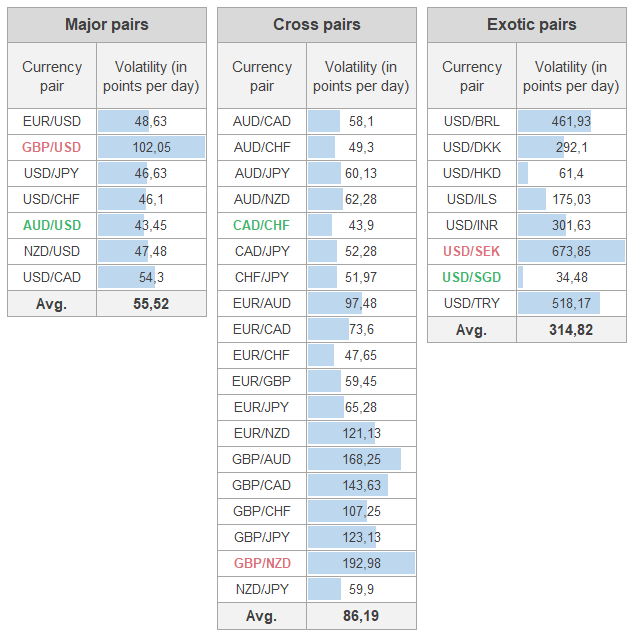
The most volatile forex pairs often include major crosses like GBP/JPY, minor pairs such as GBP/AUD, and exotic pairs like USD/ZAR, known for their large and rapid price movements. These currency pairs are considered volatile because they are influenced by significant interest rate differentials, geopolitical instability, lower liquidity, and high sensitivity to economic news, creating substantial trading opportunities alongside heightened risk.
To trade these pairs effectively, traders often employ strategies designed to capitalize on strong price movements while managing risk. Successful methods include breakout trading, which involves entering the market when prices push past key support or resistance levels, and trend-following, where trades are aligned with the prevailing market direction. Crucially, every strategy must be paired with strict risk management, such as using wider stop-loss orders to avoid being prematurely stopped out by normal price fluctuations.
Trading high-volatility pairs exposes you to several specific dangers that must be carefully managed. The primary risks include the potential for rapid and substantial financial losses, wider bid-ask spreads that increase transaction costs, and slippage, where your trade executes at a different price than intended due to fast-moving market conditions. These factors can quickly erode capital if not accounted for with a disciplined trading plan.
Understanding the nature of volatility is the first step toward harnessing its power. While the potential for quick profits is alluring, the risk of equally quick losses is always present. This guide will explore what drives volatility, identify the most active currency pairs, and provide actionable strategies to help you navigate these exciting yet challenging markets with greater confidence.
What is Volatility in Forex Trading?
Volatility in forex trading is a measure of the degree to which a currency pair’s price fluctuates over a specific period, often quantified by the standard deviation of its returns. A higher volatility means the price of the pair can change dramatically over a short time, in either direction, while lower volatility indicates that its price is relatively stable. For traders, volatility represents both opportunity and risk. It creates the price movements necessary to generate profits, but it also increases the potential for significant losses. When you hear a trader say a market is “volatile,” they are simply describing a market with a wide trading range and fast, frequent price changes.
To understand this better, let’s explore what causes these price swings. Volatility isn’t random; it’s driven by several key factors that influence supply and demand for a currency.
- Economic Data Releases: Major economic announcements are a primary driver of short-term volatility. Reports like Non-Farm Payrolls (NFP) in the United States, Gross Domestic Product (GDP) figures, inflation data (CPI), and retail sales numbers can cause immediate and sharp market reactions if they surprise analysts’ expectations.
- Central Bank Policies: The actions and words of central banks, such as the US Federal Reserve, the European Central Bank, or the Bank of England, have a massive impact. Decisions on interest rates, quantitative easing programs, and forward guidance can define a currency’s trend and create powerful price movements.
- Geopolitical Events: Political instability, elections, trade disputes, and international conflicts can create uncertainty, leading to sudden shifts in market sentiment. Currencies from countries with less stable political environments are often more volatile. For example, events like the Brexit vote caused extreme volatility in GBP pairs.
- Market Liquidity: Liquidity refers to the ease with which an asset can be bought or sold without affecting its price. Major pairs like EUR/USD have very high liquidity, which tends to dampen volatility. In contrast, exotic pairs like USD/TRY have much lower liquidity, meaning a single large order can cause a disproportionately large price move, making them inherently more volatile.
Traders use specific technical indicators to measure and visualize volatility. The Average True Range (ATR) is one of the most popular. It doesn’t indicate price direction but measures the degree of price movement. A rising ATR suggests increasing volatility, while a falling ATR indicates it’s decreasing. This helps traders adjust their stop-loss and take-profit levels accordingly. Another common tool is Bollinger Bands, which consist of a moving average and two standard deviation bands plotted above and below it. The bands widen when volatility increases and contract when it decreases, providing a visual representation of the market’s state. By understanding what volatility is and what drives it, you can better prepare for the trading conditions you are likely to face.
Which Forex Pairs are the Most Volatile?
There are several groups of volatile forex pairs, with the most active ones typically found among exotic pairs involving emerging market currencies, minor crosses, and certain major pairs known for large daily ranges. These pairs are characterized by lower liquidity, high interest rate differentials, or sensitivity to political and economic shifts, which all contribute to wider price swings. Exploring these categories helps traders identify which pairs align with their risk tolerance and trading strategy.
Let’s explore the specific pairs within each group that consistently show high levels of price movement.
What are the Most Volatile Major Currency Pairs?
The most volatile major currency pairs often involve the British Pound (GBP) and the Japanese Yen (JPY), as these currencies are highly sensitive to risk sentiment and central bank policy shifts. For instance, GBP/JPY is famously known as “the Dragon” or “the widow-maker” for its extreme volatility. This is because it combines two currencies that can move independently and sharply. The GBP is sensitive to UK economic data and Bank of England policy, while the JPY is a classic safe-haven currency that strengthens during times of global uncertainty. The high interest rate differential that often exists between the UK and Japan also fuels its price swings through the carry trade.
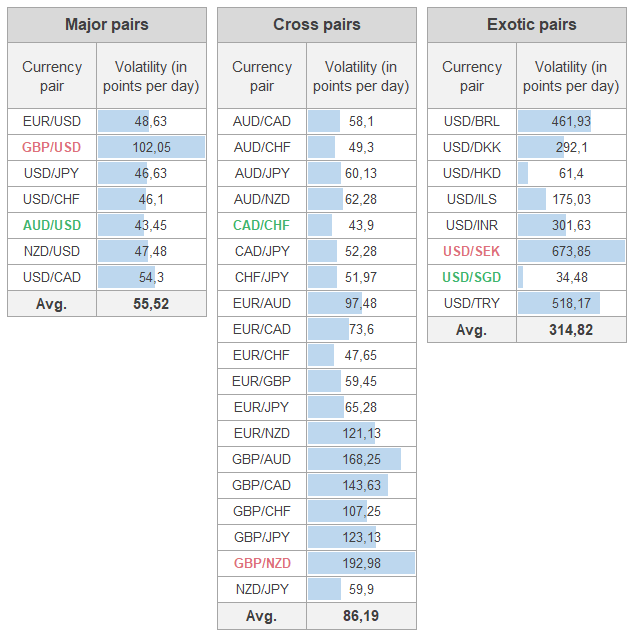
Another highly volatile major is GBP/USD, or “Cable.” Its volatility stems from the significant economic news flow from both the United States and the United Kingdom. Historically, this pair has been prone to large movements, which were amplified by the political uncertainty surrounding Brexit. Traders watch key data releases like GDP, inflation, and employment figures from both countries, as any divergence can trigger strong trends.
Similarly, EUR/JPY is a volatile cross pair that is very sensitive to global risk appetite. When investors feel optimistic, they often sell the safe-haven JPY to buy higher-yielding assets, causing EUR/JPY to rise. Conversely, during periods of market fear, capital flows back into the JPY, causing the pair to fall sharply. The monetary policies of the European Central Bank and the Bank of Japan are also key drivers, creating sustained trends based on their divergent paths.
What are the Most Volatile Minor and Exotic Currency Pairs?
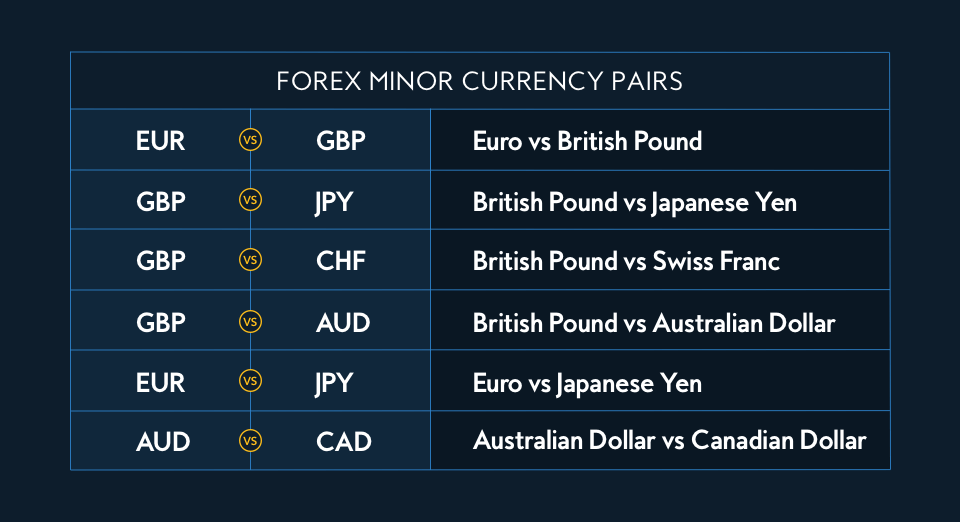
Minor and exotic pairs exhibit even greater volatility due to factors like lower liquidity, political risk, and commodity price dependence. For example, GBP/AUD is a notoriously volatile minor cross. It combines two robust economies with different drivers. The GBP is driven by UK financial services and economic policy, while the Australian Dollar (AUD) is a commodity currency heavily influenced by the prices of iron ore and coal, as well as its trade relationship with China. This creates a pair that can trend powerfully when the economic fortunes of the two nations diverge.

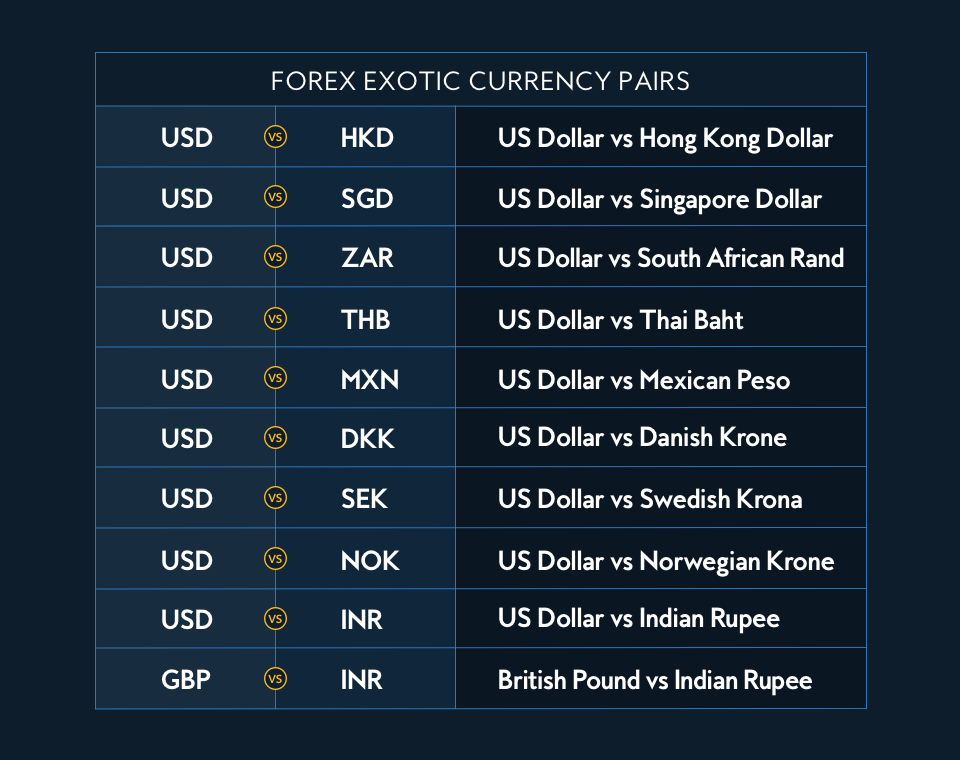
Among exotic pairs, USD/ZAR (US Dollar vs. South African Rand) stands out. The Rand’s volatility is driven by South Africa’s status as an emerging market. It is highly sensitive to changes in global risk sentiment, commodity prices (especially gold and platinum), and domestic political and economic instability. Its relatively low liquidity means that price movements can be incredibly sharp and sudden, especially during risk-off periods when investors pull capital from emerging markets.
Another extremely volatile pair is USD/TRY (US Dollar vs. Turkish Lira). This pair’s volatility is fueled by Turkey’s unique economic challenges, including high inflation and unconventional monetary policies set by its central bank. Geopolitical tensions in the region also play a significant role. Like the ZAR, the Lira suffers from lower liquidity compared to major currencies, which magnifies the impact of market orders and news events, leading to dramatic price spikes and declines that are difficult for many traders to manage.
How Do You Trade High Volatility Forex Pairs?
Trading high volatility forex pairs successfully requires using specialized strategies like breakout and trend-following techniques, all of which must be built upon a foundation of strict risk management. Because these pairs can move quickly and unpredictably, your primary goal is to protect your capital while positioning yourself to capture significant price swings. This involves using wider stop-loss orders to account for the larger price fluctuations and having a clear plan for both entering and exiting the market. The key is discipline, not improvisation.
To understand this better, let’s break down the practical strategies and risk management tools you can use when navigating these challenging yet rewarding markets.
How Can You Use Breakout Trading Strategies?
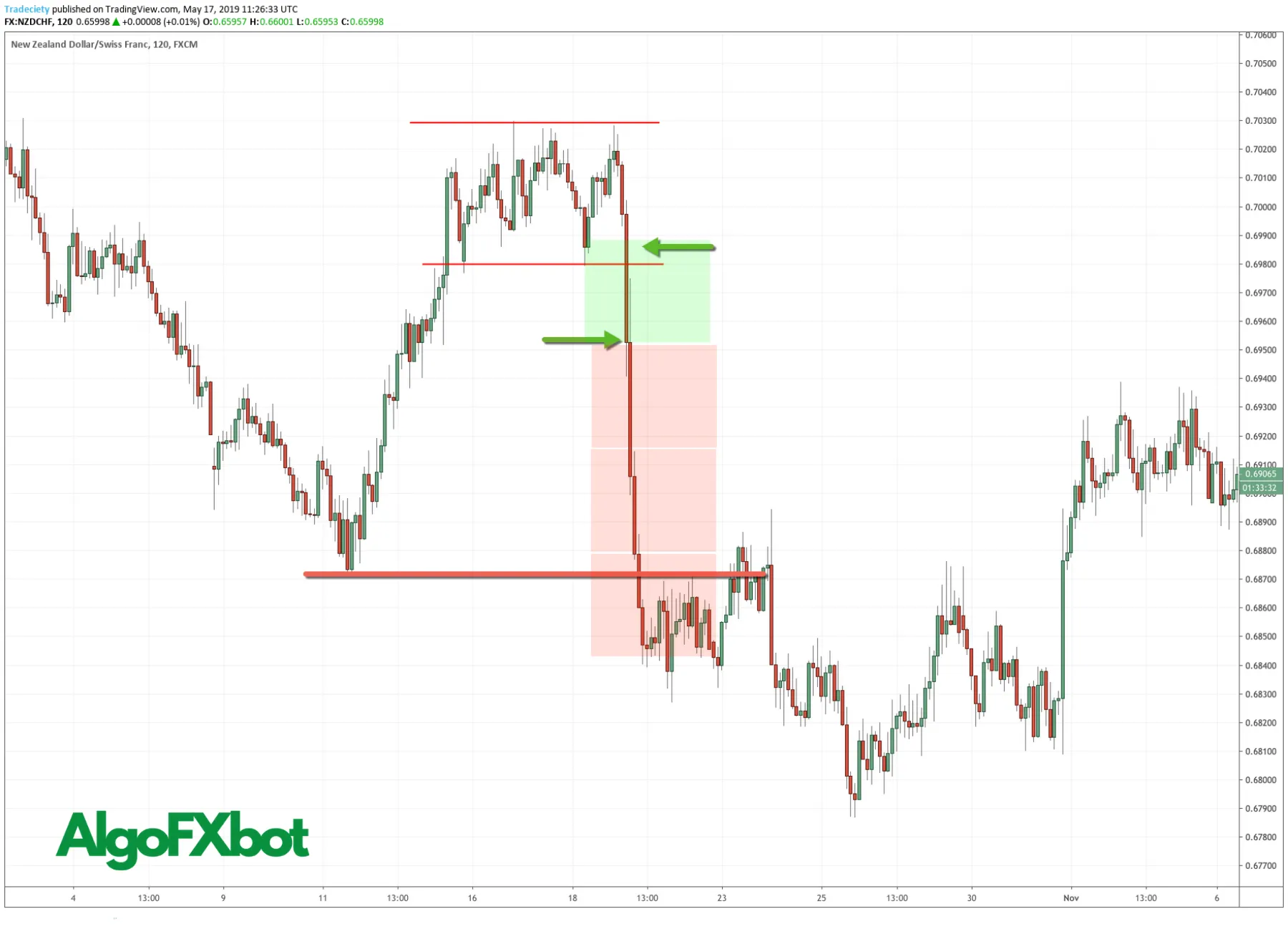
Breakout trading is a popular strategy for volatile pairs because it is designed to capture the start of a new, strong move. This approach involves identifying key levels of support (a price floor) and resistance (a price ceiling) where the price has previously reversed. A breakout occurs when the price moves decisively through one of these levels, suggesting that momentum is strong enough to start a new trend. For example, in a ranging market, you would wait for a powerful candlestick to close clearly above a resistance level before entering a buy trade.
To implement this strategy effectively, follow a clear process. First, identify the key levels on your chart, paying attention to areas where the price has stalled multiple times. Second, wait for a period of consolidation or a tightening price range, as this often precedes a powerful breakout. Third, you need confirmation. Do not enter a trade simply because the price has touched the level. A strong confirmation is a full-bodied candle closing beyond the support or resistance line, preferably on increased volume. Finally, manage your risk. Place your stop-loss order just on the other side of the broken level. For a breakout above resistance, your stop-loss would go just below that old resistance line, which should now act as new support.
How Can You Use Trend-Following Strategies?
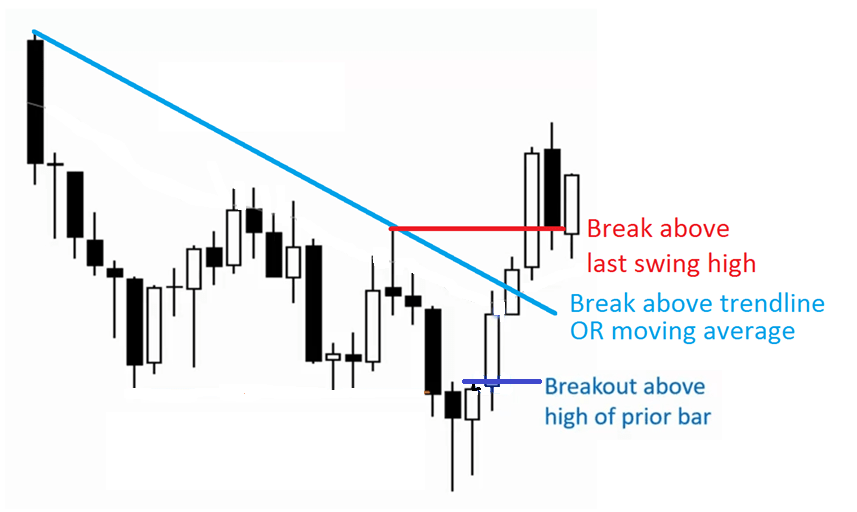
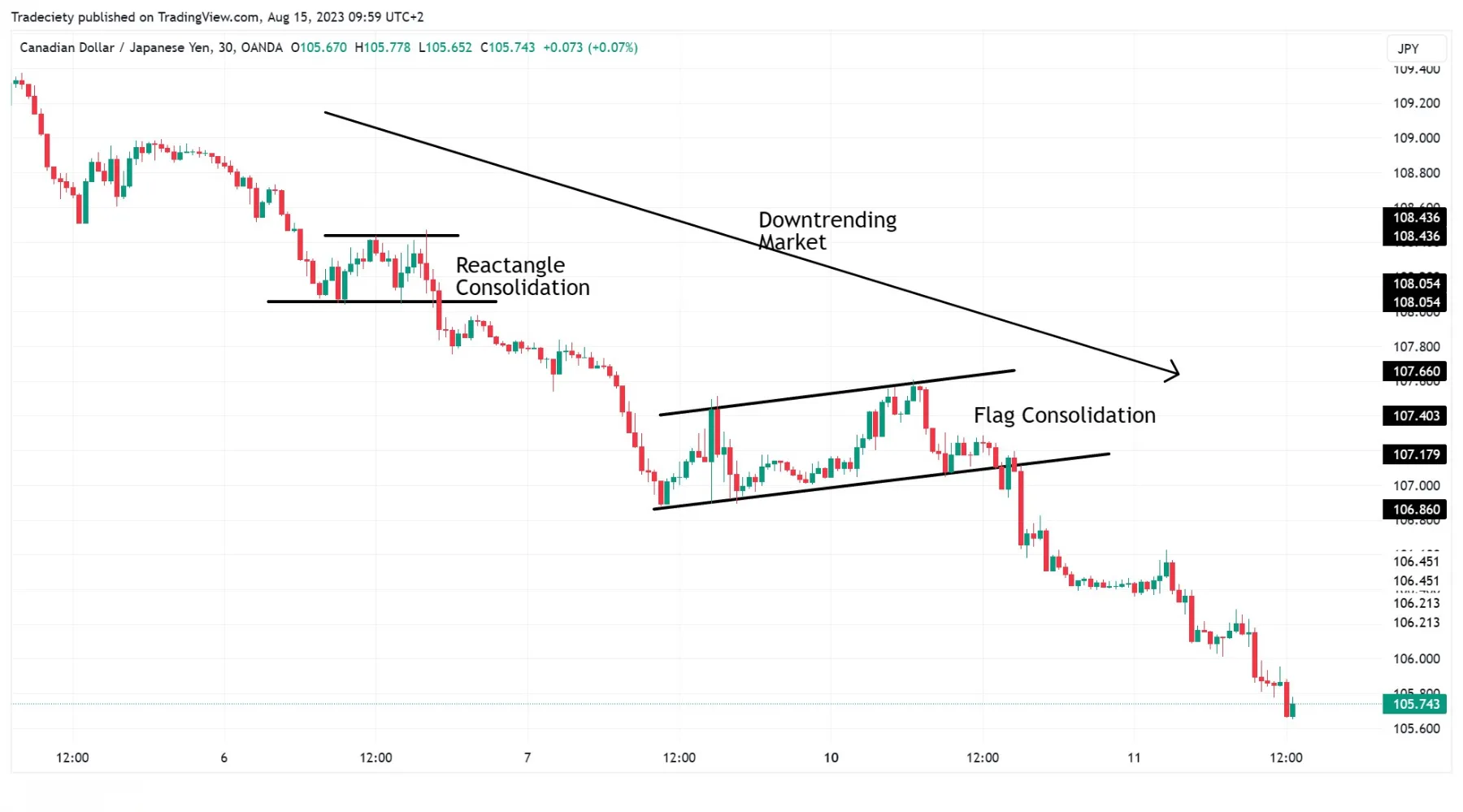
Volatile pairs do not just move randomly; they often form strong, sustained trends. A trend-following strategy aims to identify the dominant direction of the market and place trades that align with it. This method avoids trying to predict tops and bottoms and instead focuses on participating in the main move. You might use tools like moving averages to help identify the trend. For instance, a common approach is to use a 50-period moving average (MA) and a 200-period MA. When the 50 MA is above the 200 MA, the market is in a long-term uptrend, and you should only look for buying opportunities.
The core of this strategy is to “buy the dip” in an uptrend or “sell the rally” in a downtrend. Specifically, once you have identified an uptrend, you don’t just buy at any price. Instead, you wait for the price to pull back to a level of value, such as the 50-period moving average or a previous support level. This pullback gives you a lower-risk entry point to join the established trend. Another useful indicator is the Average Directional Index (ADX), which measures the strength of a trend. An ADX reading above 25 often signals a strong trend, making it an ideal environment for a trend-following approach.
How Should You Use Stop-Loss and Take-Profit Orders?
Using stop-loss and take-profit orders is absolutely fundamental when trading volatile pairs, but they must be adapted to the market’s character. Standard tight stop-losses are ineffective because the wide price swings, known as “whipsaws,” can easily trigger your stop before the price moves in your intended direction. You must use wider stops. Instead of placing a stop a fixed number of pips away, base its placement on market structure. For example, if you enter a long trade, your stop-loss should be placed below the most recent significant swing low. Another advanced method is to use the Average True Range (ATR) indicator, placing your stop at a multiple of the ATR value (e.g., 2x ATR) below your entry.
Just as your stop-loss needs to be wider, your take-profit targets should also be strategically placed to ensure a favorable risk-to-reward ratio. If you are risking 100 pips on a trade, your target should be at least 200 pips away to achieve a 1:2 risk-to-reward ratio. You can set take-profit orders at the next major support or resistance level. Alternatively, a trailing stop-loss can be very effective. A trailing stop automatically moves your stop-loss up as the price moves in your favor, locking in profits while still giving the trade room to continue its trend.
What are the Risks of Trading Volatile Currency Pairs?
The primary risks of trading volatile currency pairs are the potential for rapid and significant financial losses, increased trading costs due to wider spreads, and poor trade execution from slippage. These dangers are magnified by the speed and magnitude of price movements, which can catch even experienced traders off guard if they are not prepared. Understanding these risks in detail is the first step toward managing them effectively and protecting your trading capital from the market’s inherent unpredictability.
Let’s explore each of these core risks so you know exactly what you are up against when trading these dynamic markets.
One of the most apparent dangers is the potential for sudden and large losses. A currency pair that can offer a 150-pip profit in an hour can just as easily deliver a 150-pip loss in the same timeframe. When combined with leverage, which allows you to control a large position with a small amount of capital, these losses can be devastating. For example, if you are trading one standard lot of GBP/JPY, each pip movement is worth approximately $10. A sudden 100-pip move against your position would result in a $1,000 loss. Without a properly placed stop-loss order, this loss could grow even larger in a matter of minutes, potentially wiping out a significant portion of your account balance. This risk is not just theoretical; it is a practical reality of trading pairs known for their wide daily ranges.
Another critical risk is dealing with wider bid-ask spreads. The spread is the difference between the price at which you can buy a currency (the ask price) and the price at which you can sell it (the bid price). It represents the cost of making a trade. Brokers widen their spreads on volatile pairs to protect themselves from the increased risk of rapid price changes. This means that from the moment you enter a trade, you are already at a small loss. During times of extreme volatility, such as a major news release, these spreads can widen dramatically. What might normally be a 3-pip spread on GBP/JPY could temporarily expand to 15 or 20 pips, making it much harder to achieve profitability and increasing your overall transaction costs.
Finally, traders must contend with slippage. Slippage occurs when your trade is executed at a different price from what you requested. In a calm market, this difference is usually minimal. However, in a fast-moving, volatile market, the price can change in the milliseconds it takes for your order to travel from your computer to your broker’s server. This most often works against you. For example, you might try to enter a buy trade at 1.2500, but due to high volatility, your order gets filled at 1.2505. This 5-pip difference is slippage. The same can happen with stop-loss orders. Your stop set at 1.2450 might get triggered and filled at 1.2445, resulting in a larger loss than you had planned. This makes precise risk management more challenging.
What Else Should Traders Know About Forex Volatility?
Beyond identifying volatile pairs, traders must understand how to measure volatility, when it occurs, and how it relates to risk and economic events. Furthermore, a complete understanding involves recognizing both the most and least volatile market conditions to build a flexible trading strategy.
How Can You Measure Forex Volatility?
Traders use technical indicators to quantify market volatility and make more informed decisions about risk and entry points. Two of the most common tools for this purpose are the Average True Range (ATR) and Bollinger Bands. The ATR indicator measures the average price range of a currency pair over a specific number of periods, typically 14 days. A higher ATR value suggests greater volatility, indicating wider price swings, while a lower ATR suggests a quieter market with smaller price movements. Traders use the ATR to set stop-loss orders and profit targets that are proportional to the pair’s recent behavior.
Bollinger Bands provide a different visual representation of volatility. This tool consists of three lines plotted on a price chart:
- A simple moving average (SMA) in the middle.
- An upper band, which is typically two standard deviations above the SMA.
- A lower band, which is two standard deviations below the SMA.
The distance between the upper and lower bands widens when volatility increases and narrows or “squeezes” when volatility decreases. Traders often look for price breakouts when the bands are unusually narrow, as this can signal an impending spike in volatility.
When is the Forex Market Most Volatile?
The forex market is most volatile during the overlap of major trading sessions, specifically when the London and New York sessions are open simultaneously. This period, which occurs between 8:00 AM and 12:00 PM EST (1:00 PM to 5:00 PM GMT), is characterized by the highest trading volume and liquidity. During this four-hour window, traders from two of the world’s largest financial centers are active, leading to more significant and frequent price movements. Major economic data from both the United States and Europe is often released during these hours, further fueling price action.
Other session overlaps also create pockets of increased volatility, though generally less intense than the London-New York overlap.
- The Tokyo-London overlap sees a handoff between Asian and European markets, often affecting pairs like GBP/JPY and EUR/JPY.
- The Sydney-Tokyo overlap kicks off the trading day, bringing initial liquidity and movement primarily to Oceanic and Asian currency pairs like AUD/JPY.
For traders seeking to capitalize on large price swings, focusing on the London-New York overlap provides the most consistent opportunities.
How Does Economic News Affect Forex Pair Volatility?
Major economic news releases are primary drivers of short-term forex volatility, often causing immediate and sharp price movements. When economic data is released, it can change the market’s perception of a currency’s strength or weakness, prompting a flurry of buying and selling activity. Traders and algorithms react within seconds to news that beats, meets, or misses consensus forecasts. For example, a central bank’s unexpected decision to raise interest rates typically strengthens its currency, causing pairs involving that currency to experience a sudden spike in volatility as the market reprices its value.

Key news events that consistently inject volatility into the market include:
- Non-Farm Payrolls (NFP): This U.S. employment report heavily influences the U.S. Dollar.
- Consumer Price Index (CPI): Inflation data from major economies can alter expectations for monetary policy.
- Interest Rate Decisions: Announcements from central banks like the Federal Reserve, European Central Bank, or Bank of England are among the most impactful events.
- Gross Domestic Product (GDP): Reports on economic growth provide a broad view of an economy’s health.
What are the Least Volatile Forex Pairs?
While many traders seek high volatility, others prefer the stability and predictability of the least volatile forex pairs. These pairs typically involve currencies from economies that are geographically close, have strong trade links, or follow similar monetary policies. Their price movements are generally smaller and more contained, making them suitable for traders with a lower risk tolerance or those who employ range-trading strategies. A prime example is EUR/CHF, as the economies of the Eurozone and Switzerland are deeply interconnected. The Swiss Franc often moves in tandem with the Euro, resulting in lower relative price changes.
Other examples of low-volatility pairs include those where both currencies are commodity-linked and share similar economic drivers.
- AUD/CAD: Both the Australian Dollar and Canadian Dollar are influenced by commodity prices, so their values often move in a correlated fashion.
- NZD/CAD: Similar to AUD/CAD, the economies of New Zealand and Canada are both tied to commodity exports, leading to more stable exchange rate fluctuations.
- EUR/GBP: Before Brexit, this pair was known for its low volatility due to the close economic ties between the UK and the Eurozone, though its volatility has increased in recent years.
Is Higher Volatility Always Better for Profit?
It is a common misconception that higher volatility automatically translates to better profit potential. While volatility does create opportunities for larger gains in a shorter period, it equally magnifies the risk of substantial losses. A highly volatile pair can move against a trader’s position just as quickly as it can move in their favor, potentially leading to a rapid margin call or a stop-loss being triggered prematurely. For this reason, high volatility is a double-edged sword that demands exceptional risk management and discipline. Without a solid strategy, trading volatile pairs can be more like gambling than calculated speculation.
The relationship between volatility and profit depends entirely on the trader’s skill and preparation.
- Increased Risk: Wider price swings mean that stop-loss orders must be placed further away from the entry point, requiring a smaller position size to maintain proper risk-per-trade.
- Psychological Pressure: Fast-moving markets can lead to emotional decisions like chasing trades or closing winning positions too early out of fear.
- Execution Issues: During extreme volatility, slippage can occur, where an order is filled at a worse price than expected.
Ultimately, profitability comes from a sound strategy, not from volatility alone.