

Blog
What are the Best Forex Trading Platforms in 2025 for Low Fees and Security?

Finding the best forex trading platform in 2025 requires balancing low trading costs with robust security measures to protect your capital. The top forex trading platforms that excel in both low fees and high security are Pepperstone, IC Markets, IG, OANDA, and eToro. Each of these brokers is regulated by top-tier financial authorities and offers competitive pricing structures, making them leaders in the industry for both new and experienced traders. They combine tight spreads and low commissions with features like negative balance protection and segregated client funds.
For traders prioritizing specific needs, certain platforms stand out more than others. Beginners will find platforms like eToro and OANDA most suitable due to their intuitive user interfaces, extensive educational resources, and social trading features. These brokers lower the barrier to entry with user-friendly mobile apps, straightforward fee structures, and supportive communities that help new traders learn the ropes without feeling overwhelmed by complex tools. Their focus is on a smooth and guided trading experience.
Conversely, experienced and high-volume traders often require more advanced tools and the lowest possible costs. Active traders and professionals generally favor Pepperstone and IC Markets for their ultra-fast execution speeds, raw ECN-style spreads, and integration with powerful platforms like MetaTrader 5 and cTrader. These brokers are built for performance, offering deep liquidity and advanced charting packages that are essential for implementing sophisticated strategies like scalping and automated trading.
Ultimately, the right platform depends on your individual trading style, experience level, and priorities. This guide breaks down the top contenders across the most important criteria, from detailed fee comparisons and security protocols to user experience and customer support. By understanding how each platform performs in these key areas, you can make an informed decision that aligns perfectly with your trading goals for 2025 and beyond.
What are the Top 5 Forex Trading Platforms for 2025?
The top five forex trading platforms for 2025 are Pepperstone, IC Markets, IG, OANDA, and eToro, each excelling in different areas like low costs, platform variety, beginner support, or regulatory strength.
To help you quickly see the best options, here’s a summary of our top picks:
- Pepperstone: Best overall for active traders due to its ultra-low spreads and fast execution.
- IC Markets: Best for algorithmic traders with its true ECN environment and deep liquidity.
- IG: Best for comprehensive market access and exceptional trading tools.
- OANDA: Best for user-friendliness and powerful proprietary platform technology.
- eToro: Best for beginners and social copy trading.
Let’s explore why each of these platforms earned a top spot. These brokers consistently rank high because they successfully balance the core needs of a forex trader: competitive pricing, strong regulatory oversight, powerful trading technology, and reliable support. They are not just market leaders by volume but also by the quality of service they provide to millions of clients worldwide.
Pepperstone is often the first choice for serious traders who demand performance. Known for its Razor account, it offers some of the tightest spreads in the industry, starting from 0.0 pips on major pairs like EUR/USD, paired with a small, transparent commission. Its execution infrastructure is designed for speed, which is a massive advantage for scalpers and day traders. Regulated by top bodies like the FCA in the UK and ASIC in Australia, it provides a secure environment for traders to operate in. The platform choice, including MT4, MT5, cTrader, and TradingView, gives traders the flexibility to use tools they are already comfortable with.
IC Markets is another powerhouse, particularly popular among those who use automated trading systems or Expert Advisors (EAs). It promotes a true ECN (Electronic Communication Network) trading environment, meaning it sources liquidity from multiple top-tier providers. This results in deep liquidity, minimal slippage, and incredibly low raw spreads. Like Pepperstone, it’s a favorite among high-volume traders who can benefit from its low-cost structure. Its servers are co-located in major data centers, ensuring low latency for its global user base. With strong regulation and a commitment to transparency, IC Markets has built a reputation for reliability.
IG stands out for its sheer scale and the breadth of its offerings. It provides access to over 17,000 markets, including a vast selection of forex pairs, indices, shares, and commodities. Its proprietary trading platform is one of the best in the business, featuring advanced charting tools, risk management modules, and a clean, intuitive interface. IG is also one of the most heavily regulated brokers globally, listed on the London Stock Exchange, which adds another layer of financial transparency and security. While its fees are competitive, its main strength lies in its all-in-one ecosystem that caters to traders of all levels.
OANDA has a long-standing reputation for innovation and reliability, having been one of the pioneers in online forex trading. Its proprietary platform, fxTrade, is highly regarded for its clean design, advanced charting capabilities, and powerful API that allows for automated trading. OANDA’s pricing is transparent, with tight spreads and no hidden commission fees on its standard accounts. It is regulated in multiple major jurisdictions, including the USA, UK, Canada, and Australia, making it a trusted choice for traders concerned with safety and security. Its tools and educational resources make it accessible for beginners, while its advanced features satisfy seasoned professionals.
Finally, eToro has carved out a unique niche as the leading platform for social and copy trading. It allows novice traders to automatically replicate the trades of experienced, successful investors, providing a valuable learning tool and an alternative way to participate in the markets. Its platform is designed to be extremely user-friendly and social, resembling a financial social media network. While its spreads can be slightly wider than ECN-style brokers, its value comes from its simplicity, community features, and the ease of diversifying into other assets like stocks and crypto. Regulated in multiple top-tier jurisdictions, eToro provides a secure and engaging entry point into the world of trading.
How Do the Best Forex Platforms Compare on Key Criteria?
The best forex platforms compare favorably on core criteria, but Pepperstone and IC Markets excel in low fees, IG and OANDA lead in security and tools, while eToro provides the best user experience for beginners.
To understand this better, it’s helpful to break down how each of the top five brokers performs across the factors that matter most to traders: trading fees, regulation, user experience, and customer support. While all are strong contenders, their individual strengths cater to different trader priorities.
Which Platform Offers the Lowest Trading Fees?
Pepperstone and IC Markets consistently offer the lowest overall trading fees, primarily through their raw spread accounts that feature near-zero spreads plus a small, fixed commission.
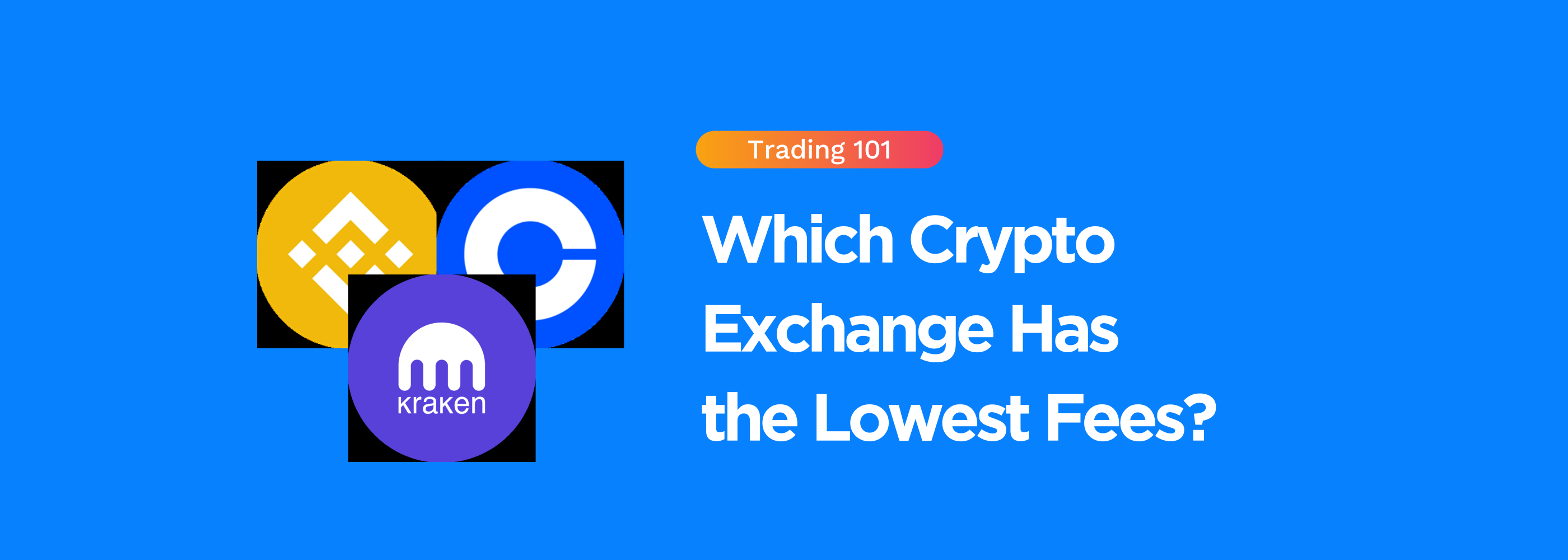
Let’s look at the specifics. Trading fees are a combination of spreads, commissions, and non-trading fees like withdrawal or inactivity charges.
- Pepperstone: On its popular Razor account, you can expect EUR/USD spreads to average around 0.1 pips, plus a commission of about $3.50 per lot per side. This all-in cost is one of the lowest available, making it ideal for high-frequency traders. Its Standard account has no commissions but slightly wider spreads, starting from 0.6 pips for EUR/USD. Pepperstone also scores well on non-trading fees, with no inactivity fees and free deposits and withdrawals for most methods.
- IC Markets: Similar to Pepperstone, its Raw Spread account offers an average EUR/USD spread of 0.1 pips with a $3.50 commission. It also provides a cTrader account with a lower $3.00 commission. This structure is highly attractive for scalpers and algorithmic traders. Non-trading fees are also minimal, with no charges for inactivity or most deposit/withdrawal options.
- IG: IG’s pricing is competitive but can be slightly higher than the raw spread brokers. Its standard account for EUR/USD typically has spreads around 0.8 pips. However, it offers rebates for high-volume traders, which can significantly lower costs. IG does have an inactivity fee if an account is dormant for two years, but its withdrawal and deposit fees are generally low.
- OANDA: OANDA is known for its commission-free pricing on its Standard account, with spreads for EUR/USD starting from around 0.9 pips. It also has a Core account with raw spreads and commissions, similar to Pepperstone. OANDA does charge an inactivity fee after 12 months, which is a point to consider for infrequent traders.
- eToro: eToro operates on a spread-only model, with no separate commissions for forex trades. Its spreads are wider than ECN brokers, often starting from 1.0 pips for EUR/USD. It also charges a flat withdrawal fee and inactivity fees, making it potentially more expensive for very active traders but simpler for beginners to understand.
Which Platforms Have the Strongest Regulation and Security?
IG and OANDA have some of the strongest regulatory frameworks and security measures in the industry, holding licenses from multiple top-tier authorities across the globe.

Trader security is paramount, and regulation is the best indicator of a broker’s commitment to protecting client funds. Here’s how they stack up:
- IG: IG is regulated by an extensive list of top-tier authorities, including the Financial Conduct Authority (FCA) in the UK, the Australian Securities and Investments Commission (ASIC), and the Commodity Futures Trading Commission (CFTC) in the US. As a publicly traded company on the London Stock Exchange, its financials are transparent. It provides negative balance protection and holds client funds in segregated accounts at major banks.
- OANDA: OANDA is also a regulatory heavyweight, with oversight from the FCA (UK), IIROC (Canada), ASIC (Australia), and the NFA (US), among others. This multi-jurisdictional regulation ensures it adheres to strict operational standards. Client funds are fully segregated, and traders in eligible regions are covered by investor compensation schemes.
- Pepperstone: Pepperstone is well-regulated by the FCA and ASIC, two of the world’s most respected financial watchdogs. It also holds licenses from other bodies like CySEC (Cyprus) and BaFin (Germany). Like its peers, it offers negative balance protection and segregates client money from its own operational funds.
- IC Markets: Regulated by ASIC and CySEC, IC Markets provides a secure trading environment. It adheres to strict capital requirements and offers negative balance protection. Client funds are kept in segregated trust accounts with top Australian banks, ensuring they are not used for company purposes.
- eToro: eToro is regulated by the FCA, ASIC, and CySEC. This ensures compliance with high standards of client fund protection, including segregated accounts and eligibility for compensation schemes in certain jurisdictions. Its long track record and large user base also add to its reputation for safety.
Which Platform Provides the Best User Experience for Beginners?
eToro offers the best user experience for beginners due to its incredibly intuitive interface, gamified design, and unique social copy trading features.
For a new trader, a platform’s usability can make or break their early experience. An overly complex interface can be intimidating.
- eToro: The platform is designed from the ground up for simplicity. The sign-up process is quick, and navigating the web and mobile apps feels more like using a social media app than a complex trading terminal. Its standout feature, CopyTrader, allows beginners to automatically mirror the trades of successful investors, providing a hands-on learning experience. The social feed also lets users interact, share ideas, and learn from the community.
- OANDA: OANDA’s proprietary fxTrade platform is also very user-friendly. It has a clean, uncluttered layout that makes finding information and placing trades straightforward. The platform includes powerful charting tools that are easy to use, and its mobile app is highly rated for its smooth performance and intuitive design. OANDA also provides a wealth of educational materials and market analysis to support new traders.
- IG: While IG’s platform is packed with advanced features, it remains surprisingly accessible. The onboarding process is well-structured, and the platform offers different layouts for varying experience levels. It includes integrated learning modules and news feeds that help beginners stay informed. Its demo account is an excellent tool for practicing without risk.
Which Platform Has the Most Comprehensive Customer Support?
IG provides the most comprehensive customer support, offering true 24/7 availability through multiple channels, including weekends when markets are closed.

Reliable customer support is essential, especially when you need help with a live trade or a funding issue.
- IG: IG’s support is exceptional. They offer 24/7 assistance via phone, live chat, and email. This is a significant advantage over competitors who typically only operate 24/5. Their support staff is known to be knowledgeable and professional, capable of resolving both technical and account-related queries efficiently.
- Pepperstone: Pepperstone offers award-winning 24/5 customer support. You can reach them through live chat, email, and phone. Their response times are generally very fast, especially on live chat, where you can often connect with an agent in under a minute. The quality of support is consistently rated as helpful and professional by users.
- OANDA: OANDA also provides 24/5 support through phone, live chat, and email. They have a detailed FAQ and help section on their website that can resolve many common issues without needing to contact an agent. Their support teams are located globally, providing localized assistance.
- IC Markets: With 24/7 support, IC Markets is also a strong contender. Their global support team is available via live chat, email, and phone to assist with any issues. They are particularly praised for their technical support, which is helpful for traders using MT4/MT5 or automated systems.
- eToro: eToro’s support is primarily available through a ticketing system, which can be slower than live chat or phone. However, for users with higher account tiers, they offer access to a dedicated account manager, which provides a more personalized level of service.
What are the Best Forex Platforms for Different Trading Styles?
The best forex platforms are highly dependent on your trading style, with day traders favoring Pepperstone for speed and beginners preferring eToro for its simplicity.
Choosing a platform isn’t a one-size-fits-all decision. A platform that works perfectly for a long-term investor might be completely unsuitable for a high-frequency scalper. The key is to match the platform’s strengths with your specific trading strategy, frequency, and experience level. For instance, some traders need the fastest possible execution and lowest spreads, while others value educational content and a supportive community above all else. Recognizing these differences helps you filter through the options and find the broker that will truly support your journey. Let’s look at which of our top platforms are best suited for two of the most common trader profiles: day traders and beginners.
What is the Best Forex Platform for Day Traders?
Pepperstone is the best forex platform for day traders due to its combination of rapid execution speeds, exceptionally low spreads, and support for powerful trading platforms like cTrader and TradingView.
Day traders execute multiple trades within a single day, aiming to profit from small price movements. For this strategy to be successful, several platform features are non-negotiable.
First, low trading costs are paramount. Since day traders open and close many positions, spreads and commissions can quickly add up and eat into profits. Pepperstone’s Razor account, with its raw spreads from 0.0 pips and a small commission, is designed specifically for this purpose. The all-in cost is minimal, allowing traders to capitalize on even the smallest market fluctuations. IC Markets offers a very similar structure and is also an excellent choice for the same reason.
Second, fast execution speed is critical. A delay of even a few milliseconds can result in slippage, where a trade is executed at a different price than intended. This can turn a winning trade into a losing one. Pepperstone and IC Markets have invested heavily in their server infrastructure, with servers located in major financial data centers like Equinix in New York and London. This co-location minimizes latency, ensuring orders are filled at lightning speed.
Finally, day traders need advanced charting tools and platforms. They rely on technical analysis to identify trading opportunities. Pepperstone provides access to MetaTrader 4, MetaTrader 5, cTrader, and TradingView. cTrader and TradingView, in particular, are lauded for their superior charting packages and user-friendly interfaces, offering advanced order types and deep market analysis tools that are perfect for intricate day trading strategies.
What is the Best Forex Platform for Beginners?
eToro is the best forex platform for beginners because its user-friendly interface, innovative copy trading system, and social features create a supportive and educational environment.
Starting out in forex can be daunting. Beginners need a platform that simplifies the trading process, reduces the learning curve, and provides tools to build confidence.
The most important factor for a beginner is ease of use. eToro’s platform is designed with simplicity in mind. Opening an account, depositing funds, and placing a trade are all straightforward processes. The mobile and web platforms are intuitive, avoiding the complex jargon and overwhelming layouts found in professional-grade terminals. This allows new traders to focus on learning the fundamentals of the market rather than struggling with the software.
Next, educational and social features are invaluable. eToro’s standout feature is CopyTrader. It allows beginners to browse through the profiles of successful traders, view their performance history, and automatically copy their trades in real-time. This is not just a way to potentially profit; it’s a powerful educational tool that lets novices see how experienced traders manage their portfolios and react to market events. The social feed further enhances this, creating a community where users can ask questions and share insights.
Lastly, a low barrier to entry is key. eToro offers low minimum deposits, allowing beginners to start with a small amount of capital. It also provides a free demo account loaded with virtual money, which is the perfect risk-free environment to practice trading strategies and get comfortable with the platform before committing real funds. OANDA is another strong option for beginners, offering a similarly user-friendly proprietary platform and extensive educational resources.
How Can You Choose the Right Forex Trading Platform?
To choose the right forex platform, you must systematically evaluate brokers based on five key criteria: your personal trading needs, regulatory security, fee structure, platform usability, and customer support quality.
Selecting the right trading platform is one of the most important decisions you’ll make as a trader. The broker you choose acts as your primary partner in the markets, and their reliability, costs, and tools will directly impact your trading performance. Following a structured approach can help you cut through the marketing noise and find a platform that is a perfect fit.
Here is a step-by-step guide to help you make an informed choice:
1. Define Your Trading Profile and Needs
Before you even look at a single broker, you need to understand yourself as a trader. Ask yourself a few key questions. Are you a complete beginner who needs educational resources and a simple interface? Are you an active day trader who requires low spreads and fast execution? What currency pairs or other assets do you plan to trade? How much capital are you starting with? Your answers will create a personal checklist that you can use to measure each platform against. For example, a scalper would prioritize a broker with raw ECN spreads, while a long-term investor might care more about low overnight swap fees.
2. Verify Regulation and Security Above All Else
This is the most critical step and should never be compromised. The security of your funds is non-negotiable. Look for brokers regulated by top-tier financial authorities. These include the FCA (UK), ASIC (Australia), CySEC (Cyprus), and the CFTC/NFA (USA). Regulation by one of these bodies ensures the broker adheres to strict standards, such as keeping client funds in segregated accounts, which protects your money in case the broker becomes insolvent. Also, check if they offer negative balance protection, a feature that prevents you from losing more money than you have in your account.
3. Conduct a Detailed Analysis of the Fee Structure
Trading costs can have a major impact on your profitability. Don’t just look at the advertised minimum spread. Dig deeper into the typical or average spreads for the currency pairs you trade most often. Compare commission-based accounts (like Pepperstone’s Razor) with spread-only accounts to see which is more cost-effective for your trading volume. Also, look out for non-trading fees, which can include charges for deposits and withdrawals, currency conversion, or account inactivity. A platform with low spreads might be less appealing if it has high withdrawal fees.
4. Test the Platform and Trading Tools
A platform’s usability and features are highly subjective. What one trader finds intuitive, another may find confusing. This is why you should always take advantage of a demo account. Open a demo with your top two or three choices and trade with virtual money for at least a week. During this trial, assess the following. Is the platform stable and fast? Is placing, modifying, and closing orders easy? Are the charting tools sufficient for your analysis? Does the mobile app have all the functionality you need? This hands-on experience is the best way to determine if a platform feels right for you.
5. Evaluate the Quality of Customer Support
You might not think about customer support until you desperately need it. Before you commit real money, test the broker’s support channels. Send a query via live chat or email and see how quickly and effectively they respond. Check their hours of availability, do they offer 24/5 or 24/7 support? A broker with responsive, knowledgeable, and easily accessible support can be a lifesaver when you encounter a technical issue or have an urgent question about your account.
What Other Features and Concepts Define a Forex Platform?
Beyond fees and security, a forex platform is defined by its broker model, supported third-party software, community features like copy trading, integrated analysis tools, and risk-free practice accounts. Furthermore, these elements determine how you interact with the market, the resources at your disposal, and your overall potential for success as a trader.
What is the Difference Between an ECN and a Market Maker Broker?
The primary difference lies in how your trades are executed. An ECN (Electronic Communication Network) broker acts as a direct intermediary, passing your orders into a network of liquidity providers like banks and other financial institutions. This model fosters a competitive pricing environment, often resulting in very tight spreads. In contrast, a Market Maker broker creates its own internal market. They take the opposite side of your trades, effectively betting against you. This model can create a potential conflict of interest, as the broker profits when a client loses.

Understanding this distinction helps you choose a broker that aligns with your trading style.
- ECN brokers are often preferred by experienced traders who value transparency and fast execution. They typically charge a fixed commission per trade since their profit is not derived from the spread.
- Market Makers are often attractive to beginners because they may offer commission-free trading (their fee is built into a wider spread) and lower minimum deposit requirements.
- Execution with an ECN is generally faster and less prone to requotes, as orders are filled directly from the interbank market. Market makers may experience delays or requotes during high volatility.
Should You Use MetaTrader 4 or MetaTrader 5?
The choice between MetaTrader 4 (MT4) and MetaTrader 5 (MT5) depends on your trading needs and technical proficiency. MT5 is the technologically superior platform, offering more asset classes and advanced tools, while MT4 remains popular due to its massive, established ecosystem of automated trading robots. Many traders stick with MT4 simply because their preferred custom indicators or Expert Advisors (EAs) were built using its MQL4 programming language and have not been updated for M_T_5’s MQL5.
This decision often comes down to what you plan to trade and how you plan to trade it.
- Programming and Backtesting: MT5 uses MQL5, a more advanced object-oriented language that allows for faster and more complex strategy testing. Its backtesting capabilities are multi-threaded and use real tick data, providing more accurate results than MT4.
- Asset Support: MT4 was designed primarily for forex trading. MT5 was built from the ground up as a multi-asset platform, providing better native support for trading stocks, futures, and commodities through a centralized exchange.
- Built-in Tools: MT5 comes with more standard technical indicators, more charting timeframes, and a built-in economic calendar, features that require third-party add-ons in MT4.
Are Social and Copy Trading Features Worthwhile for New Traders?
Social and copy trading features can be very worthwhile for new traders, provided they are used with caution and as a learning tool. These features allow you to automatically replicate the trades of experienced investors, offering a hands-on way to participate in markets while observing professional strategies. Platforms like eToro and AvaTrade have built extensive communities around this concept, enabling users to view the performance metrics, risk scores, and trade histories of top performers before deciding to copy them.
However, relying solely on these features carries significant risks.
- Past Performance: A trader’s historical success does not guarantee future returns. Market conditions change, and even the best traders have losing streaks.
- Risk Management: Blindly copying another trader means you are also adopting their risk appetite, which may not align with your own. It is essential to use a platform’s risk management tools, such as stop-loss orders on the copy relationship itself.
- Learning vs. Following: The greatest value comes from analyzing why a copied trader enters and exits positions, rather than just passively mirroring their actions. Use it to learn market analysis, not as a get-rich-quick scheme.
What are the Most Important Trading Tools a Platform Should Offer?
Beyond standard charts and order types, the most important trading tools provide deeper market insight and analytical power. A top-tier platform should offer an integrated economic calendar, advanced technical indicators, market sentiment gauges, and pattern recognition software. These tools empower traders to make more informed decisions based on a combination of fundamental, technical, and sentiment analysis. Without them, you are trading with incomplete information compared to other market participants.
 Which Platform Has the Most Comprehensive Customer Support?
Look for platforms that integrate these advanced functionalities directly into their interface.
- Economic Calendar: This tool is essential for fundamental traders. It tracks major economic events, such as interest rate announcements, non-farm payroll reports, and inflation data, allowing you to anticipate periods of high market volatility.
- Advanced Technical Indicators: Go beyond basic moving averages. A good platform includes tools like Ichimoku Clouds for identifying trends, Fibonacci retracement levels for pinpointing support and resistance, and Pivot Points for gauging daily market direction.
- Sentiment Analysis: Tools like IG’s Client Sentiment or a Commitment of Traders (COT) report indicator show how other traders are positioned. This can provide valuable contrarian signals or confirm a trend’s strength.
Do Forex Platforms Offer Demo Accounts?
Yes, virtually every reputable forex platform offers a free demo account to prospective and current clients. A demo account is a simulated trading environment that mirrors the live market but uses virtual funds. This allows you to practice executing trades, test different strategies, and become comfortable with the platform’s software and tools without risking any real capital. It is an indispensable resource for traders at all levels, from beginners learning the basics to experts testing a new automated strategy.

To make the most of a demo account, it is best to use it with a clear purpose.
- Realistic Simulation: Set your demo account balance to the same amount you plan to deposit in a live account. This helps you practice proper position sizing and risk management.
- Platform Familiarization: Use the demo period to explore every feature of the platform. Test different order types, customize your charts with various indicators, and learn how to navigate the user interface quickly and efficiently.
- Strategy Testing: A demo account is the perfect place to develop and refine a trading plan. Follow your strategy consistently for several weeks to see how it performs under different market conditions before you transition to trading with real money.