

Blog
ECN vs STP Brokers: What are the Key Differences in Order Execution and Pricing?

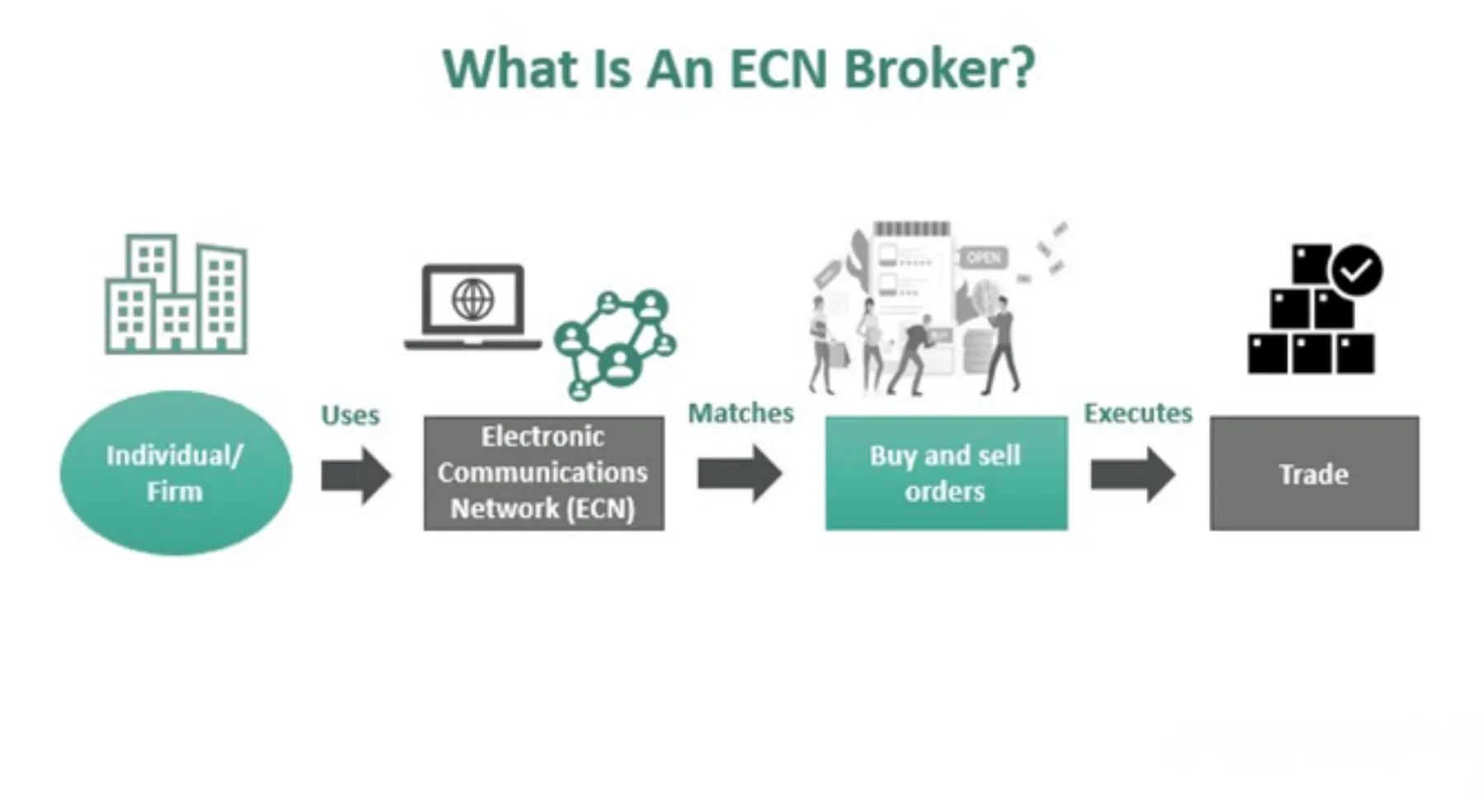
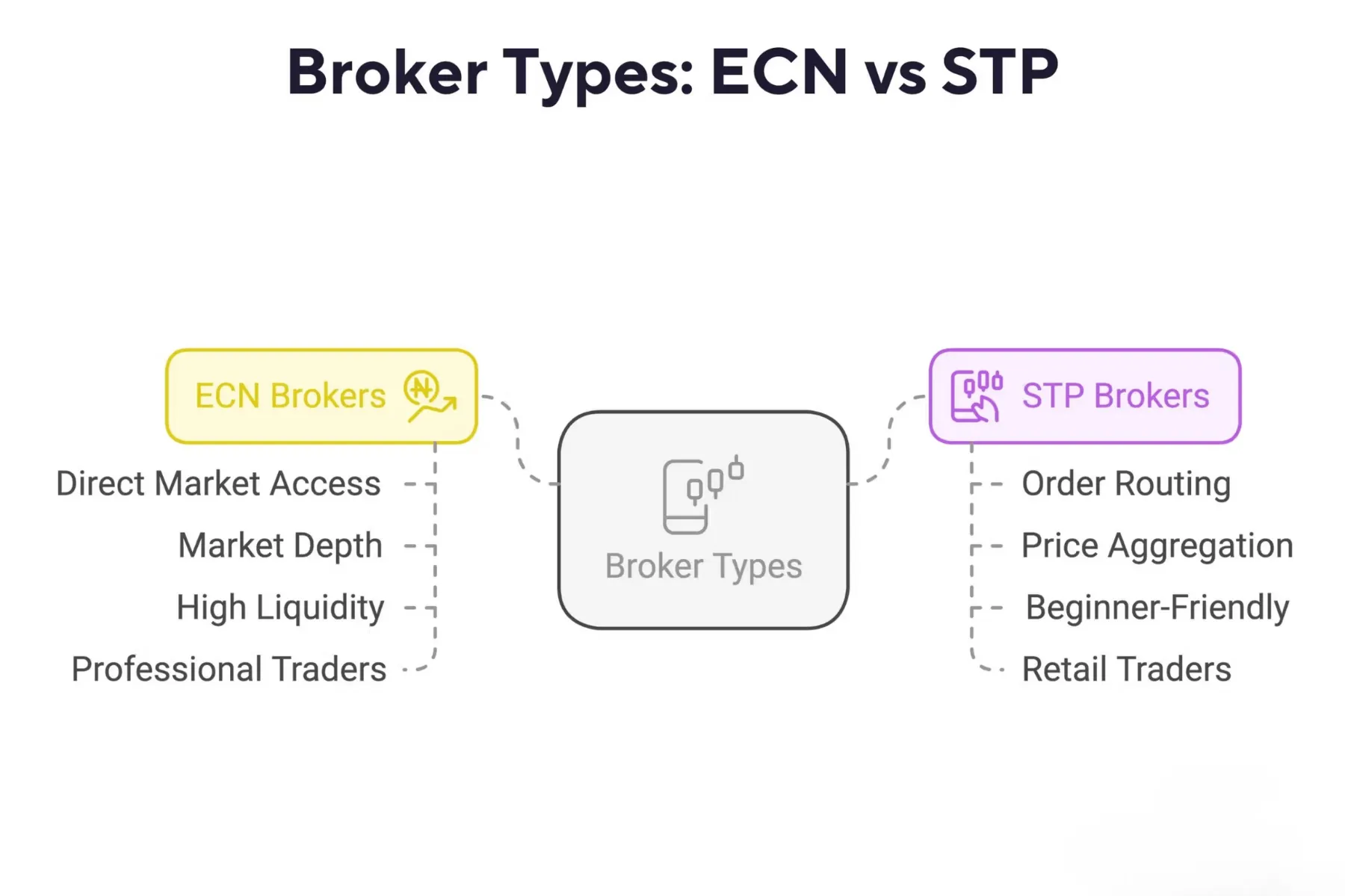
The key differences between ECN and STP brokers lie in their order execution models and pricing structures. ECN brokers connect traders directly within an electronic network of liquidity providers, offering raw market spreads plus a separate commission, while STP brokers route orders to external liquidity providers, typically charging their fee through a markup on the spread. This core distinction impacts everything from cost and speed to the level of transparency a trader experiences. ECN acts as a transparent hub where all participants interact, while STP functions more like a bridge connecting the trader to a select pool of liquidity.
In terms of trade execution, ECN is generally considered more transparent than STP because it provides traders with access to the Depth of Market (DOM), which shows the live order book of buy and sell orders from all network participants. This allows you to see the available liquidity at various price levels. In contrast, the STP model does not typically offer this level of visibility. Your order is sent to the broker’s liquidity pool, and the routing process happens behind the scenes, making it less transparent.
The pricing models differ primarily in how the broker earns revenue. ECN brokers charge a fixed, transparent commission per trade on top of very tight, variable spreads sourced directly from the market, whereas most STP brokers incorporate their fee into a slightly wider, marked-up spread. For example, an ECN broker might offer a 0.1 pip spread on EUR/USD and charge a $6 commission per lot, while an STP broker might offer a 0.7 pip spread on the same pair with no separate commission.
Choosing the right broker type is a foundational decision for any trader. Your choice will directly influence your trading costs, execution quality, and overall market visibility. Whether the commission-based transparency of an ECN or the all-in-one spread pricing of an STP is better for you depends on your trading strategy, frequency, and capital. This article will break down each model so you can make an informed decision.
What is an ECN Broker?
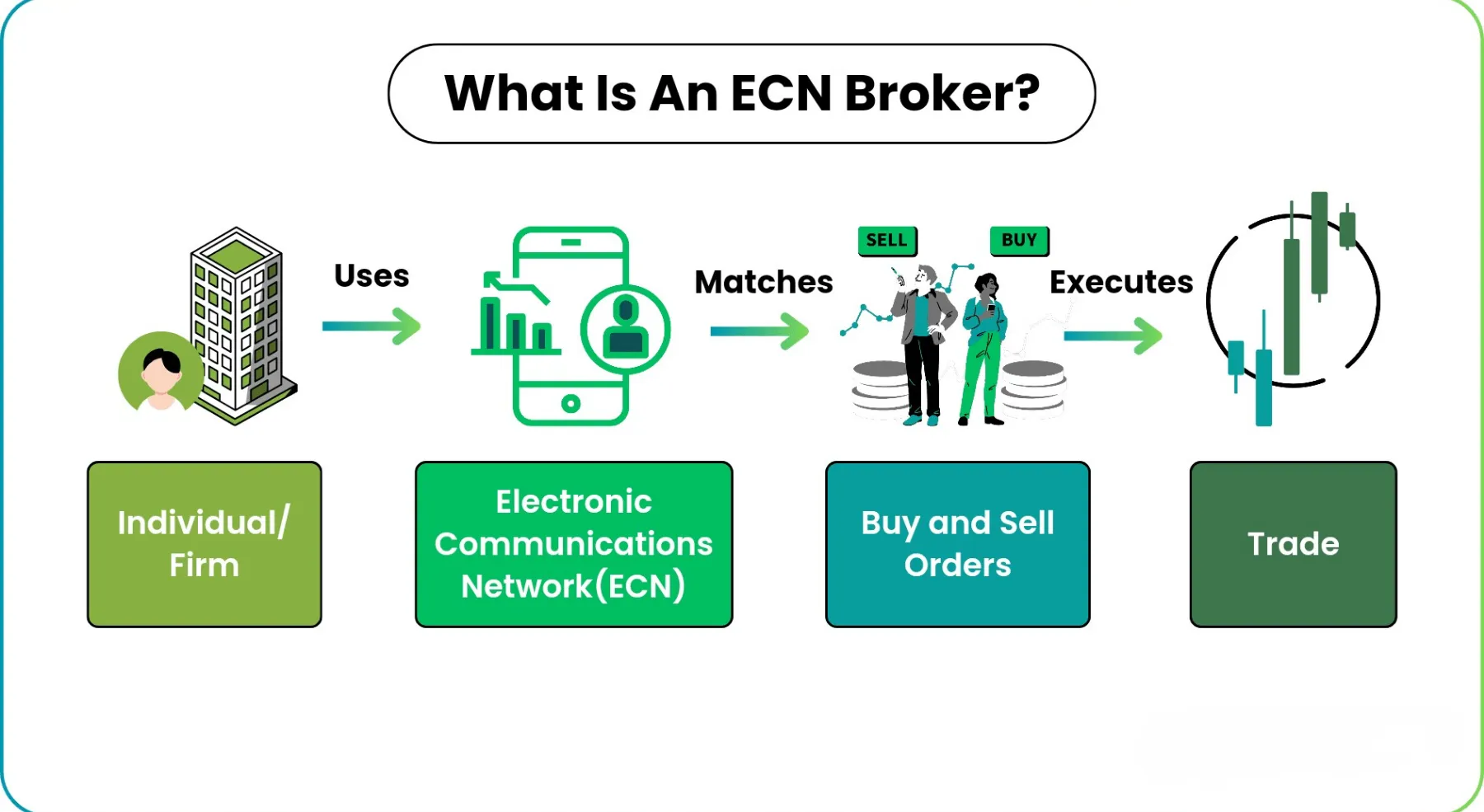
An ECN broker is a financial intermediary that uses an Electronic Communication Network (ECN) to give traders direct access to other participants in currency and other financial markets without a dealing desk. This model essentially creates a transparent, centralized marketplace where buy and sell orders from different sources can be matched against each other. Instead of the broker acting as a counterparty to your trade, it simply acts as a facilitator, connecting you to a deep pool of liquidity. The core principle of the ECN model is to eliminate the traditional middleman, providing a more direct and efficient trading environment. This direct access means traders are interacting with real market prices from a variety of sources.
Here’s the breakdown of how this model operates and what makes it unique.
How Does an ECN Broker Execute Orders?
An ECN broker executes orders by placing them directly into a network where they are automatically matched with the best available opposing order from a pool of liquidity providers. This process is entirely electronic and removes any potential for intervention from a dealing desk. When you place a buy order, the ECN system scans the network for the lowest corresponding sell order from participants like banks, institutions, or even other retail traders using the same broker. Once found, the trade is executed instantly.
For example, imagine you want to buy 1 standard lot of EUR/USD. You place the order through your ECN broker’s platform. The ECN immediately broadcasts your order to its network. Within that network, a major bank might have a sell order for EUR/USD at the exact price you want, or perhaps another trader is looking to sell. The ECN’s matching engine finds the best available counterparty and executes the trade. The broker’s role is purely to connect the two parties.
A key feature of this execution method is the Depth of Market (DOM), also known as Level II pricing. ECN brokers provide their clients with a view of the order book, which displays the buy and sell orders for a specific asset at different price levels. This gives you unparalleled transparency, allowing you to gauge market sentiment and identify areas of high liquidity. You are not just seeing a single bid and ask price; you are seeing the entire supply and demand landscape for that instrument.
Where Do ECN Brokers Get Their Liquidity?
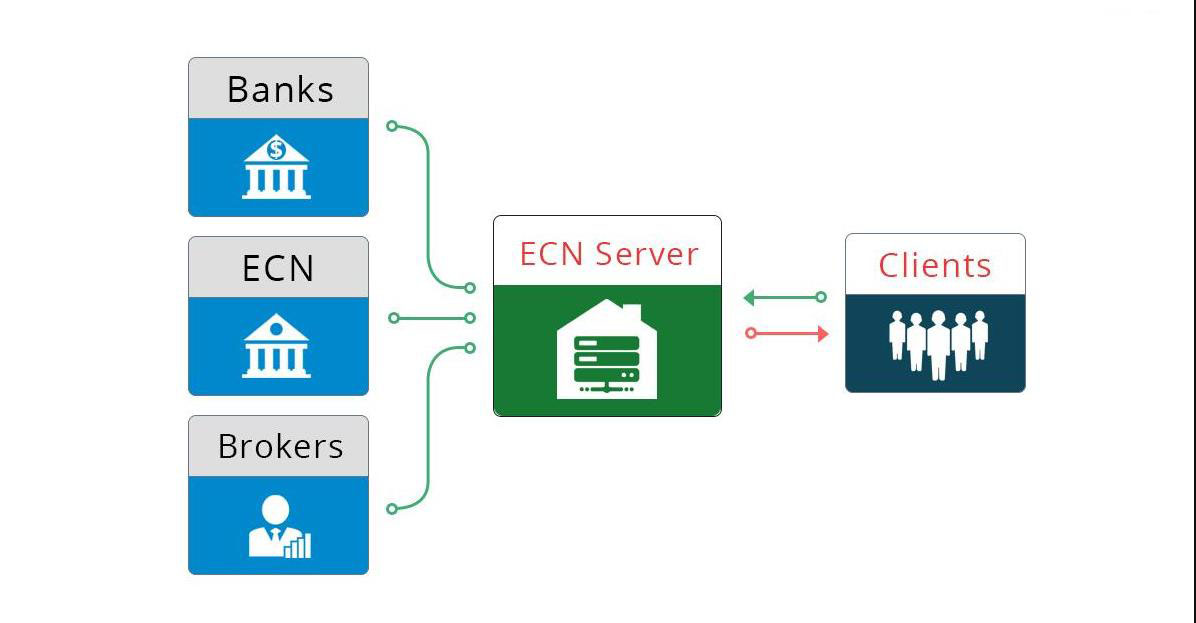
ECN brokers aggregate liquidity from a diverse range of top-tier financial institutions. This creates a deep and competitive marketplace, which is a major benefit for traders. These liquidity providers are the backbone of the ECN, constantly feeding buy and sell orders into the network.
The typical sources of liquidity for a true ECN broker include:
- Tier-1 Banks: These are major global banks like JPMorgan Chase, Deutsche Bank, Citi, and Barclays. They are the largest players in the foreign exchange market and provide a significant amount of liquidity.
- Hedge Funds and Investment Firms: Large institutional trading firms actively participate in the markets and contribute to the ECN’s order book.
- Other ECNs: ECN networks can connect to one another, further deepening the pool of available liquidity and tightening spreads.
- Proprietary Trading Firms: These firms trade with their own capital and are constantly placing large orders, which adds to the overall market depth.
The result of combining these sources is a very deep order book. For a trader, this means several things. First, you get access to raw market spreads, which can be incredibly tight and sometimes even zero during periods of high liquidity. Second, a deep liquidity pool minimizes the risk of slippage, which is when your order is filled at a different price than requested. With so many participants, large orders can be absorbed by the market without causing drastic price movements, ensuring better and more reliable trade execution.
What is an STP Broker?
An STP broker is a type of no-dealing-desk broker that passes client orders directly to its liquidity providers using Straight Through Processing (STP) technology. Unlike a market maker broker who takes the other side of a client’s trade, an STP broker acts as a silent bridge, connecting the trader’s order to the interbank market. This model ensures that there is no conflict of interest, as the broker does not profit from a client’s losses. Instead, they make their money either by adding a small markup to the spreads they receive from their liquidity providers or by charging a commission. The entire process is automated, designed for speed and efficiency.
Let’s explore the mechanics of this model to see how it differs from others.
How Does an STP Broker Execute Orders?
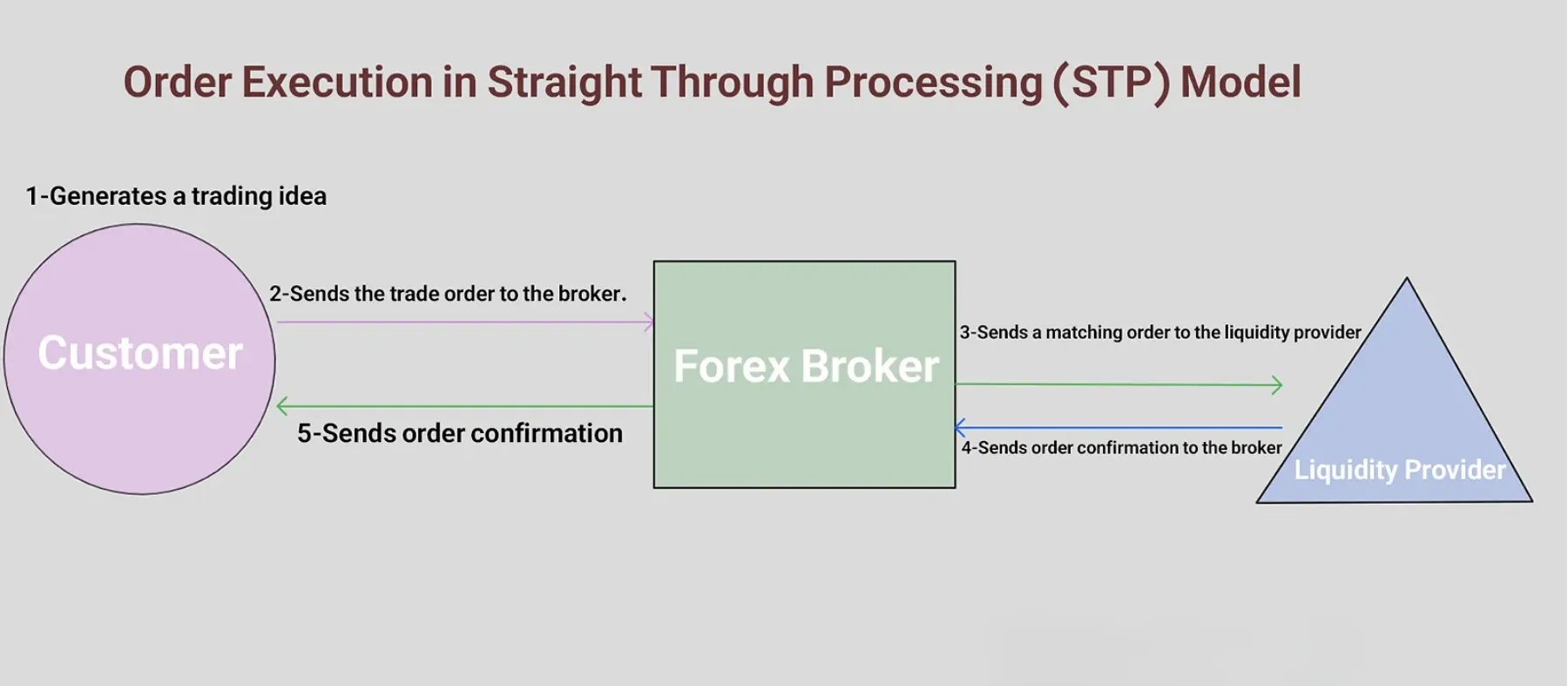
An STP broker executes orders by routing them to one or more of its liquidity providers, who then fill the trade. When you click “buy” or “sell” on your trading platform, the STP broker’s system instantly forwards that request to its pool of liquidity providers. These providers, which are typically large banks or financial institutions, compete to offer the best bid and ask prices. The STP system automatically selects the best available price and executes your trade at that price. The broker effectively serves as a conduit for the transaction.
For instance, if you place a buy order for GBP/JPY, your STP broker might have connections to three different liquidity providers. Provider A might offer a price of 195.50, Provider B a price of 195.51, and Provider C a price of 195.49. The STP technology will automatically route your order to Provider C to be filled at 195.49, ensuring you get the best available price from its network at that moment.
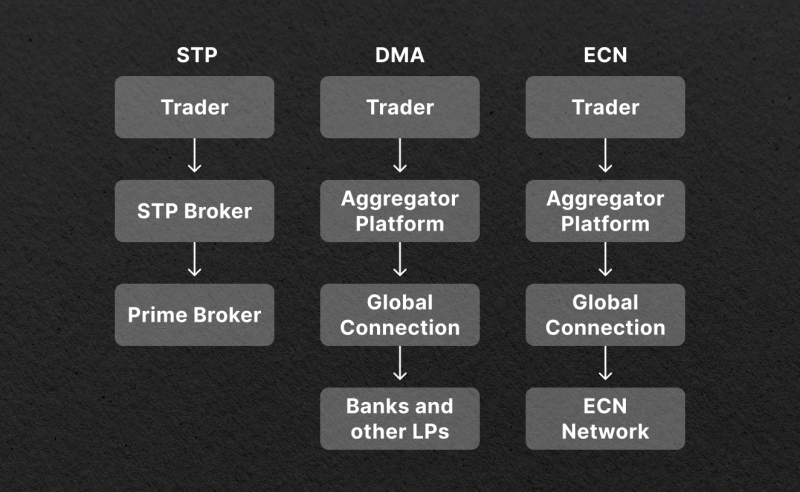
While this is a no-dealing-desk model, it’s important to understand the difference from an ECN. An STP broker acts as a central router, sending orders out to a group of providers. An ECN, on the other hand, creates a central hub or network where all participants’ orders can interact with each other. You can think of STP as a one-to-many connection, while an ECN is a many-to-many network. This subtle difference has implications for transparency and pricing.
Who are the Liquidity Providers for STP Brokers?
The liquidity providers for STP brokers are the institutions that actually execute the trades. These are the players in the interbank market who are willing to buy and sell currency pairs and other assets. An STP broker cultivates relationships with a number of these providers to create a pool of liquidity for its clients.

Common liquidity providers for STP brokers include:
- Prime Brokers: These are large financial institutions, often parts of investment banks like Goldman Sachs or Morgan Stanley, that provide a wide range of services to other market participants, including access to liquidity.
- Large Investment Banks: Similar to ECNs, STP brokers connect with major banks that are active in the forex market.
- Aggregators: Some STP brokers connect to liquidity aggregators that pool prices from multiple sources, which can enhance the quality of the price feed.
The size and quality of an STP broker’s liquidity pool are very important. A broker with only one or two liquidity providers might not be able to offer consistently competitive pricing. If their sole provider experiences technical issues or widens spreads significantly during news events, the broker’s clients will be directly affected. In contrast, a broker with a diverse pool of ten or more liquidity providers can offer more stable and competitive pricing, as there is greater competition to fill client orders. However, this pool is generally smaller and less diverse than a true ECN network, which can sometimes result in slightly wider spreads.
What Are the Core Differences in Order Execution Models?
The core difference is that ECN execution involves matching client orders within a transparent, centralized network, while STP execution involves routing client orders to external liquidity providers. While both are non-dealing desk models designed to offer direct market access, the way they handle your trade request is fundamentally different. The ECN model creates an interactive marketplace, whereas the STP model acts as an efficient bridge to a select group of market participants. These structural differences lead to variations in transparency, speed, and overall trading experience.
Here’s a detailed comparison of these key distinctions.
Is ECN Execution More Transparent than STP?
ECN execution is definitively more transparent than the standard STP model. This high level of transparency is one of the main attractions of using an ECN broker. The primary reason for this is the Depth of Market (DOM), or Level II data, that ECN brokers provide. The DOM is essentially the exchange’s order book. It shows you a list of the current buy and sell orders for a specific asset, organized by price level. You can see the volume of orders waiting to be executed at prices above and below the current market price. This gives you a clear picture of the supply and demand dynamics and helps you make more informed trading decisions. You can see where large orders are clustered, giving you insight into potential support and resistance levels.

In contrast, the STP model typically operates as more of a “black box.” When you place an order with an STP broker, you see the best bid and ask price that the broker has aggregated from its liquidity pool. However, you generally cannot see the underlying order book. You don’t know which specific liquidity provider is filling your trade, nor can you see the other pending orders. The routing and execution process is handled internally by the broker’s system, and the trader is shielded from these details. While this simplifies the trading experience, it comes at the cost of the granular market insight that an ECN provides.
Which Model Typically Offers Faster Execution Speeds?
Both ECN and STP models are known for their fast execution speeds, as they are both fully electronic systems that eliminate manual intervention. However, ECN is often considered to have a slight edge in terms of raw speed. This is because in an ECN model, order matching happens within the network itself. The physical distance the order data has to travel is often minimal, especially if a trader uses a Virtual Private Server (VPS) located in the same data center as the broker’s ECN server. The matching engine is designed for ultra-low latency, and trades can be executed in milliseconds.

With an STP broker, the speed of execution depends on an additional step: the connection between the broker’s server and its external liquidity providers’ servers. This introduces another potential point of latency. If the network connection to a liquidity provider is slow, or if the provider’s own system is slow to respond, it can delay the trade fill. A well-capitalized STP broker will invest heavily in high-speed, dedicated fiber optic lines to its liquidity providers to minimize this latency.
Ultimately, the actual speed you experience depends on many factors, including your own internet connection, the broker’s server infrastructure, and the distance to that server. While ECN has a structural advantage for potential speed, a top-tier STP broker with excellent infrastructure can offer execution that is virtually indistinguishable in speed for the average retail trader.
How Do ECN and STP Pricing Structures Compare?
ECN pricing is based on raw market spreads plus a fixed, separate commission, whereas STP pricing is typically based on a broker-marked-up spread with no separate commission. This fundamental difference in how brokers generate revenue directly affects a trader’s costs. The ECN model separates the cost of the asset (the spread) from the cost of the service (the commission), offering transparency. The STP model combines these costs into a single figure, offering simplicity. Choosing between them depends on whether a trader prioritizes the lowest possible raw spread or a simpler, all-in cost structure.
Let’s look at how you pay for your trades in each of these models in more detail.
Is the ECN Pricing Model Based on Commission?
Yes, the classic ECN pricing model is centered around a fixed commission charged on top of raw, variable spreads. With an ECN broker, you are getting direct access to the prices from the interbank market. These prices, sourced from numerous liquidity providers competing with each other, result in extremely tight spreads. For major currency pairs like EUR/USD or USD/JPY, the spread can often be as low as 0.0 or 0.1 pips during active trading sessions.

Since the broker is not making money from the spread, they charge a separate fee for facilitating the trade. This fee is the commission. It is usually a fixed amount charged per “lot” (100,000 units of the base currency) traded. For example, a broker might charge a commission of $3.50 per lot to open a position and another $3.50 to close it, for a total round-trip commission of $7.00 per standard lot.
This pricing structure is highly transparent. You can clearly see the raw market price and exactly how much you are paying the broker for their service. This model is often favored by active traders, such as scalpers and day traders, because the very tight spreads allow them to enter and exit positions with minimal cost, even if the commission adds up over many trades. The total cost of trading is often lower for high-volume traders with an ECN model compared to a spread-based model.
Is the STP Pricing Model Based on Spreads?
Yes, the most common pricing model for STP brokers is based on the spread. In this model, the broker generates revenue by adding a small markup to the spread it receives from its liquidity providers. The process is straightforward: the broker gets the best bid and ask prices from its liquidity pool and then widens that spread by a certain amount. This widened spread is what you, the trader, see on your platform.
For example, a liquidity provider might offer the broker a EUR/USD spread of 0.2 pips. The STP broker might then add its own markup of 0.6 pips, presenting a final spread of 0.8 pips to its clients. The 0.6 pip difference is the broker’s profit on the trade. This is often advertised as “commission-free” trading, which can be appealing to beginners because the cost is simple to understand. All costs are built directly into the buy and sell prices you see.
It’s worth noting that the lines can sometimes blur. Some STP brokers also offer hybrid accounts that function more like an ECN model. They might offer a “raw spread” account where they pass on the direct prices from their liquidity providers and charge a commission instead of a markup. This gives traders a choice between a simple, all-in-one spread model or a more transparent commission-based model, even under the same STP broker.
What are the Advantages and Disadvantages of Each Broker Type?
ECN brokers offer superior transparency and tighter spreads but charge commissions and often require higher deposits, while STP brokers provide simpler, commission-free pricing but with wider spreads and less market visibility. Neither model is inherently better than the other; the best choice depends entirely on a trader’s individual needs, strategy, and capital. An active scalper might prefer the raw spreads of an ECN, while a long-term swing trader might prefer the simplicity of an STP account.
Understanding these pros and cons will help you decide which model fits your trading style and financial goals.
What are the Pros and Cons of Using an ECN Broker?
Using an ECN broker comes with a distinct set of benefits and drawbacks related to its transparent, network-based model. These factors are especially important for professional and high-volume traders to consider.
Pros of ECN Brokers:
- Tighter Spreads: By providing direct access to a deep pool of liquidity providers, ECNs offer some of the tightest spreads available, often starting from 0.0 pips on major pairs.
- High Transparency: The provision of Depth of Market (DOM) data gives traders a complete view of the order book, showing real-time supply and demand. This level of insight is unmatched by other models.
- No Conflict of Interest: The broker profits from a fixed commission regardless of whether you win or lose. They have no incentive to trade against you and benefit when you trade more, aligning their interests with yours.
- Minimal Slippage and Requotes: The deep liquidity in the ECN network means that large orders can be filled with minimal price impact, reducing the likelihood of slippage or rejected orders (requotes).
Cons of ECN Brokers:
- Commissions on Every Trade: A fixed commission is charged for opening and closing every position. For traders with small account sizes or who trade infrequently, this can feel like an added complexity and cost.
- Higher Minimum Deposits: True ECN accounts often require a larger initial investment compared to standard STP accounts, making them less accessible for beginners.
- Variable Spreads: While spreads are tight, they are not fixed. During times of high market volatility or low liquidity (like major news releases or overnight), spreads can widen substantially.
What are the Pros and Cons of Using an STP Broker?
STP brokers offer a balance of direct market access and simplicity, making them a popular choice for a wide range of retail traders. However, this accessibility comes with its own trade-offs.
Pros of STP Brokers:
- Simpler Cost Structure: The all-in-one spread pricing is straightforward and easy for new traders to understand. There are no separate commission calculations to worry about.
- Often Commission-Free: Most standard STP accounts are marketed as “commission-free,” which is psychologically appealing and simplifies profit and loss calculations.
- Direct Market Access: Like ECNs, STP brokers operate on a no-dealing-desk model, which removes the main conflict of interest present with market makers.
- Lower Minimum Deposits: STP accounts are generally more accessible, often allowing traders to start with a much smaller amount of capital than required for ECN accounts.
Cons of STP Brokers:
- Wider Spreads: The broker’s markup is built into the spread, meaning the spreads you trade on will almost always be wider than the raw spreads available on an ECN platform.
- Less Transparency: STP brokers typically do not provide Depth of Market data. You cannot see the underlying order book, and the process of routing your order to a liquidity provider is not visible to you.
- Potential for Slippage: If an STP broker has a small pool of liquidity providers, there is a higher chance of slippage during volatile market conditions compared to the deep, multi-participant ECN network.
What are Other Important Considerations for Forex Broker Models?
Beyond execution and pricing, traders should evaluate a broker model’s suitability for specific strategies, potential conflicts of interest, and handling of market volatility. Furthermore, understanding how these models differ from others, like Market Makers, and how they can be combined provides a more complete picture for making an informed decision.
Which Broker Type is Better for Scalpers and High-Frequency Traders?
For scalpers and high-frequency traders, the ECN model is almost always the superior choice. The success of these strategies depends on executing a large number of trades to capture very small price movements, which means that transaction costs and execution speed are paramount. ECN brokers provide direct access to a network of liquidity providers, resulting in the tightest possible spreads, often starting from 0.0 pips on major pairs. While traders pay a fixed commission per trade, this transparent cost structure is highly predictable and more cost-effective for high-volume trading than the wider, marked-up spreads found with many STP brokers.
Additionally, the ECN environment offers other critical advantages for these advanced traders.
- Superior Execution Speed: Orders are matched and executed within the ECN network with minimal delay, reducing the risk of slippage negatively impacting tiny profit margins.
- Deep Liquidity: Access to a large pool of liquidity providers ensures that even large orders can be filled with minimal price impact, which is essential for institutional-level trading.
- No Requotes: The system automatically fills orders at the best available price, preventing frustrating requotes that can cause missed trading opportunities during fast-moving markets.
Do ECN or STP Brokers Have a Conflict of Interest with Traders?
A significant advantage of both ECN and STP brokers is the minimized conflict of interest with their clients. Both are classified as No Dealing Desk (NDD) models, meaning they do not take the opposite side of a trader’s position. Instead, they act as intermediaries, passing client orders directly to the interbank market or a pool of liquidity providers. Their business model is built on generating revenue from trading volume. ECN brokers charge a commission on each trade, while STP brokers typically add a small, fixed markup to the raw spreads they receive from their liquidity providers.
This structure creates a positive alignment between the broker and the trader.
- Profit from Volume: Since the broker profits from commissions or spread markups, they have a vested interest in their clients trading frequently and for a long time. A successful, profitable trader is more likely to continue trading.
- No Incentive for Client Losses: Unlike a Market Maker, an NDD broker does not directly profit when a client loses a trade. A client’s loss does not become the broker’s gain, removing the primary source of conflict.
- Transparency: The NDD model promotes greater transparency in pricing and execution, as the broker is simply a conduit to the real market rather than the market itself.
How Do ECN and STP Brokers Handle Slippage and Requotes?
Because both ECN and STP brokers execute orders at live market prices, slippage is a natural and expected occurrence, especially during periods of high volatility or low liquidity. Slippage refers to the difference between the expected price of a trade and the price at which the trade is actually executed. Since NDD brokers send orders to be filled by external liquidity providers, they cannot guarantee a specific price. If the market moves between the time an order is placed and when it is filled, the final price may differ. This can be negative, where the fill price is worse than requested, or positive, where the fill price is better.

However, one of the main benefits of these models is the near-complete absence of requotes.
- Market Execution: ECN and STP brokers use a market execution model. This means their system is designed to fill an order at the next best available price, whatever that may be.
- No Dealing Desk Intervention: A requote happens when a broker, typically a dealing desk, is unwilling to fill an order at the requested price and instead offers a new price. This requires the trader to accept or decline, causing delays.
- Slippage Instead of Requotes: With an NDD broker, instead of receiving a requote, the order is simply filled at the prevailing market rate, resulting in slippage. Most traders prefer this immediate execution over the delays caused by requotes.
What is the Difference Between an STP Broker and a Market Maker?
The fundamental difference between an STP broker and a Market Maker lies in how they handle client orders and manage risk. An STP broker acts as a bridge, connecting a trader’s order directly to the broader market. A Market Maker, on the other hand, is the counterparty to the trade, effectively creating a market for its clients. The STP model is a “No Dealing Desk” system where orders are passed through to external liquidity providers, like banks or other financial institutions. The broker profits by adding a markup to the spreads from these providers.
A Market Maker, also known as a Dealing Desk broker, operates a closed system with key operational differences.
- Counterparty to Trades: When a client places a buy order, the Market Maker sells to them. When a client sells, the Market Maker buys from them. The broker directly profits if the client loses the trade.
- Risk Management: Market Makers manage their risk by internalizing orders. They may hedge their net exposure in the real market, but for the most part, they absorb the risk of their clients’ positions.
- Price Control: Market Makers set their own bid and ask prices, which are based on, but not identical to, the interbank market rates. This gives them control over the spreads offered to clients.
Can a Broker be Both ECN and STP?
Yes, it is common for a broker to operate using a hybrid model that incorporates elements of both ECN and STP systems. The terms are not always mutually exclusive, as STP is a technology for routing orders, while ECN refers to a specific type of network where orders are matched. In many cases, a broker will use STP technology to connect a trader’s platform directly to an ECN network. Here, the STP protocol acts as the “Straight Through Processing” pipeline that delivers the order to the ECN’s central order book for execution against orders from other market participants.

This blending of technologies allows brokers to offer flexible solutions tailored to different types of traders.
- Hybrid Execution: A broker might offer a standard account that uses an STP model to route orders to a select group of liquidity providers. At the same time, they could offer a professional account that provides direct ECN access for lower spreads and commissions.
- Tiered Liquidity: Some brokers use an STP system to internally aggregate orders before sending them to an ECN. This allows them to offer competitive pricing to retail clients while still benefiting from the deep liquidity of an ECN environment.
- Clarity is Key: Because these models can be combined, it is important for traders to read a broker’s execution policy carefully to understand exactly how their orders are being handled.