

Blog
What are the Best Forex Signal Providers Reviewed for Accuracy, Cost, and Support?


The best forex signal providers for accuracy, cost, and support offer a blend of verified performance, transparent pricing, and responsive service. Top choices for 2024 include Learn 2 Trade for its educational approach, 1000pip Builder for its independently verified track record, and ForexSignals.com for its live trading community. The ideal provider ultimately depends on your individual trading style, experience level, and budget, making direct comparison of these key features essential before committing to a subscription.
The cost for a reputable forex signal service generally falls within a predictable range. Most providers charge between $40 and $150 per month, with discounts often available for quarterly, annual, or lifetime subscription plans. Be cautious of services that are significantly cheaper, as they may lack quality, while extremely expensive services must justify their fees with exceptional and verifiable performance metrics that go beyond simple win-rate claims.
When evaluating a provider’s performance, claimed win rates can be misleading. The most reliable way to gauge accuracy is through a publicly available, third-party verified track record on platforms like MyFXBook or FXBlue. These services connect directly to a provider’s live trading account, offering an unfiltered view of their historical performance, including metrics like monthly gain, drawdown, and trade history, which cannot be easily manipulated.
A forex signal provider supplies you with real-time trade recommendations, removing much of the analytical burden from your shoulders. This guide will review the top providers in detail, compare their core features side-by-side, and give you the tools to choose a service that aligns with your financial goals and helps you navigate the foreign exchange market with greater confidence.
What Is a Forex Signal Provider?
A forex signal provider is a service or individual that distributes trading recommendations and analysis for the foreign exchange market, typically for a subscription fee. These signals contain specific instructions for a trade, including the currency pair to trade, an entry price, a stop loss level, and one or more take profit targets. The core function is to give traders actionable ideas, allowing them to participate in the market without conducting their own in-depth technical or fundamental analysis. For many, it’s a way to leverage the expertise of more experienced analysts and traders.
Let’s explore this in more detail. A forex signal is essentially a concise alert. When a provider identifies a potential trading opportunity, they send this alert to their subscribers. For example, a signal might look like this:
- Pair: EUR/USD
- Order: Buy
- Entry Price: 1.0750
- Stop Loss: 1.0720
- Take Profit: 1.0810
This tells the subscriber exactly what to do. They would place a “buy” order on the Euro versus the U.S. Dollar at the 1.0750 price level. The stop loss at 1.0720 is a crucial risk management tool; it automatically closes the trade if the price moves against them by a predetermined amount, limiting potential losses. The take profit at 1.0810 is the target where the trade will automatically close to secure the profit.
These signals can be generated in two primary ways. First is through human analysis, where a team of experienced traders and market analysts studies charts, economic data, and news events to identify opportunities. They use their discretion and experience to decide when to issue a signal. The second method is through automated algorithms, or trading robots. These systems are programmed to scan the markets 24/7 for specific patterns and conditions, issuing signals automatically when their criteria are met. Many top providers use a hybrid approach, where an algorithm identifies potential setups and a human analyst confirms them before sending the signal to subscribers. This combines the speed of automation with the nuanced judgment of a professional.
Subscribers typically receive these signals through fast and accessible channels like Telegram, dedicated mobile apps, email, or even SMS. The speed of delivery is critical in the fast-moving forex market, where a few moments can make a significant difference in the entry price. Once you receive a signal, you are responsible for manually placing the trade in your own brokerage account. The exception is a copy trading service, which automatically replicates the provider’s trades in your account without manual intervention. This is a more passive form of signal following, popular on platforms like MQL5.
Which Are the Top Forex Signal Providers of 2024?
The top forex signal providers of 2024 include Learn 2 Trade for its educational content, 1000pip Builder for its verified performance, ForexSignals.com for its live community, MQL5 for its copy trading marketplace, and FX Premiere for its signal variety. Each service caters to a different type of trader, so the best choice depends on whether your priority is learning, verified results, or automated trading. To help you choose, it’s useful to review each one based on its performance, cost, and overall service model.
Here’s the breakdown. We will examine the key features of these leading services to give you a clear picture of what they offer. This includes their pricing structures, how they deliver signals, their claimed accuracy or monthly pip targets, and what kind of support you can expect. By comparing them side-by-side, you can better identify which provider aligns with your personal trading goals, risk appetite, and budget. Whether you’re a complete beginner looking for guidance or an experienced trader seeking to save time, one of these providers will likely meet your needs.
A Review of Learn 2 Trade
Learn 2 Trade stands out by combining forex signals with a strong educational component, making it an excellent choice for traders who want to learn while they earn. The service is known for its high-quality market analysis and transparent approach. They deliver signals primarily through a dedicated Telegram channel, which ensures instant delivery so you can act on opportunities quickly. Their signals cover a wide range of markets, including major, minor, and exotic currency pairs, as well as cryptocurrencies and commodities like gold and oil.

In terms of performance, Learn 2 Trade claims a success rate of over 76%. While this number is a provider claim, their detailed analysis accompanying each signal allows users to understand the rationale behind the trade, adding a layer of transparency. The signals always include clear entry, stop loss, and take profit levels. The cost is quite competitive, with a monthly plan priced around $40. They also offer significant discounts for longer commitments, including a popular lifetime access plan that provides long-term value. For those hesitant to commit, they offer a free Telegram group that provides several signals per week, allowing you to sample their service quality before upgrading to the VIP plan, which offers 3-5 signals per day. Customer support is accessible through Telegram and email, with a team ready to answer questions about signals or subscriptions.
A Review of ForexSignals.com
ForexSignals.com is much more than a simple signal provider; it’s a comprehensive trading education platform and community. Its primary value comes from its “Trading Room,” where subscribers can watch professional traders analyze the markets and take trades in real-time, seven days a week. This live interaction provides immense educational value, as you can ask questions and see exactly how professionals navigate market volatility. While they do provide trade signals, they are presented more as trade ideas and analysis from mentors rather than simple “buy here, sell there” alerts.

The platform is designed for traders who are serious about developing their own skills. The cost is around $47 per month when billed annually, which gives you access to the live trading room, a library of over 300 educational videos, proprietary trading tools, and a global chat room with thousands of fellow traders. The signals or trade ideas are shared within their proprietary platform and discussed live, so the delivery method is integrated into their educational ecosystem. The performance is tied to the individual mentors, who are transparent about their results and trading styles. This model is best for traders who want to be actively involved and learn the “why” behind every trade, rather than just blindly following alerts. Support is excellent, with a dedicated team and community managers available to help.
A Review of 1000pip Builder
1000pip Builder is a top choice for traders who prioritize independently verified results and a consistent track record. Their main selling point is their performance history, which is verified by MyFXBook, a respected third-party tracking service. This adds a significant layer of credibility that is often missing in the forex signals industry. They aim for 350 to 650 pips of profit per month and have a long history of meeting or exceeding this target. The service is run by a lead trader, Bob James, who has over a decade of experience and provides direct support to members.
Signals are sent via Telegram, email, and SMS, offering multiple delivery channels to ensure you never miss a trade. The signals are straightforward and include the currency pair, entry price, stop loss, and take profit. They primarily focus on major and minor currency pairs, making the service ideal for those who prefer to trade more liquid markets. The pricing is structured at around $97 per month, with discounts for quarterly and yearly plans. While there isn’t a free trial, their verified performance history gives many traders the confidence to subscribe. The direct access to the lead trader for support is a major advantage, as you can get insights and help from the person actually conducting the analysis.
A Review of MQL5 Signals
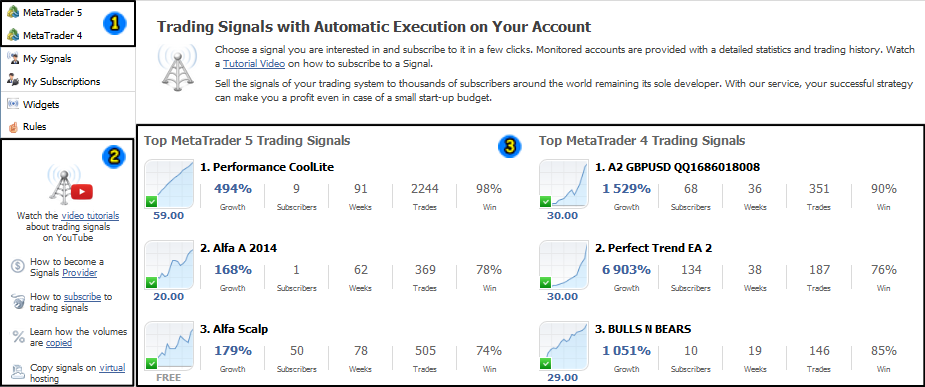
MQL5 is not a single signal provider but a massive marketplace built into the popular MetaTrader 4 (MT4) and MetaTrader 5 (MT5) trading platforms. It offers a copy trading service, where you can subscribe to thousands of different traders (signal providers) and have their trades automatically replicated in your own brokerage account. This is ideal for traders who want a completely hands-off approach. You don’t need to manually enter any trades; the platform does it all for you once you’re subscribed to a provider.

The strength of MQL5 is its transparency and variety. Every provider on the platform has a detailed and public performance history, showing their monthly gain, maximum drawdown, and full trading history. You can sort and filter providers based on their performance, risk level, and subscription cost. Prices vary dramatically, from $30 to over $500 per month, depending on the provider’s track record. This allows you to find a trader that perfectly matches your risk appetite and investment goals. However, the sheer number of options can be overwhelming for beginners. The key is to look for providers with a long, consistent history and a low drawdown, rather than those with explosive but volatile gains. Support comes from the MQL5 community forums and the individual signal provider you subscribe to.
A Review of FX Premiere
FX Premiere has been operating for over a decade and is known for its wide variety of signal packages delivered exclusively through Telegram. They cater to different trading needs by offering specialized channels for specific instruments, such as forex pairs, gold, and oil. This allows subscribers to choose the signals that are most relevant to their interests. They offer both a free and a VIP service. The free channel provides occasional signals and market analysis, serving as a good entry point to evaluate their style.

The VIP service, which is their core offering, provides more frequent and detailed signals. They claim a success rate of around 75% and deliver multiple signals per day across various currency pairs. The pricing is tiered, starting at around $37 per month and going up for longer subscription periods or bundled packages. One of their unique aspects is providing signals for up to 15 currency pairs, offering a high degree of diversification for active traders. Customer support is primarily handled through Telegram, where they have a support team available to assist with subscription or signal-related queries. While they don’t offer a MyFXBook verified account, their long-standing presence in the market has built them a substantial following.
How Do the Leading Forex Signal Providers Compare?
Comparing leading providers reveals that Learn 2 Trade excels in educational value, 1000pip Builder is superior for verified accuracy, and MQL5 offers the most diversity through its copy trading marketplace. Each service targets a different trader profile, making a direct comparison of their core features essential for making an informed choice. ForexSignals.com is best for those wanting a community and live mentorship, while FX Premiere provides a high volume of signals across many pairs.
To understand these differences better, let’s look at a side-by-side comparison table. This table summarizes the key attributes of each provider, from their monthly cost and delivery method to their primary focus and performance claims. This format allows for a quick assessment of which service might be the best fit for your specific needs. Are you a beginner who needs guidance, or an experienced trader who just wants verified, profitable signals? The answer will guide your choice.
| Feature | Learn 2 Trade | ForexSignals.com | 1000pip Builder | MQL5 Signals | FX Premiere |
|---|---|---|---|---|---|
| Price (Monthly) | Approx. $40 | Approx. $47 (billed annually) | Approx. $97 | $30 – $500+ (Varies by provider) | Approx. $37 |
| Trial Period | Free Telegram Group | 7-Day Money-Back Guarantee | No Trial | No Trial (but full public history) | Free Telegram Group |
| Win Rate / Pips | Claimed 76%+ Success | Performance Varies by Mentor | Aims for 350-650 Pips/Month | Performance Varies by Provider | Claimed 75% Success |
| Verification | Provider-claimed | Mentor Results Shared | MyFXBook Verified | Fully Verified Public History | Provider-claimed |
| Delivery Method | Telegram | Proprietary Platform, Trading Room | Telegram, Email, SMS | Automated Copy Trading (MT4/MT5) | Telegram |
| Primary Focus | Education & Signals | Live Trading & Community | Verified Performance | Copy Trading Marketplace | High Signal Volume |
Analyzing this table, you can see clear distinctions. If your budget is a primary concern, Learn 2 Trade and FX Premiere offer the lowest monthly entry points. However, if undeniable proof of performance is what you need, 1000pip Builder and the MQL5 marketplace are the strongest contenders, as they both offer transparent, verified track records. ForexSignals.com occupies a unique space, focusing less on just signals and more on creating skilled, independent traders through mentorship. For those who want a completely passive experience, the automated copy trading of MQL5 is unmatched. By identifying your main priority, whether it’s cost, verification, education, or automation, this comparison makes it much easier to select the right partner for your trading journey.
What Should You Look For When Choosing a Forex Signal Provider?
When choosing a forex signal provider, you should look for four key criteria: a verifiable performance history, a clear and fair pricing structure, responsive and accessible customer support, and a transparent trading strategy. These elements help you distinguish legitimate services from unreliable ones and ensure you are investing in a tool that genuinely aids your trading. A provider that excels in these four areas is more likely to offer consistent value and operate with integrity.
To make an informed decision, it’s not enough to just look at a provider’s marketing claims. You need to dig deeper into the specifics of their service. How do they prove their results? Is their pricing straightforward, or are there hidden fees? What happens if you need help or have a question about a signal? Answering these questions before you subscribe can save you from future disappointment and financial loss. The following sections break down exactly what to look for within each of these critical areas.
How Can You Verify a Provider’s Performance History?
To verify a provider’s performance history, you must look for a live, third-party audited track record, not just screenshots or internal spreadsheets. The industry standard for this is a connection to platforms like MyFXBook or FXBlue. These services link directly to a provider’s live trading account via their broker, independently tracking and publicly displaying every trade and performance metric. This method is nearly impossible to fake and provides an unbiased view of their actual results over time.

When you review a MyFXBook profile, don’t just glance at the total gain percentage. Look deeper at several key metrics to get a full picture of their trading style and risk management. First, check the drawdown, which shows the largest peak-to-trough decline the account has experienced. A high drawdown, for example, over 40%, indicates a very risky strategy that could wipe out a significant portion of your capital, even if the overall gains are high. Second, ensure the trading history is public, not private. A provider hiding their trade history is a major red flag. Finally, look at the age of the account. A track record spanning several years is far more reliable than one that is only a few weeks or months old, as it shows consistency across different market conditions.
What Is a Fair Price for Forex Signals?
A fair price for forex signals typically ranges from $30 to $150 per month, depending on the quality, features, and verification of the service. Prices within this range usually reflect a provider who is serious about their business without being prohibitively expensive. Be wary of services priced extremely low, like under $20 per month, as they may be using signals as a way to earn commissions by referring you to a specific broker. Conversely, services charging several hundred dollars a month must justify that cost with exceptional, verified performance and premium features like one-on-one mentorship.

Most providers offer several pricing models to choose from. A monthly subscription is the most common, offering the most flexibility. Quarterly or annual plans usually come with a significant discount, rewarding longer-term commitment. Some providers also offer a lifetime plan, which is a one-time payment for permanent access. This can offer the best long-term value if you are confident in the provider’s longevity and quality. Before committing to a long-term plan, it is always a good idea to start with a monthly subscription to test the service and ensure it fits your trading style.
Which Signal Delivery Method Is Best?
The best signal delivery method is one that is fast, reliable, and convenient for you, with Telegram and dedicated mobile apps being the top choices for most traders. Speed is the most important factor, as a delay of even a minute can result in a missed entry or a less favorable price. Telegram has become the industry standard because it delivers instant notifications to your phone or desktop and allows providers to manage large subscriber groups efficiently. It’s a simple, no-frills platform that does its job exceptionally well.

Dedicated mobile apps are another excellent option, often providing a more integrated experience. These apps might include features like trade analytics, direct chat with support, and educational content, all in one place. However, they are proprietary to the signal provider. Email and SMS are less common and generally less effective. Email can be slow, with messages sometimes landing in spam folders, while SMS is fast but lacks the ability to include charts or detailed analysis. For a completely hands-off approach, copy trading integration with platforms like MT4/MT5 is the ultimate method, as it executes trades for you automatically, eliminating any delay or manual error. The best choice depends on how actively you want to be involved in the trading process.
Are Paid Forex Signals Worth the Investment?
Yes, paid forex signals can be worth the investment for traders who properly research their provider and use the service to supplement their strategy, save time, or learn from experts. They are not a guarantee of profits, but a legitimate service can provide significant value by offering well-analyzed trade ideas that you might not have found on your own. Their worth depends entirely on the quality of the provider and how the trader uses the signals.
To understand this better, it’s useful to weigh the potential benefits against the inherent risks and costs. On one hand, a good signal service can act as a powerful tool. You gain access to the research and expertise of professional traders, which is especially valuable for beginners who are still learning to analyze the market. It can also be a massive time-saver for experienced traders who have other commitments and cannot spend all day watching charts. Following signals can also help instill discipline by providing clear entry, exit, and stop loss parameters, which helps remove emotion from trading decisions. When used as a learning tool, you can deconstruct the signals to understand the provider’s strategy and apply those concepts to your own analysis over time.
However, the downsides are just as important to consider. The most obvious is the cost. A monthly subscription is a fixed expense that you must cover with your trading profits. If you have a small account, the subscription fee can represent a significant percentage of your capital, putting you at a disadvantage from the start. The forex signal industry is also filled with scams and low-quality providers who promise unrealistic returns. Without careful due diligence, you could easily waste money on a service that loses you even more. Furthermore, there is a risk of becoming dependent on the signals, preventing you from developing your own trading skills. The most critical point is that even the best signal providers have losing trades and losing months. Past performance is not an indicator of future results, and you must always practice proper risk management, never risking more than 1-2% of your capital on a single trade, regardless of how confident the provider seems. Ultimately, signals are a tool, not a magic solution. They are worthwhile if you find a credible provider and use their insights as one part of a broader, well-managed trading plan.
What Else Should You Know About Forex Signal Services?
Beyond provider reviews, you should understand the differences between signal types, the risks of free services, and how signals compare to automated methods like copy trading. What’s more, a deep awareness of the inherent risks and the strategies behind the signals is necessary for making an informed decision and using these tools effectively.
How Do Manual Signals Differ from Automated Signals?
The core difference between manual and automated signals lies in their origin: one is derived from human analysis, while the other is generated by a software algorithm. Manual signals are created by experienced forex traders or analysts who use their expertise, technical analysis, and interpretation of fundamental news to identify potential trading opportunities. The primary advantage here is human intuition. An expert analyst can factor in the nuances of market sentiment, political events, and economic announcements in a way that an algorithm cannot. However, manual signals are limited by the analyst’s availability and are susceptible to human error or emotional biases like fear and greed.
Automated signals, conversely, come from trading bots or algorithms that scan the markets 24/7 based on pre-programmed rules and technical indicators. Their strength is speed, consistency, and the complete removal of emotion from the decision making process. They can execute backtests on historical data to validate a strategy and operate around the clock without fatigue. The main drawback is their rigidity. An algorithm cannot interpret the context behind a sudden market shock, such as a central bank intervention, and may generate a signal that is technically valid but fundamentally flawed. Choosing between them often comes down to a trader’s preference for human expertise versus algorithmic precision.
Are Free Forex Signal Providers Ever a Good Choice?
While the prospect of getting trading signals for free is tempting, these services are rarely a good choice for serious traders and often come with hidden costs and significant risks. The most common business model for free providers is earning affiliate commissions from brokers. They offer free signals to entice you to sign up with a specific brokerage through their referral link. This creates a direct conflict of interest, as their revenue depends on you trading frequently, not necessarily profitably. They may encourage over-trading with low quality signals, leading you to generate more commission for them at the expense of your trading capital.

Beyond the business model, free signals typically lack the depth and support of paid services. You will likely find no detailed analysis explaining the rationale behind a trade, no community support, and no accountability from the provider. These signals are often delayed or less accurate, serving more as a marketing tool to upsell you to a paid “VIP” subscription. While a free service could potentially be used on a demo account for a short period to understand how signals work, using them with real money is extremely risky. A quality, transparent signal service requires significant resources for research and analysis, which is why reputable providers charge a subscription fee.
What Are the Biggest Risks of Using Forex Signals?
Using forex signals can introduce several significant risks that every trader must manage carefully. The most immediate danger is fraudulent providers. The forex market is filled with scams promising unrealistic, guaranteed returns. These services often disappear after collecting subscription fees or provide consistently poor signals that deplete your account. Another major risk is over-reliance, which prevents skill development. When you depend solely on signals, you fail to learn how to analyze the market, manage risk, or develop your own trading strategy. This dependency makes you vulnerable if the signal service suddenly deteriorates in quality or shuts down.

Furthermore, no signal can account for extreme market volatility. A sudden geopolitical event or unexpected economic data release can instantly invalidate a perfectly good technical setup, leading to rapid losses. You must also contend with execution risks like slippage, which is the difference between the signal’s entry price and the actual price your trade is filled at. During fast moving markets, slippage can turn a potentially profitable trade into a losing one. Finally, there is the risk of poor execution on your part. A signal is time sensitive, and failing to act on it promptly can mean missing the optimal entry point, which completely changes the trade’s risk to reward profile.
How Is Using a Signal Provider Different from Copy Trading?
Using a signal provider is fundamentally different from copy trading, primarily in the degree of control and automation involved. A forex signal provider gives you trade recommendations, but you retain full control over execution. The service will send an alert with details like the currency pair, entry price, stop loss, and take profit levels. It is then your responsibility to analyze the signal, decide if it aligns with your strategy, and manually place the trade in your own brokerage account. This process allows you to learn and maintain final authority over your capital, giving you the power to reject a signal you disagree with.

Copy trading, on the other hand, is a fully automated process. You connect your trading account to a copy trading platform, such as those offered by eToro or ZuluTrade, and choose a specific trader to “copy.” From that point on, every trade the master trader executes is automatically replicated in your account in real time, with the trade size scaled to your account balance. This approach is completely hands off and requires no manual intervention. While convenient, it means you delegate all trading decisions to someone else, and you may not understand the strategy behind the trades being placed on your behalf. The key distinction is signals are advisory, while copy trading is automated execution.
What Types of Trading Strategies Do Signal Providers Use?
Forex signal providers employ a variety of trading strategies, and it is essential to choose one whose style aligns with your availability, risk tolerance, and personality. One common strategy is scalping, which involves making a high volume of trades that last only a few seconds to a few minutes, aiming to capture very small price movements. This style requires constant market monitoring and is best suited for traders who can be at their trading desk for long periods. Another popular approach is day trading, where positions are opened and closed within the same trading day, avoiding overnight risk. This requires being active during specific high liquidity market sessions, like the London or New York sessions.

For traders with less time, swing trading signals are often a better fit. Swing traders hold positions for several days to a few weeks, aiming to profit from larger price “swings.” This strategy requires less screen time, as analysis is often done on higher time frames. Finally, position trading involves holding trades for weeks, months, or even years, based on long term fundamental and technical factors. The type of strategy dictates the frequency of signals, the expected profit per trade, and the amount of time you need to be available. Mismatching your lifestyle with the provider’s strategy, such as trying to follow a scalping service with a full time job, is a common path to failure.