

Blog
How to Scale a Forex Account Using Compounding and Risk Management


Scaling a forex account is the methodical process of increasing your trade size in direct proportion to your account’s growth, using a fixed-percentage risk model and the power of compounding. This approach is not about randomly taking on more risk when you feel confident. Instead, it is a disciplined, rules-based strategy that relies on a proven trading edge to grow your capital at an accelerating rate over time. When done correctly, scaling transforms simple account growth into a powerful wealth-building engine, but it demands strict adherence to a predefined plan.
The single most important element of successful scaling is disciplined risk management, specifically through consistent position sizing. Without a firm rule, like risking only 1% of your capital per trade, increasing your trade size becomes a form of gambling. This exposes your account to oversized losses that can wipe out weeks or even months of hard-earned progress. Proper risk management is the brake pedal that keeps the compounding vehicle safely on the road.
The biggest mistake traders make when trying to scale is increasing trade size based on emotion, such as overconfidence after a winning streak, rather than following a predefined, mathematical plan. This undisciplined approach completely breaks the compounding model and introduces unsustainable levels of risk. A single emotional decision to double your lot size can lead to a drawdown so severe that it psychologically and financially prevents you from continuing your trading journey.
This entire process is built on a foundation of logic, not luck. It requires a tested strategy, unwavering psychological control, and a clear understanding of the mathematical principles that govern growth. By creating and following a systematic plan, you remove guesswork and emotion from the equation, allowing you to harness the full potential of your trading edge. Let’s explore the components and steps needed to build this structure for your own account.
What is Forex Account Scaling?
Forex account scaling is the systematic, rules-based process of increasing trade size in proportion to the growth of your trading capital, driven by the principle of compounding. It is a deliberate strategy to magnify gains from a profitable trading system. To understand this better, think of it not as simply making more money, but as actively managing your risk exposure to let your winning strategy work on a larger and larger capital base. The core idea is that as your account equity increases, your position size should also increase. This creates a positive feedback loop. Bigger wins from your larger positions lead to a faster increase in account equity, which in turn allows for even larger positions on future trades. This is the essence of compounding in action. However, this process is entirely dependent on a strict, pre-planned set of rules. It is the opposite of impulsive trading, where a trader might increase their lot size after a few wins out of pure excitement or greed. True scaling is mechanical, unemotional, and calculated, designed to optimize growth while keeping risk at a constant, manageable percentage.
What is the Difference Between Account Growth and Account Scaling?
Many traders use the terms “account growth” and “account scaling” interchangeably, but they represent two different concepts. Account growth is simply the outcome, while account scaling is the active process designed to accelerate that outcome. You can achieve account growth without a scaling plan. For example, if you have a $5,000 account and trade a fixed 0.05 lot size on every trade, your account might grow to $6,000 over time. This is account growth. The account’s equity has increased, which is a positive result.
Account scaling, on the other hand, is the deliberate strategy of adjusting your trade size as your equity changes. Using the same example, with a scaling plan, you might start by risking 1% of your $5,000 account, which is $50 per trade. As your account grows to $6,000, your 1% risk is now $60 per trade. Your position size would be recalculated to reflect this new, higher risk tolerance in dollar terms. This dynamic adjustment is what defines scaling. It is the engine that drives compounding. Account growth can be linear if you use a fixed trade size, but a proper scaling plan aims for exponential growth by continuously reinvesting profits to fund larger trade sizes.
Why is a Systematic Scaling Plan Necessary?
A systematic scaling plan is necessary because it removes destructive emotions like fear and greed from your trading decisions and replaces them with a logical, mathematical framework. Trading is a psychological minefield. After a string of winning trades, it is natural to feel overconfident and want to dramatically increase your lot size to make money faster. Conversely, after a few losses, fear can cause you to shrink your position size, meaning your next winning trade will not be large enough to recover the previous losses. A scaling plan neutralizes these impulses.

The plan provides concrete rules for every scenario. For instance, your plan might state: “Recalculate position size to 2% of the current account balance before every trade.” This rule dictates your actions regardless of how you feel. It forces discipline and consistency, which are the cornerstones of long-term trading success. Furthermore, a systematic plan is the only way to properly harness compounding. Compounding requires consistency over a long period. By ensuring your risk, as a percentage, remains constant, you create the stable environment needed for your edge to play out and for the compounding effect to build momentum. Without a plan, your equity curve will likely be erratic, marked by emotional decisions that lead to huge drawdowns and sabotage your progress.
What are the Core Principles for Scaling a Forex Account?
The core principles for scaling a forex account are possessing a proven trading edge, implementing strict position sizing for risk management, and maintaining disciplined trading psychology. These three pillars are non-negotiable and work together to support a successful scaling strategy. Trying to scale an account without all three in place is like trying to build a skyscraper on a weak foundation; it is destined to collapse under pressure. A trading edge gives you the statistical probability of success, position sizing protects your capital from ruin, and strong psychology ensures you can execute your plan consistently, especially when dealing with larger sums of money. Before you even consider increasing your trade size, you must first master these fundamental elements. They are the prerequisites that separate professional, systematic scaling from reckless gambling. Let’s explore how each of these principles contributes to a robust scaling plan.
How Does a Proven Trading Edge Enable Scaling?
You can only scale a strategy that has a positive expectancy, which means that over a large number of trades, it is statistically proven to make more money than it loses. A trading edge is your unique advantage in the market. Without one, scaling is impossible because you would simply be magnifying your losses. Increasing your position size on a losing or break-even strategy will only make you lose money faster. Think of it this way: your trading edge is the engine of your car, and scaling is the act of pushing the accelerator. If the engine is faulty, pressing the accelerator will only lead to a breakdown.

To confirm you have a genuine edge, you must engage in rigorous testing. This involves two key phases:
- Backtesting: This is where you test your trading rules on historical price data over a long period. The goal is to collect data on hundreds, or even thousands, of past trades to see how the strategy would have performed. This will give you key metrics like win rate, average risk-to-reward ratio, and maximum drawdown.
- Forward-testing: After successful backtesting, you must test the strategy in a live market environment, either on a demo account or with very small real money positions. This phase confirms that the strategy works in current market conditions, not just on historical data.
Only after your strategy has proven its profitability through both phases can you say you have a reliable edge worth scaling.
What Role Does Position Sizing Play in Scaling?
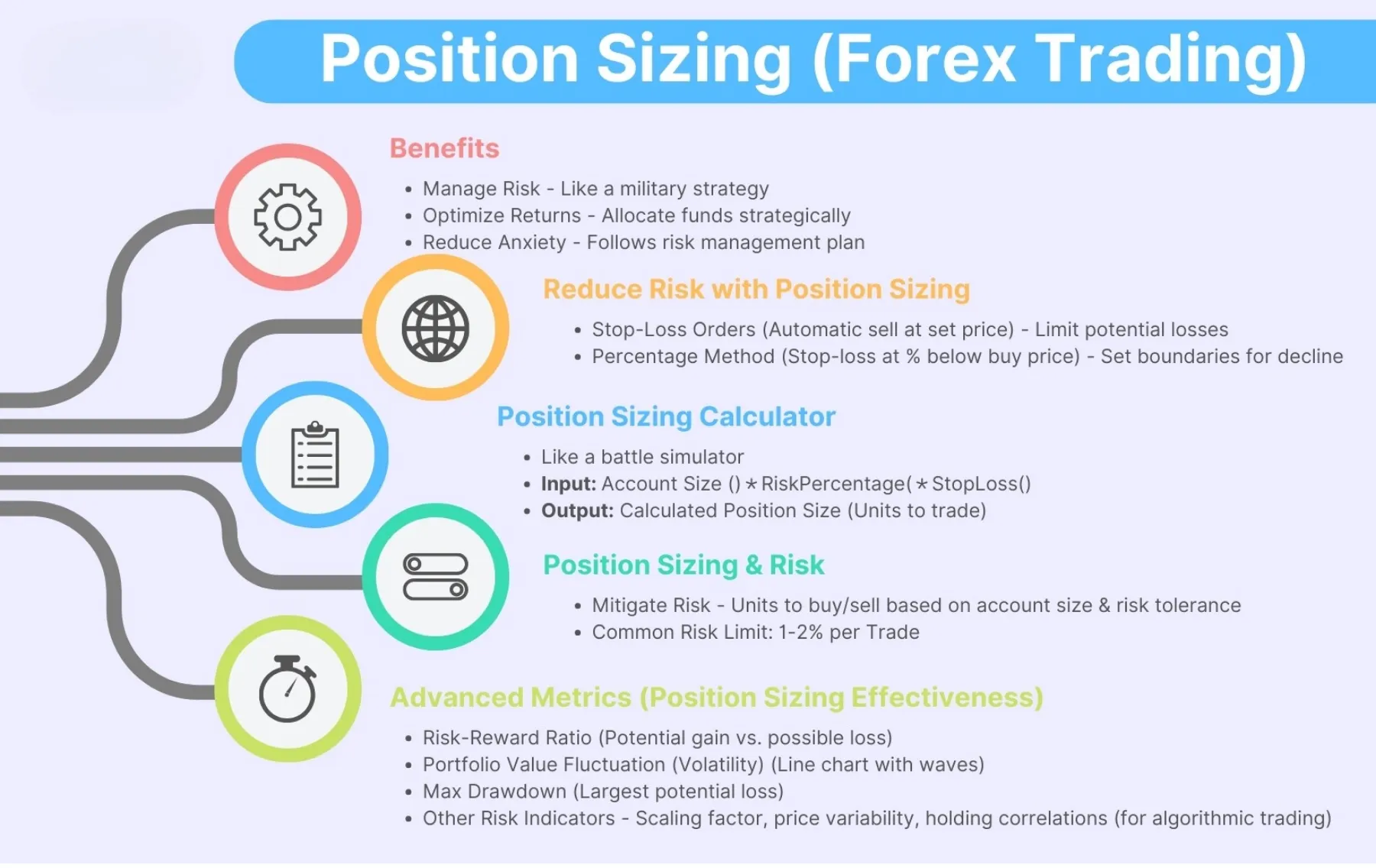
Position sizing is the core mechanical process of scaling an account. It is the method you use to determine exactly how many lots to trade based on your account size and the specific parameters of a trade. The most common and effective approach for scaling is risking a small, fixed percentage of your account on every single trade. Professional traders typically recommend risking between 1% and 2% of equity per trade. This rule is the bedrock of risk management and the primary driver of compounding.
Here’s how it works in practice. If you have a $10,000 account and decide to risk 1% per trade, your maximum acceptable loss on any single trade is $100. If your strategy calls for a 50-pip stop loss, you would calculate the lot size that makes those 50 pips equal to $100. Now, let’s say your account grows to $12,000. Your 1% risk is now $120. For the same 50-pip stop loss, you would use a slightly larger lot size to align with the $120 risk limit. This automatic adjustment is scaling. It ensures that as your account grows, your position size grows with it. Conversely, if your account suffers a drawdown to $9,000, your 1% risk shrinks to $90, forcing you to trade smaller sizes and protecting your remaining capital. This dynamic adjustment is what keeps risk under control while maximizing growth potential.
How Does Trading Psychology Affect Account Scaling?
Trading psychology is the glue that holds your entire scaling plan together. As your account and position sizes grow, the monetary values associated with your wins and losses also become larger, which can have a powerful emotional impact. A 1% loss on a $5,000 account is $50, which is relatively easy for most people to handle. However, a 1% loss on a $100,000 account is $1,000. Seeing a four-figure loss, even if it is a perfectly acceptable part of your strategy, can trigger fear, panic, and doubt.
Successfully scaling an account requires the mental discipline to stick to your plan without deviation, regardless of the dollar amounts involved. You must learn to view trades in terms of percentages and probabilities, not cash. The mental shift from thinking “$1,000 loss” to “one R loss” (where R is your predefined risk unit) is fundamental. This detachment allows you to execute your strategy flawlessly, whether you are trading for $10 or $10,000 per trade. Without this psychological fortitude, you are likely to sabotage your own success by hesitating to take valid setups, cutting winning trades too early out of fear, or widening your stop losses in the hope a losing trade will turn around. A strong mindset ensures that you can handle the pressures of trading larger capital and allow your proven edge to work over the long term.
What is the Step-by-Step Process to Scale a Trading Account?
The process to scale a trading account involves establishing a profitable baseline with fixed risk, setting clear rules for when to increase trade size, and methodically recalculating position size as your account equity changes. This structured approach transforms scaling from a vague goal into an actionable plan. It is a three-part framework designed to verify your strategy’s effectiveness before increasing risk and then provides a clear, mechanical method for that increase. Following these steps removes emotion and guesswork, which are the primary reasons most traders fail when they try to manage larger amounts of capital. The goal is to create a logical progression that is easy to follow and repeat, allowing the power of compounding to work consistently over time. Let’s break down each step in detail so you can apply this framework to your own trading.
How Do You Establish a Baseline for Your Account?
Before you can think about scaling, you must first prove that your trading strategy is consistently profitable in the current market environment. This is achieved by establishing a performance baseline. To do this, you should trade your strategy with a fixed lot size for a set period or a specific number of trades, such as 30 to 50 trades. During this phase, you are not focused on making a fortune. Instead, you are gathering critical data. The primary goal is to confirm your strategy’s positive expectancy with real results, not just historical backtests.

While trading with a small, fixed lot size, you should meticulously track key performance indicators:
- Win Rate: What percentage of your trades are profitable?
- Risk-to-Reward Ratio: On average, how much do your winning trades make compared to what your losing trades lose?
- Profit Factor: The gross profit divided by the gross loss. A value above 1.0 indicates profitability.
- Maximum Drawdown: What was the largest peak-to-trough decline in your account equity during this period?
This baseline period serves as your proof of concept. If you cannot grow your account, even slightly, with a small, fixed risk, then you are not ready to scale. The data you gather will give you the confidence that your edge is real and will also prepare you psychologically for the realities of drawdowns.
When Should You Increase Your Trade Size?
You should only increase your trade size based on specific, predefined, and non-negotiable rules written into your trading plan. This is the most critical part of removing emotion from the scaling process. Instead of increasing your lot size because you “feel good” about the market, you will do so because a specific condition in your plan has been met. This approach creates consistency and discipline. Your feelings are irrelevant; only the rules matter.
There are several common rule-based triggers you can use. Here are a few examples:
- Equity Threshold Model: “I will increase my base lot size by 0.01 for every $1,000 of net profit in my account.” With this rule, a trader starting with 0.10 lots on a $10,000 account would move to 0.11 lots once the account reaches $11,000, then to 0.12 lots at $12,000, and so on.
- Periodic Review Model: “At the end of each month, I will review my account balance. I will adjust my position size for the next month to reflect 1% of the closing balance of the previous month.”
- Per-Trade Recalculation Model: “Before placing any new trade, I will recalculate my position size to be exactly 1.5% of my current account equity.”
The specific rule you choose is less important than the act of having a rule and sticking to it without exception. This turns scaling into a simple, mechanical task.
How Do You Recalculate Position Size as the Account Grows?
Recalculating your position size is the practical application of your scaling rules. The most common method is based on a fixed percentage risk model. You can use a simple formula or an online position size calculator to do this before every trade. The formula generally looks like this:
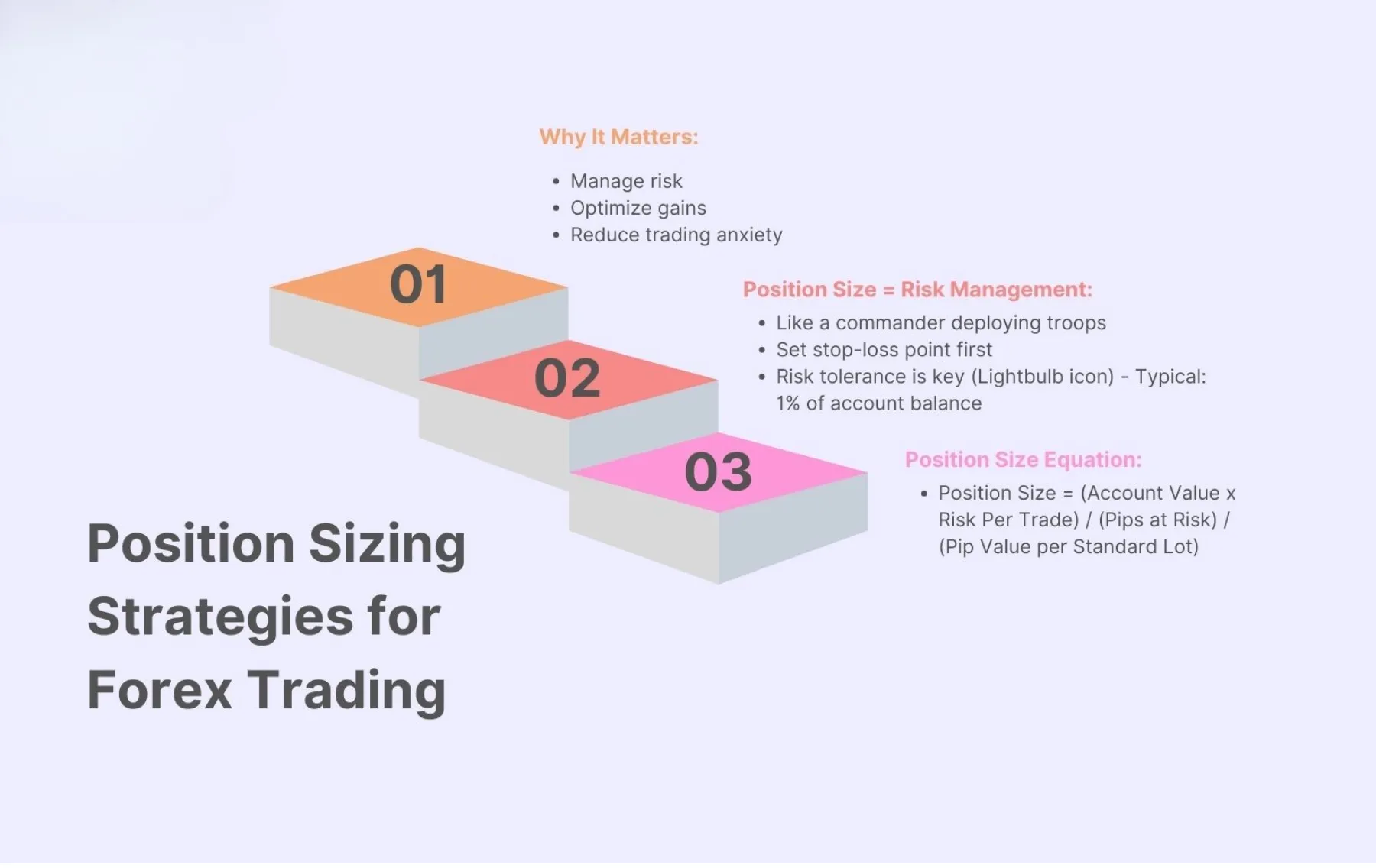
Position Size (in lots) = (Account Equity x Risk Percentage) / (Stop Loss in Pips x Pip Value)
Let’s walk through an example.
- Account Equity: $10,000
- Risk Percentage: 1% (which is $100)
- Currency Pair: EUR/USD (where 1 standard lot pip value is ~$10)
- Trade Stop Loss: 20 pips
First, calculate the total dollar amount you can risk: $10,000 * 0.01 = $100.
Next, calculate the dollar value of your stop loss per full lot: 20 pips * $10/pip = $200.
Finally, calculate the position size: $100 (your risk) / $200 (value of stop loss) = 0.50 standard lots.
Now, let’s see how this changes as the account grows to $15,000.
- Account Equity: $15,000
- Risk Percentage: 1% (which is now $150)
- Stop Loss: Still 20 pips
The calculation becomes: $150 / (20 pips * $10/pip) = $150 / $200 = 0.75 standard lots.
As you can see, the position size has increased in direct proportion to the account’s growth, while the risk as a percentage has remained constant at 1%. This disciplined, mathematical recalculation is the engine of compounding.
What are the Most Common Models for Scaling?
The two most common models for scaling are the Fixed Fractional model, which risks a set percentage of equity on each trade, and the Fixed Ratio model, which increases size after set profit targets are met. Both methods provide a systematic, rules-based approach to increasing position size, but they differ in their aggressiveness and how they handle drawdowns. The Fixed Fractional model is more popular and leads to faster compounding during winning streaks, while the Fixed Ratio model is generally considered more conservative and can feel more stable psychologically. Understanding the mechanics, pros, and cons of each model will help you choose the one that best aligns with your trading strategy and personal risk tolerance. Let’s explore each of these established methodologies in more detail.
What is the Fixed Fractional Scaling Model?
The Fixed Fractional scaling model is a popular and straightforward method where the trader consistently risks a fixed percentage of their current account equity on every single trade. For example, a trader might decide to risk 2% of their capital on any given setup. If their account is at $10,000, their risk is $200. If the account grows to $11,000, their next 2% risk is $220. If the account drops to $9,000, their 2% risk is reduced to $180. The position size is dynamically adjusted before each trade to ensure the dollar amount at risk always matches the chosen percentage of the current account balance.
This model is highly favored for its powerful compounding effect.
- Pros: When a trading strategy is performing well, this model aggressively compounds gains. Because your position size increases immediately after a win, your next win is even larger, creating an exponential growth curve. It also has a built-in risk management feature, as it forces you to reduce your position size automatically during a drawdown, which helps preserve capital.
- Cons: The primary drawback is psychological. While the percentage risk remains the same, the dollar value of drawdowns can become very large after a period of significant growth. Losing $1,000 on a trade (2% of a $50,000 account) feels much different than losing $200 (2% of a $10,000 account), even though they are identical in terms of risk management. This can cause traders to abandon their plan when the monetary figures become intimidating.
What is the Fixed Ratio Scaling Model?
The Fixed Ratio scaling model is a more conservative method where trade size is increased only after a specific, predetermined amount of profit, known as the “delta,” has been achieved. Developed by author Ryan Jones, this approach is designed to slow down the rate at which a trader increases their risk, making the equity curve potentially smoother and psychologically easier to manage. Instead of changing your position size after every trade, you only change it after hitting certain equity milestones.
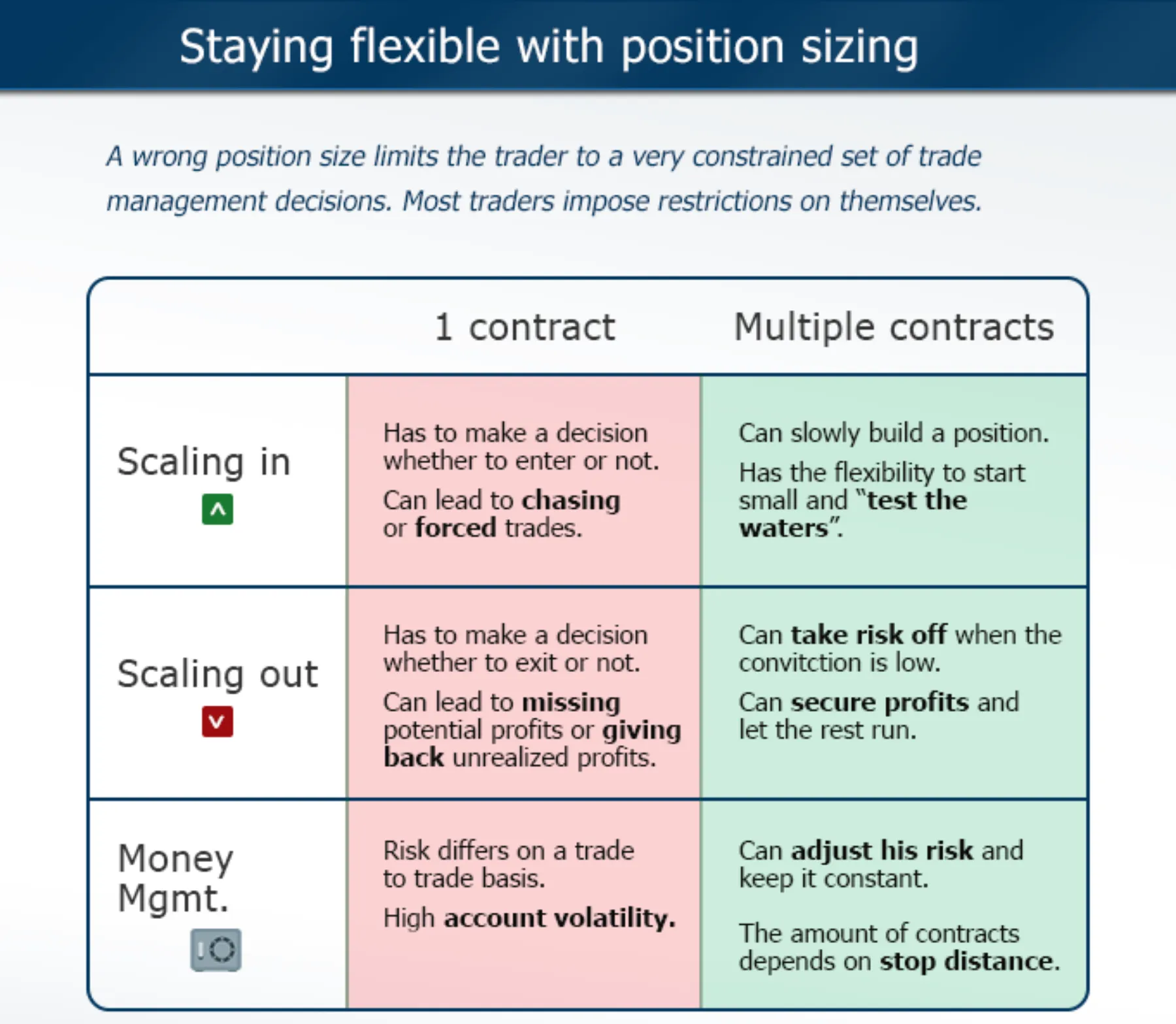
Here’s how it works. You might decide your “delta” is $1,000. This means you will increase your contract size by one unit (e.g., 0.01 lots) for every $1,000 in profit you generate.
- You start with one contract (0.01 lots) and trade with it until your account has grown by $1,000.
- Once you reach that milestone, you begin trading with two contracts (0.02 lots).
- You continue trading with two contracts until you make an additional $1,000 in profit, at which point you move to three contracts (0.03 lots), and so on.
- Pros: This model is often considered safer because it requires you to prove profitability at one level before allowing you to increase your risk. It dampens the aggressiveness of compounding, which can lead to smaller drawdowns in dollar terms compared to the Fixed Fractional model. This slower pace can be much easier for traders to handle psychologically.
- Cons: The main disadvantage is that it does not compound as quickly as the Fixed Fractional method. Because you are not increasing your trade size after every small gain, you may miss out on some growth potential during strong winning streaks. The model also requires you to define the “delta,” which can be a somewhat arbitrary number if not carefully calculated.
What are the Risks and Advanced Topics in Account Scaling?
The primary risks in scaling a forex account involve psychological pressure, over-leveraging, and flawed execution, while advanced topics include using prop firms, choosing between aggressive or conservative approaches, and automating the process. Furthermore, a trader’s success depends on navigating these complex areas with a clear strategy that aligns with their personal risk tolerance and long-term goals.
What are the Biggest Mistakes to Avoid When Scaling?
The most damaging mistake traders make is abandoning their risk management plan. This often happens in two scenarios: scaling too quickly after a winning streak due to overconfidence, or refusing to scale down during a drawdown out of a desire to “make it back.” Both actions deviate from the core strategy and expose the account to ruin. Another common error is failing to prepare for the increased psychological weight of trading larger positions. A 1% risk on a $1,000 account is $10, which is easy to handle. That same 1% risk on a $100,000 account is $1,000, a loss that can trigger emotional decisions.
To avoid these pitfalls, traders should focus on consistency over speed.
- Do not scale aggressively after a few wins: Stick to your predetermined milestones for increasing lot size, such as after a certain percentage gain or a set number of profitable trades.
- Adhere to the plan during drawdowns: A scaling plan must include rules for scaling down. Follow these rules without emotion to protect your capital.
- Mentally rehearse larger trades: Before you increase your position size, mentally prepare for the larger potential losses and how you will react to them.
Is Using a Prop Firm a Viable Shortcut to Scaling?
Using a proprietary trading firm can be a valid alternative to scaling a personal account, but it is not a shortcut to success. Prop firms, such as FTMO or The Funded Trader, offer access to significant trading capital (from $10,000 to over $1,000,000) in exchange for a one-time evaluation fee. If you pass their challenge, you trade their money and keep a large percentage of the profits, typically 70% to 90%. This allows traders with proven skills but limited personal funds to operate with institutional-level capital almost immediately.
However, this opportunity comes with strict limitations that do not exist when trading personal funds.
- Strict drawdown rules: Most firms have daily and maximum loss limits. Breaching these rules, even by a small amount, results in the immediate loss of the account.
- Profit targets and time limits: Evaluation phases require you to hit a specific profit target within a set time frame, which can encourage risky behavior.
- Trading restrictions: Some firms limit the instruments you can trade, prohibit holding positions over the weekend, or have rules against trading during major news events.
How is Aggressive Scaling Different from Conservative Scaling?
The main difference between aggressive and conservative scaling lies in the risk parameters and the frequency of increasing position size. An aggressive approach seeks to grow the account as quickly as possible, while a conservative approach prioritizes capital preservation and slow, steady growth. An aggressive scaler might increase their lot size after every 10% gain in equity and risk 2% per trade. In contrast, a conservative scaler may wait for a 25% account gain before making a small increase to their position size, while keeping their risk fixed at 0.5% or 1% per trade.
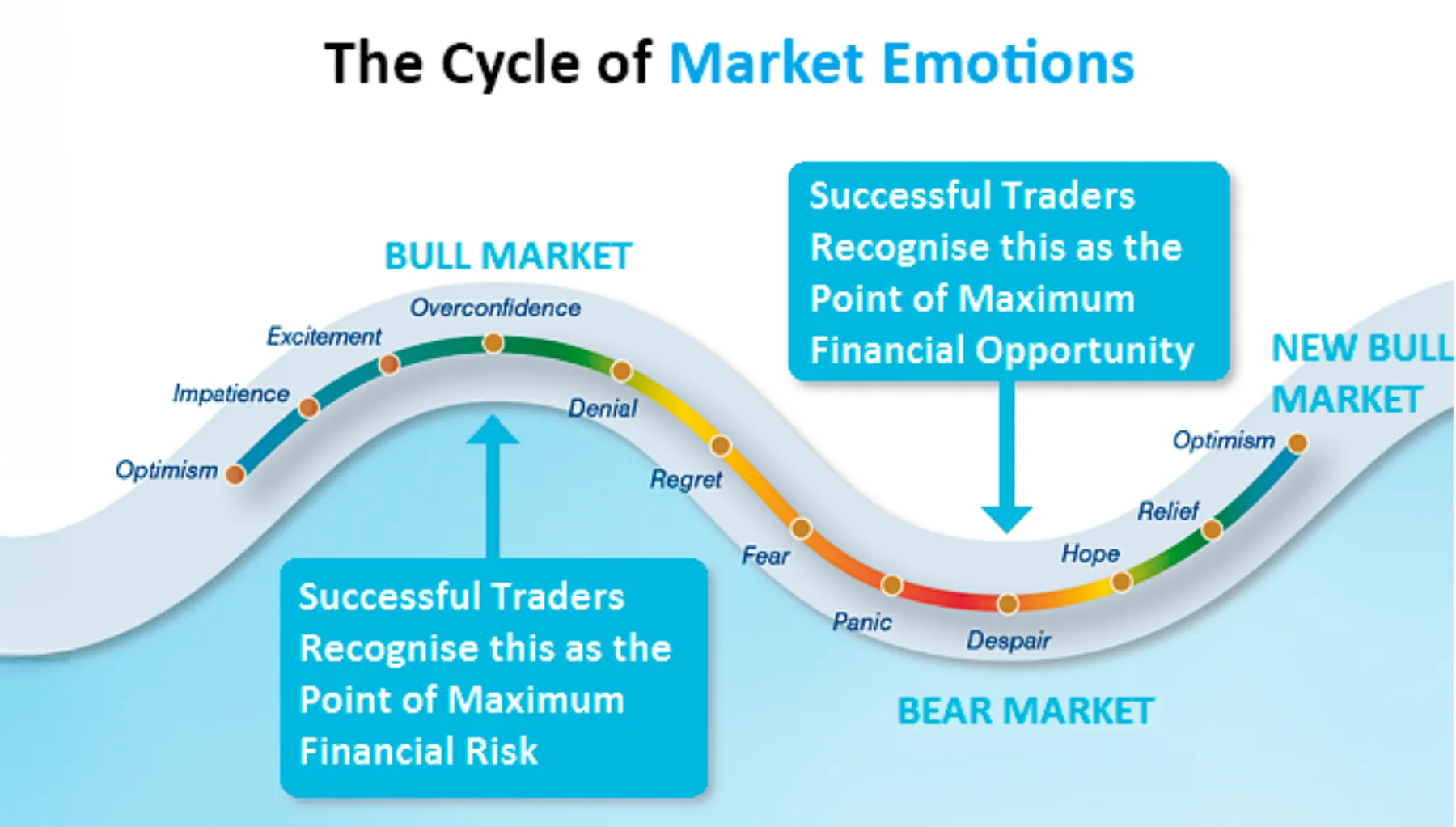
Choosing the right approach depends heavily on your psychological profile and trading style.
- Aggressive scaling suits: Traders with a high tolerance for risk and volatility, who can remain disciplined during significant drawdowns. It is often favored by short-term traders.
- Conservative scaling suits: Traders who prioritize long-term consistency and are more risk-averse. This method is better for those who would be emotionally affected by large swings in their account balance.
- Psychological tolerance is key: An aggressive strategy can generate immense stress, while a conservative one requires patience. You must choose the path you can stick with.
Should You Withdraw Profits or Compound Everything?
Deciding whether to withdraw profits or let them compound is a strategic choice between securing gains and maximizing growth potential. Compounding everything is mathematically optimal for the fastest possible account growth, as every dollar earned begins generating its own returns. However, this approach carries a psychological burden. Leaving all profits in the account means you are constantly risking money you have already earned, which can make drawdowns feel more painful and lead to poor decision-making. Withdrawing profits, on the other hand, makes your success tangible.

A balanced strategy is often the most sustainable solution. This involves setting predefined goals for withdrawals.
- Milestone-based withdrawals: Decide to withdraw a certain percentage of your profits every time your account grows by a specific amount, for example, withdrawing 20% of profits after every 25% increase in equity.
- Time-based withdrawals: Set a schedule to pay yourself, such as withdrawing a fixed amount or a percentage of profits at the end of each month or quarter.
- Hybrid approach: Reinvest the majority of profits but withdraw enough to cover personal expenses or reward yourself for reaching a goal. This helps maintain motivation.
Can You Automate the Scaling Process?
Yes, you can automate the scaling process using trading scripts or Expert Advisors (EAs), particularly on platforms like MetaTrader 4 and MetaTrader 5. Automation removes the element of human error and emotion from position sizing calculations. Instead of manually calculating your lot size for every trade based on your account balance and stop loss, an EA can do it instantly and precisely. You simply define your risk percentage in the EA’s settings, and it automatically adjusts the trade size based on your real-time account equity. This ensures you are always adhering to your risk management plan without deviation.
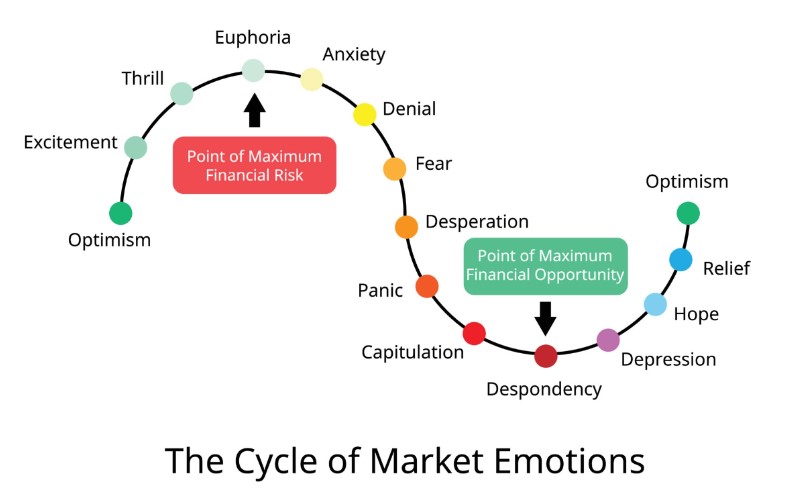
This automation is especially useful for maintaining discipline.
- Removes calculation errors: A simple misplaced decimal when calculating lot size can lead to a catastrophic loss. Automation prevents this.
- Enforces discipline: An EA will not get greedy after a win or fearful after a loss. It will apply the same risk parameter consistently.
- Increases efficiency: Automating position sizing frees you up to focus on what matters most: analyzing the market and identifying high-probability trade setups.