

Blog
Trading Forex vs Binary Options: Which Offers Better Risks and Returns?

When comparing Forex and binary options, Forex trading generally offers a more favorable risk-to-return profile for disciplined traders due to its variable profit potential and robust risk management tools, while binary options present a fixed, high-risk structure. With Forex, your potential profit is directly proportional to how much the market moves in your favor, and you can use tools like stop-loss orders to limit potential downsides. This structure rewards in-depth market analysis and strategic trade management. In contrast, binary options offer a fixed payout for a correct prediction, but you risk losing your entire investment if you are wrong, making it a high-stakes, all-or-nothing proposition.
The core difference between these two instruments lies in their fundamental mechanism: Forex involves trading the actual value of currency pairs, while binary options are simple “yes or no” predictions on price direction within a set time. In Forex, you are participating in the global currency market, speculating on the strengthening or weakening of one currency against another. Success depends on both the direction and the magnitude of the price movement. Binary options, however, simplify this to a single question: will the price of an asset be above or below a certain point at a specific time? The amount the price moves does not matter, only the direction.
While binary options may seem simpler, Forex trading is often considered a better long-term choice for beginners who are serious about learning market analysis and risk management, as its complexity builds a stronger foundation for a sustainable trading career. The initial learning curve for Forex is steeper, requiring an understanding of concepts like leverage, margin, and pips. However, mastering these principles provides you with skills that are applicable across various financial markets. The straightforward nature of binary options can be misleading, often encouraging a gambling mindset rather than a strategic one, which can lead to rapid and significant losses.
Ultimately, choosing between Forex and binary options depends on your goals, risk tolerance, and commitment to learning. Understanding the deep-seated differences in how they handle risk, calculate profit, and charge for trades is the first step toward making an informed decision. This guide will break down each of these critical aspects to give you a clear picture of which path might be right for you.
What Is the Core Difference Between Trading Forex and Binary Options?
The core difference is that Forex trading involves speculating on the fluctuating value of currency pairs with variable profit and loss, while binary options are fixed-risk, fixed-reward contracts based on a simple yes or no price prediction. In essence, Forex is about participating in the market’s movement, while binary options are about betting on a specific outcome within a rigid timeframe. This fundamental distinction impacts everything from how you make money to how you manage risk.
To understand this better, let’s look at the mechanics of each. When you trade Forex, you are directly engaging with the dynamics of the global economy. Your success is tied to your ability to analyze trends and predict the magnitude of price changes. With binary options, the market’s complexity is boiled down to a single directional guess, which changes the entire trading experience.
How Does Forex Trading Work?
Forex trading involves buying one currency while simultaneously selling another, with the goal of profiting from the change in their exchange rate. You are trading currency pairs, such as the Euro and the U.S. Dollar (EUR/USD) or the British Pound and the Japanese Yen (GBP/JPY). If you believe the Euro will strengthen against the Dollar, you would buy the EUR/USD pair. Your profit or loss is then determined by how much the exchange rate moves.
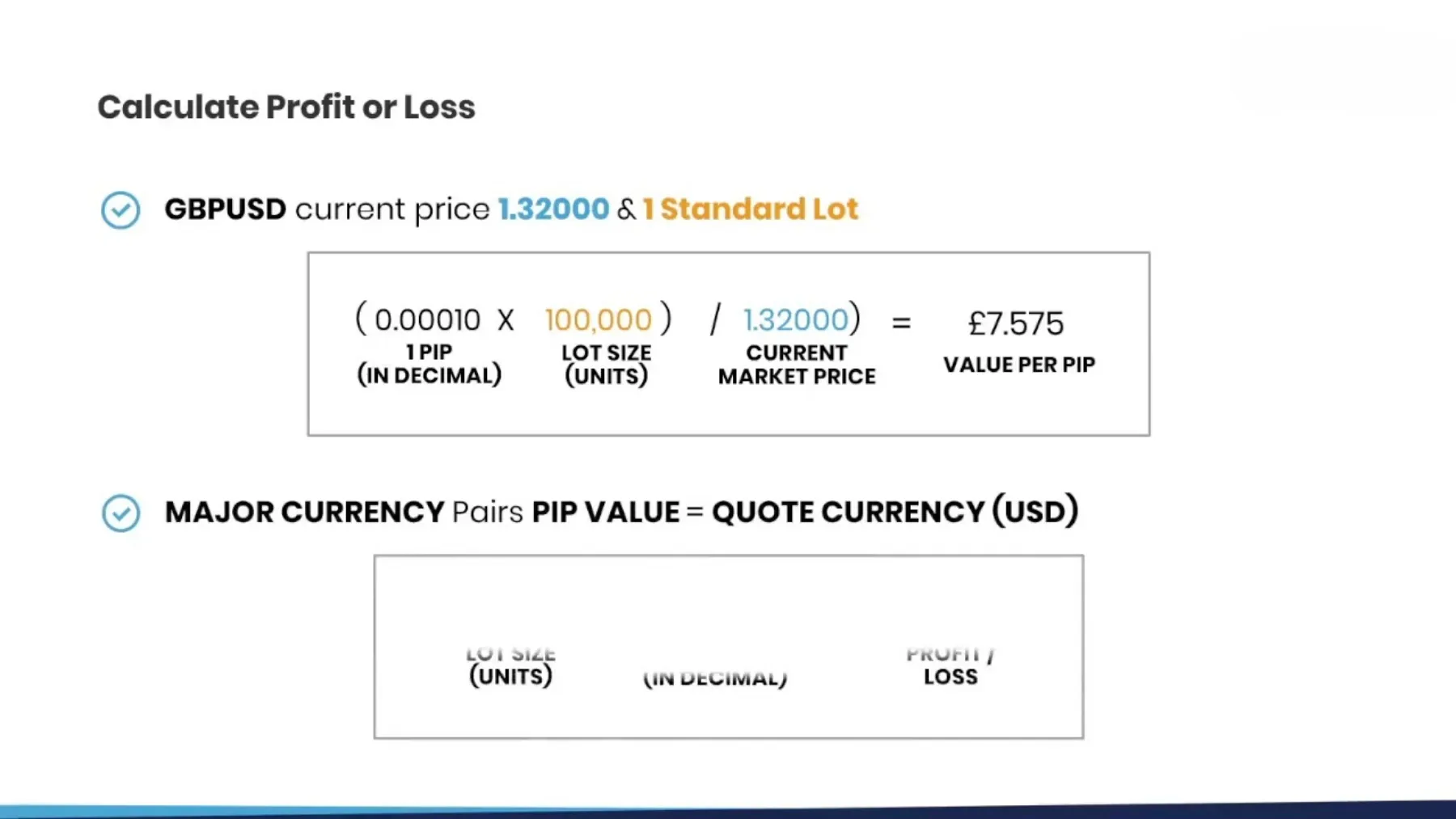
This movement is measured in pips, which stands for “percentage in point” and represents the smallest price change in a currency pair. For most pairs, a pip is the fourth decimal place (0.0001). The value of a pip depends on your trade size, which is measured in lots. A standard lot is 100,000 units of the base currency, but brokers also offer mini (10,000) and micro (1,000) lots to accommodate smaller accounts.
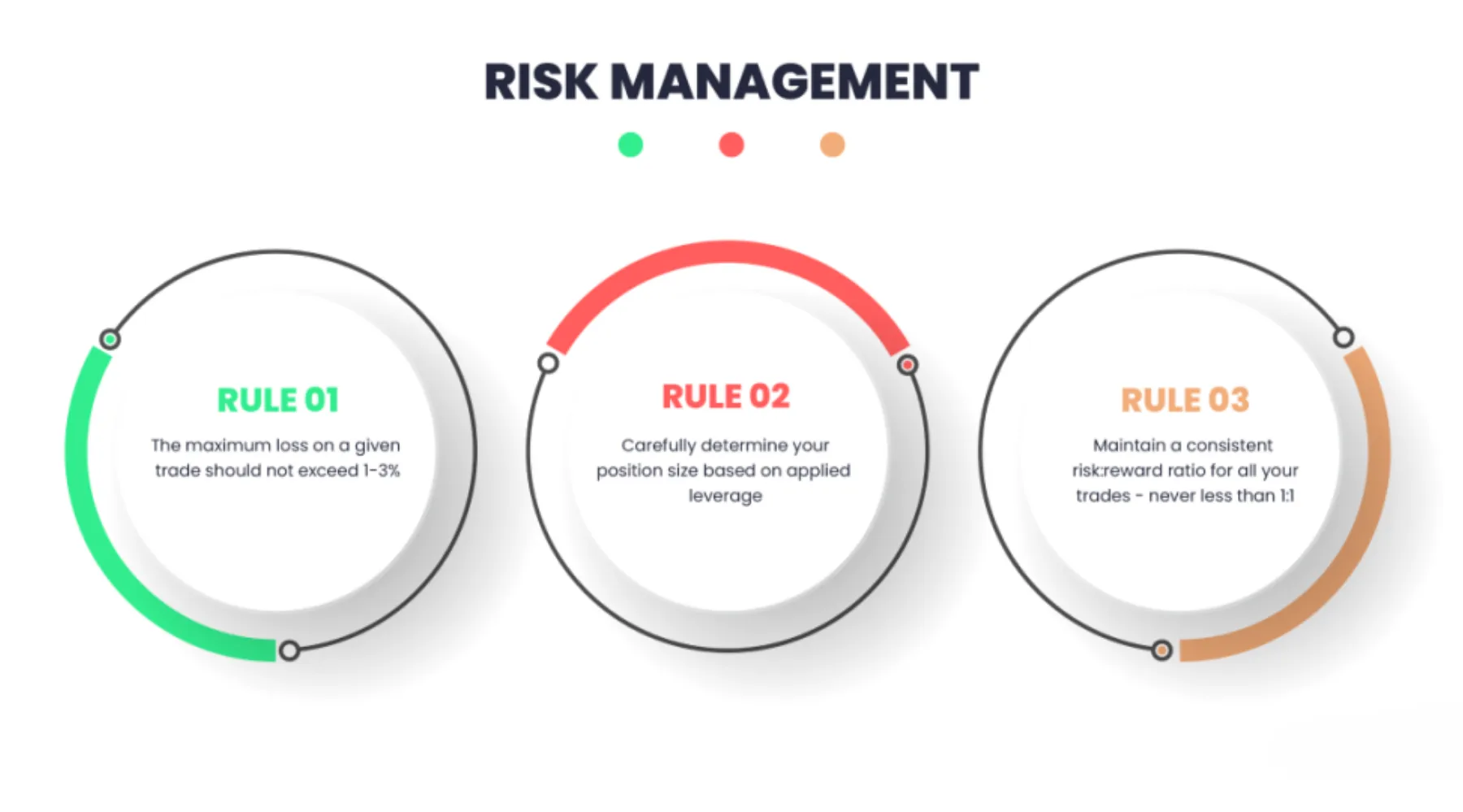
To control these large positions, traders use leverage. Leverage is essentially a loan from your broker that allows you to open a position much larger than your account balance. For example, with 100:1 leverage, you can control a $100,000 position with just $1,000 of your own money. This $1,000 is known as margin. While leverage can amplify profits, it also magnifies losses, making it a powerful but risky tool. The key takeaway is that your profit or loss in Forex is variable and uncapped, directly tied to the extent of the price move in your chosen direction.
How Does Binary Options Trading Work?
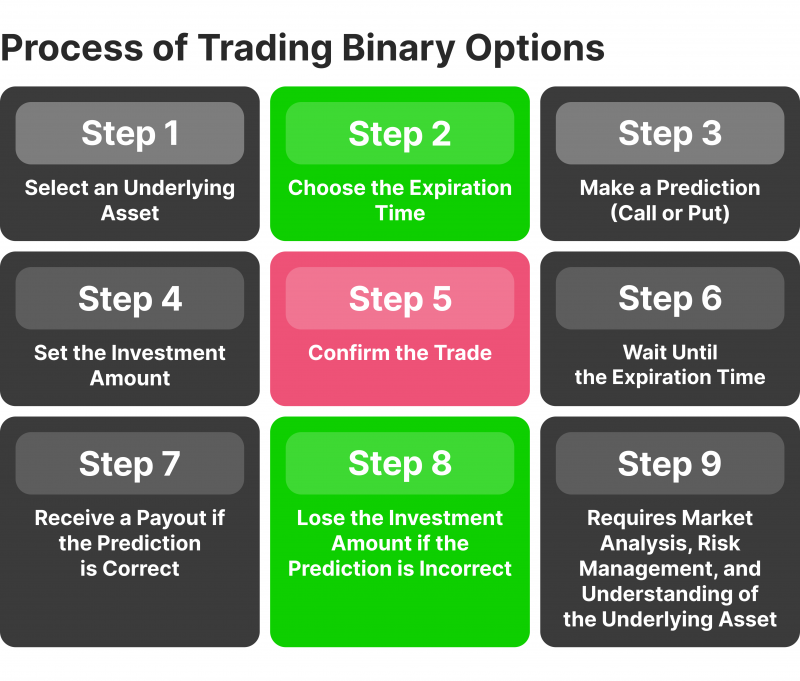
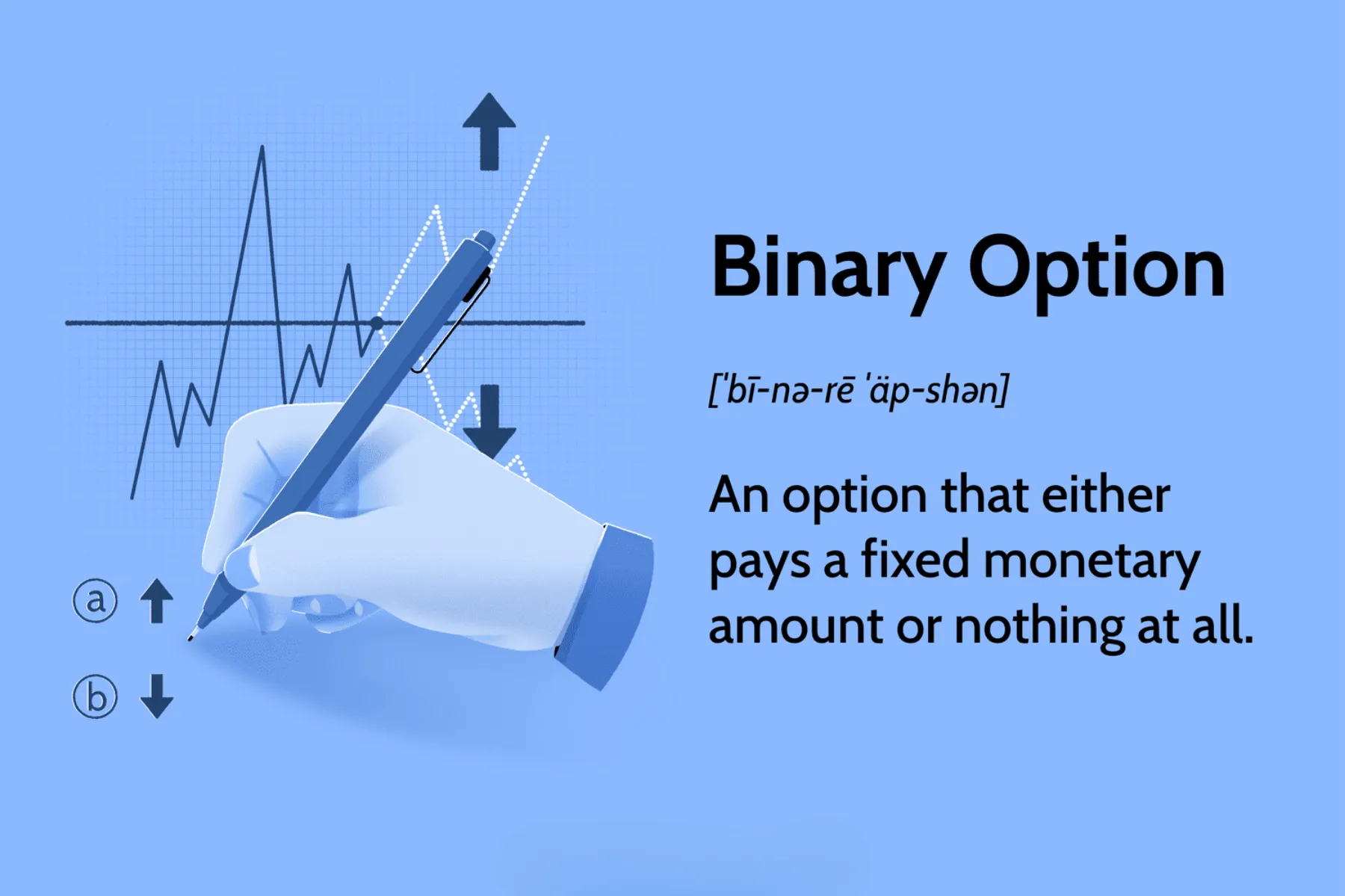
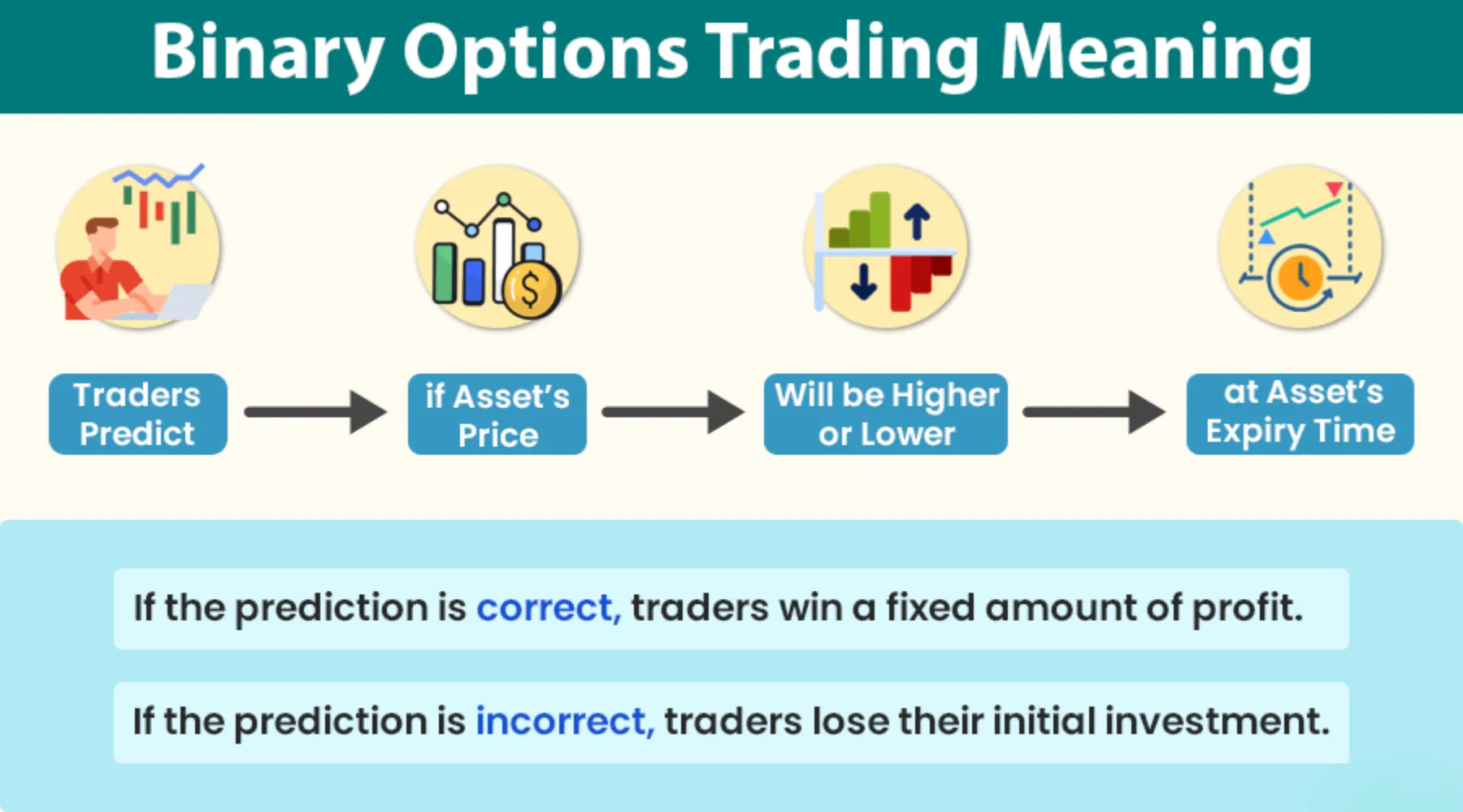
Binary options trading operates on a completely different premise: a simple “yes or no” proposition. It is an “all-or-nothing” financial product where the outcome is either a fixed monetary amount or nothing at all. Instead of buying a currency, you are placing a wager on whether an asset’s price will be above or below a specific price, known as the strike price, at a predetermined expiry time.
For example, a binary options trade might ask: “Will the price of EUR/USD be above 1.0850 in the next 10 minutes?” You would choose “Yes” (a Call option) or “No” (a Put option). If you invest $100 and the broker offers an 85% payout, here are the two possible outcomes:
- You are correct: If the price is above 1.0850 at expiry, you receive your initial $100 back plus an $85 profit.
- You are incorrect: If the price is at or below 1.0850 at expiry, you lose your entire $100 investment.
Unlike Forex, the magnitude of the price movement is irrelevant. The price could be one-tenth of a pip or 100 pips above the strike price, and your profit remains the same fixed $85. A crucial point is that with binary options, you never own the underlying asset. You are simply speculating on its price direction within a very specific and rigid set of rules. This fixed-risk, fixed-reward structure makes it easy to understand but also introduces a unique and unforgiving risk profile.
How Do Risks Compare Between Forex and Binary Options Trading?
The risks in Forex are variable and can be managed with tools like stop-losses, while binary options carry a fixed, high risk of losing the entire investment on every single trade. Forex trading risk is proportional to market volatility and position size, but it can be controlled. In contrast, binary options risk is a rigid, all-or-nothing event where a single incorrect prediction results in a total loss of the amount staked.
Here’s the breakdown of how their risk profiles differ. A key distinction is the concept of control. In Forex, a trader has several tools to actively manage and limit risk even after a trade is opened. In binary options, once the trade is placed, the outcome is out of your hands and determined solely by the price at the exact moment of expiry.
| Risk Factor | Forex Trading | Binary Options Trading |
|---|---|---|
| Risk Per Trade | Variable. You decide your maximum loss with a stop-loss order. | Fixed. You risk 100% of the amount you invest in the trade. |
| Maximum Loss | Can exceed initial deposit without proper risk management due to leverage. | Capped at the amount invested for that specific trade. |
| Risk Management | Multiple tools available: stop-loss, take-profit, position sizing, hedging. | Very limited. The primary tool is deciding how much to stake on each trade. |
| Broker Regulation | Heavily regulated in major jurisdictions (FCA, ASIC, CySEC), offering trader protection. | Historically has had more issues with unregulated or poorly regulated brokers. |
| Profit vs. Loss Ratio | Can achieve favorable risk-to-reward ratios, like risking 1% to gain 3% or more. | Often offers an unfavorable risk-to-reward ratio (e.g., risk 100% to win 70-90%). |
What Are the Primary Risks in Forex Trading?
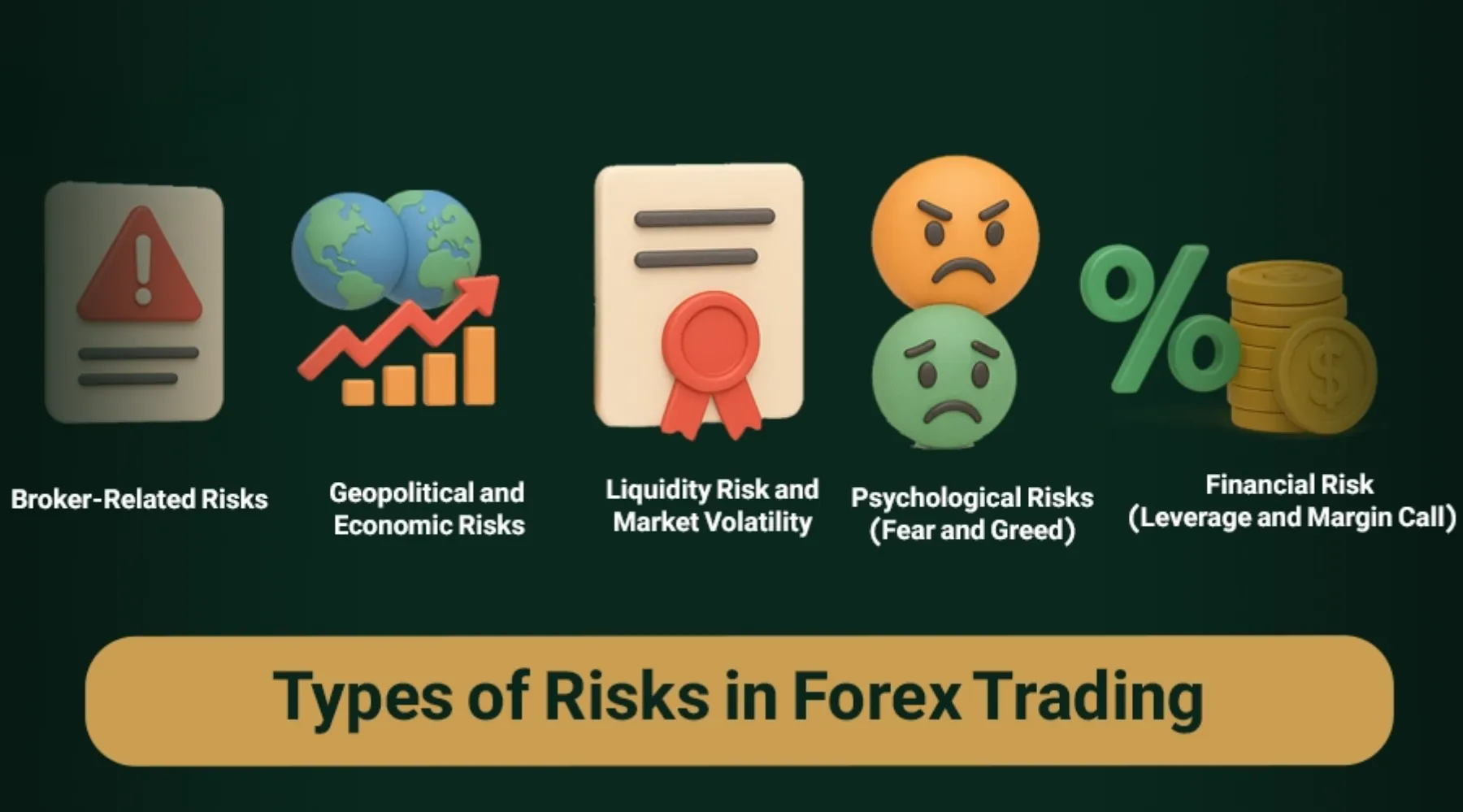
The primary risks in Forex trading stem from its dynamic and leveraged nature. First is market risk, which is the possibility that a currency pair’s value will move against your position due to economic events, political instability, or shifts in market sentiment. This volatility is what creates opportunities, but it also creates risk.
Second, and perhaps most significant, is leverage risk. Leverage allows you to control a large position with a small amount of capital, which can lead to magnified profits. However, the reverse is also true. A small price movement against you can result in substantial losses, potentially even exceeding your initial deposit if your broker does not offer negative balance protection. For example, with 100:1 leverage, a mere 1% drop in the asset’s value can wipe out your entire investment.
Finally, there is liquidity risk. While the Forex market is the most liquid in the world, there are times, such as during major news releases or outside of main trading hours, when liquidity can dry up. This can lead to slippage, where your order is executed at a different price than you intended. For instance, you might set a stop-loss order to close your trade at 1.1200, but due to a sudden price gap, it might only execute at 1.1180, resulting in a larger loss than you had planned.
What Are the Primary Risks in Binary Options Trading?
The risk profile of binary options is fundamentally different and, in many ways, more severe on a per-trade basis. The most prominent risk is the high probability of total loss on a single trade. Because of its all-or-nothing structure, if your prediction is even marginally incorrect by the expiry time, you lose 100% of the capital you risked on that trade. There is no partial loss; it’s a binary outcome.
Another major concern is the prevalence of unregulated brokers. The binary options industry has a history of being a target for scams and fraudulent operations. Dealing with an unregulated broker puts you at risk of price manipulation, withdrawal issues, or even the broker disappearing with your funds. While regulation has improved, it is still a significant risk factor that traders must navigate carefully.
Lastly, and most critically from a mathematical standpoint, is the unfavorable risk-to-reward ratio. Most binary options brokers offer payouts in the range of 70% to 90% for a successful trade. This means you risk 100% of your capital for a potential return of less than 100%. For instance, with an 85% payout, you need to win approximately 54 out of every 100 trades just to break even. Achieving such a high win rate consistently is extremely difficult, giving the house, or broker, a significant statistical edge over the long term.
What Is the Profit Potential of Forex vs Binary Options?
Forex offers theoretically unlimited profit potential on a single trade as long as the price moves favorably, whereas binary options offer a fixed, capped profit percentage per trade. This means that in Forex, your returns are directly proportional to the magnitude of the correct market move you capture. In binary options, your profit is predetermined and remains the same regardless of how far the market moves in your favor beyond the strike price.
Let’s explore how this plays out in practice. A skilled Forex trader can capture a strong trend and turn a small initial risk into a profit many times larger. A binary options trader, no matter how skilled, is always limited by the fixed payout structure of the contract they enter.
How Are Profits Calculated in Forex?
In Forex, profit potential is directly linked to the number of pips a currency pair moves in your favor and the size of your trading position (lot size). The potential for profit on a single trade is, in theory, unlimited. As long as a trend continues, your profits can continue to grow. You can let a winning trade run for days or weeks to maximize gains.
The calculation is straightforward. Let’s imagine you decide to buy one mini lot (10,000 units) of the EUR/USD pair at a price of 1.0700, believing it will rise. For a mini lot, each pip move is worth approximately $1.
- You set a target to sell at 1.0800, which is a 100-pip move.
- The market moves in your favor, and you close the trade at 1.0800.
- Your profit would be: 100 pips * $1 per pip = $100.
Now, what if a major economic announcement causes the pair to surge to 1.1000, a 300-pip move? If you adjusted your target and let the trade run, your profit would be 300 pips * $1 per pip = $300. This example shows how profit in Forex is scalable. The more the market moves in your direction, the more you can make. This dynamic rewards traders who can identify and ride strong market trends.
How Are Profits Calculated in Binary Options?
Profit calculation in binary options is much simpler because it is always a fixed, predetermined amount. The potential gain is known before you even enter the trade. The payout is expressed as a percentage of your investment.
Let’s use a similar market scenario. The EUR/USD is at 1.0700, and you believe it will be higher in the next 15 minutes.
- You place a $100 “Call” option with a payout of 80%.
- The expiry time is 15 minutes.
- After 15 minutes, the EUR/USD price is 1.0701, just one-tenth of a pip above your entry. You were correct. Your profit is a fixed $80 (80% of $100).
- Now, imagine the price surged to 1.0800, a 100-pip move. Your profit is still just $80.
This demonstrates the primary limitation of binary options’ profit potential: gains are capped per trade. It does not matter how right you were about the market’s direction or strength. Your reward is always fixed at the percentage offered by the broker. While this predictability can be appealing, it means you can never capitalize on strong, trending moves in the same way a Forex trader can. You are leaving potential profits on the table in exchange for a simplified, predetermined outcome.
What Are the Associated Costs of Trading Forex vs Binary Options?
The primary cost in Forex trading is the spread or commission charged by the broker on each trade, while the cost in binary options is indirectly built into the payout structure, creating a mathematical edge for the broker. Forex costs are transparent and visible to the trader. Binary options costs are less obvious, embedded in the difference between the potential profit from a win and the total loss from a loss.
To understand this better, let’s look at where the brokers make their money in each system. In Forex, brokers act as intermediaries and charge for their service directly. In binary options, the broker acts as the counterparty to your trade, and their profit comes from the statistical odds being in their favor.
What Are the Trading Costs in the Forex Market?
The most common cost in Forex trading is the spread. The spread is the difference between the bid (sell) price and the ask (buy) price of a currency pair. For example, if the EUR/USD is quoted with a bid price of 1.0850 and an ask price of 1.0851, the spread is 1 pip. This small difference is the broker’s fee for executing your trade. When you open a position, you immediately incur this cost.

Some brokers, particularly those offering ECN (Electronic Communication Network) accounts, offer very tight or even zero spreads. In this model, they instead charge a fixed commission per trade, such as $3 per lot traded. This model is often preferred by high-volume traders as it can be more cost-effective.
Another potential cost is the swap fee, also known as an overnight or rollover fee. This is a small fee that is either charged or credited to your account for holding a position open overnight (past the market’s closing time). The fee is based on the interest rate differential between the two currencies in the pair you are trading. If you are a day trader who closes all positions before the end of the day, you will not encounter swap fees.
Are There Trading Costs for Binary Options?
On the surface, binary options trading often appears to be “free” because there are typically no direct commissions or spreads. You invest $100, and you either win a percentage or lose the $100. However, the cost is cleverly integrated into the payout structure.
This built-in cost is the difference between what you stand to lose and what you stand to win. For instance, if a broker offers an 85% payout on a winning trade:
- A winning trade of $100 nets you an $85 profit.
- A losing trade of $100 costs you the full $100.
This imbalance means that for every dollar you risk, you can only win 85 cents. This 15-cent difference is the broker’s inherent advantage. Over a large number of trades, this statistical edge ensures the broker remains profitable. So, while you are not paying a fee per trade, you are constantly trading against odds that are slightly stacked against you. This hidden cost is arguably more significant than a transparent spread or commission because it directly impacts the win rate you need to be profitable.
Which is Better for Beginners: Forex or Binary Options?
Forex is generally better for beginners committed to learning trading as a long-term skill, as it provides a foundation in market analysis and robust risk management principles. While binary options might appear simpler and more accessible at first glance, their rigid, all-or-nothing structure can foster poor habits and expose newcomers to rapid, significant losses without teaching them the underlying principles of market dynamics.
Let’s synthesize the points we’ve discussed to help you decide. The choice really comes down to what kind of trader you want to be. Are you looking for a quick, simple way to speculate on markets, or are you aiming to build a deep, sustainable skill set?
The learning curve is a critical factor. Binary options have a very low barrier to entry. The concept of “up or down” is easy to grasp, and you can start trading within minutes. However, this simplicity is deceptive. It does not encourage a deep understanding of why markets move, technical analysis, or fundamental economic factors. Forex trading, on the other hand, has a steeper learning curve. Beginners must learn about leverage, pips, lots, spreads, and how to use a more complex trading platform. While this takes more effort initially, it forces you to learn the language and mechanics of the financial markets, which is an invaluable skill.
When it comes to risk management, Forex is the clear winner. It offers a suite of tools to help you control your risk. You can set a stop-loss order to automatically close a losing trade at a predetermined level, limiting your potential loss. You can also use take-profit orders to lock in gains. Furthermore, you can precisely control your position size to ensure you only risk a small percentage of your capital on any single trade. In binary options, risk management is almost non-existent. Your only real tool is deciding how much to stake on a trade where the only outcomes are a 100% loss or a partial gain.
Finally, consider the long-term viability. The skills you develop in Forex trading, such as chart analysis, understanding economic indicators, and disciplined risk management, are transferable to other markets like stocks and commodities. It provides a solid foundation for a potential career or serious hobby in trading. The unfavorable odds and regulatory concerns surrounding binary options make them a much more challenging path for achieving consistent, long-term success. For many, it functions more like gambling than a strategic investment.
For a beginner, the recommended approach is to start with a Forex demo account. This allows you to learn the platform, practice analyzing the market, and test your strategies with virtual money, completely risk-free. It provides the ideal environment to build the discipline and knowledge needed before ever putting real capital on the line.
What Are Other Key Factors in the Forex vs Binary Options Debate?
Beyond core risk and return mechanics, the debate is shaped by major differences in regulation, trading strategies, market availability, analytical application, and psychological demands. Additionally, these factors often have a greater impact on a trader’s long-term success or failure than the simple profit-loss structure of each market. Understanding these nuances helps you choose an environment that aligns with your trading style, risk tolerance, and personal discipline. A trader who thrives on long-term analysis and patient execution may find Forex more suitable, while someone seeking rapid, event-driven outcomes might be drawn to binary options, despite the associated risks.
How Is Regulation Different for Forex and Binary Options Brokers?
The regulatory landscape is one of the most stark contrasts between Forex and binary options. The global Forex market is generally well-regulated, with major financial authorities overseeing broker activities to protect traders. For instance, brokers operating in the United Kingdom must be authorized by the Financial Conduct Authority (FCA), while those in Australia are governed by the Australian Securities and Investments Commission (ASIC). These bodies enforce strict rules regarding client fund segregation, leverage limits, and fair dealing practices, providing a safety net against fraud.
In contrast, the binary options market has a much more problematic regulatory history. Many jurisdictions, including the entire European Union under the European Securities and Markets Authority (ESMA) and the UK, have banned the sale of binary options to retail clients. This is due to their high-risk, all-or-nothing nature and the prevalence of scams. Consequently, many binary options brokers operate from offshore locations with little to no oversight, exposing traders to significant risks like price manipulation, withdrawal issues, and outright theft of funds. Choosing a broker in this space requires extreme caution and due diligence.
What Trading Strategies Work Best for Each Market?
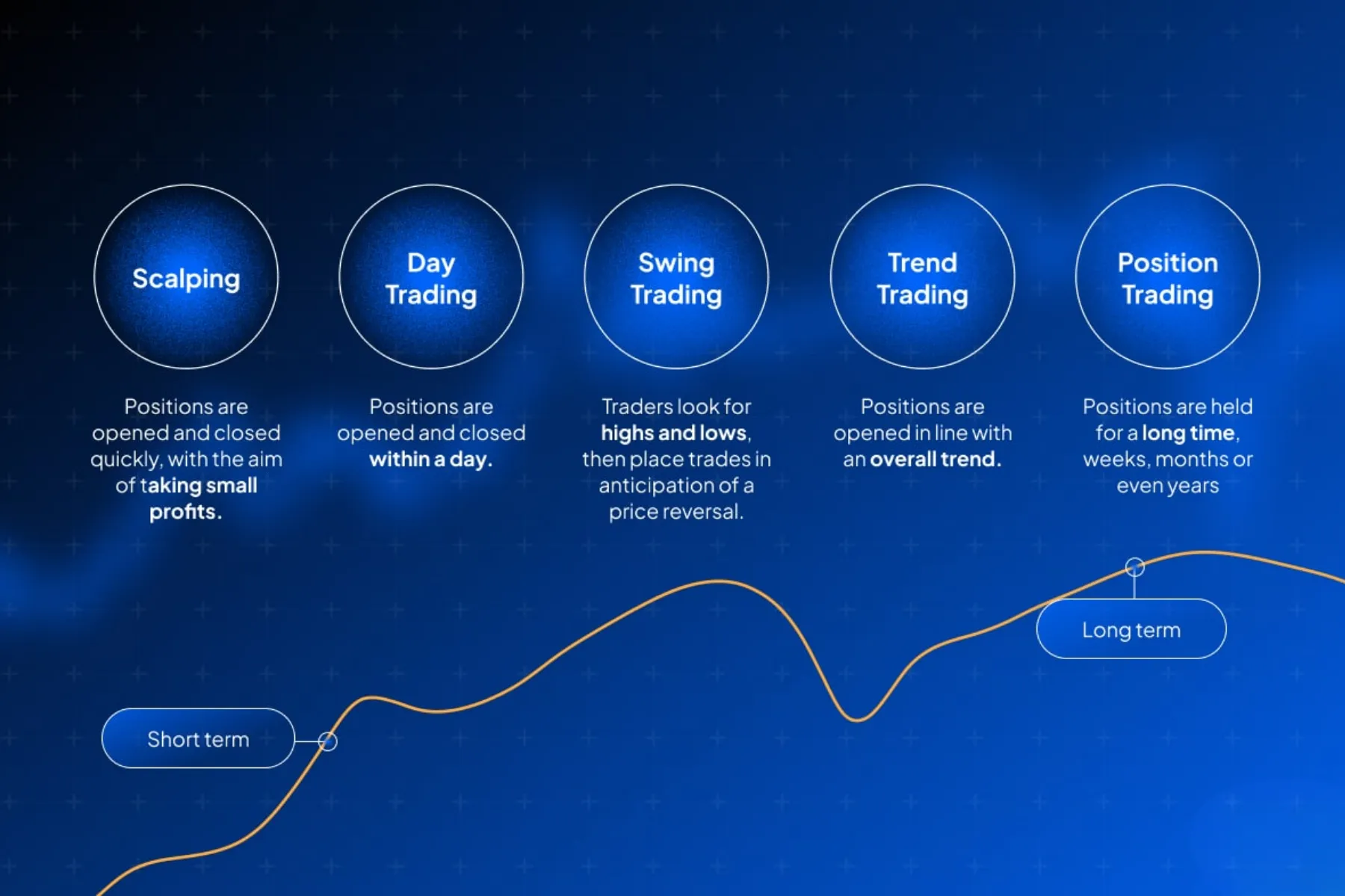
The ideal trading strategies for Forex and binary options are dictated by their unique structures. In Forex, profitability is tied to the magnitude of price movements, allowing for diverse and flexible approaches. Three common strategies reflect this.
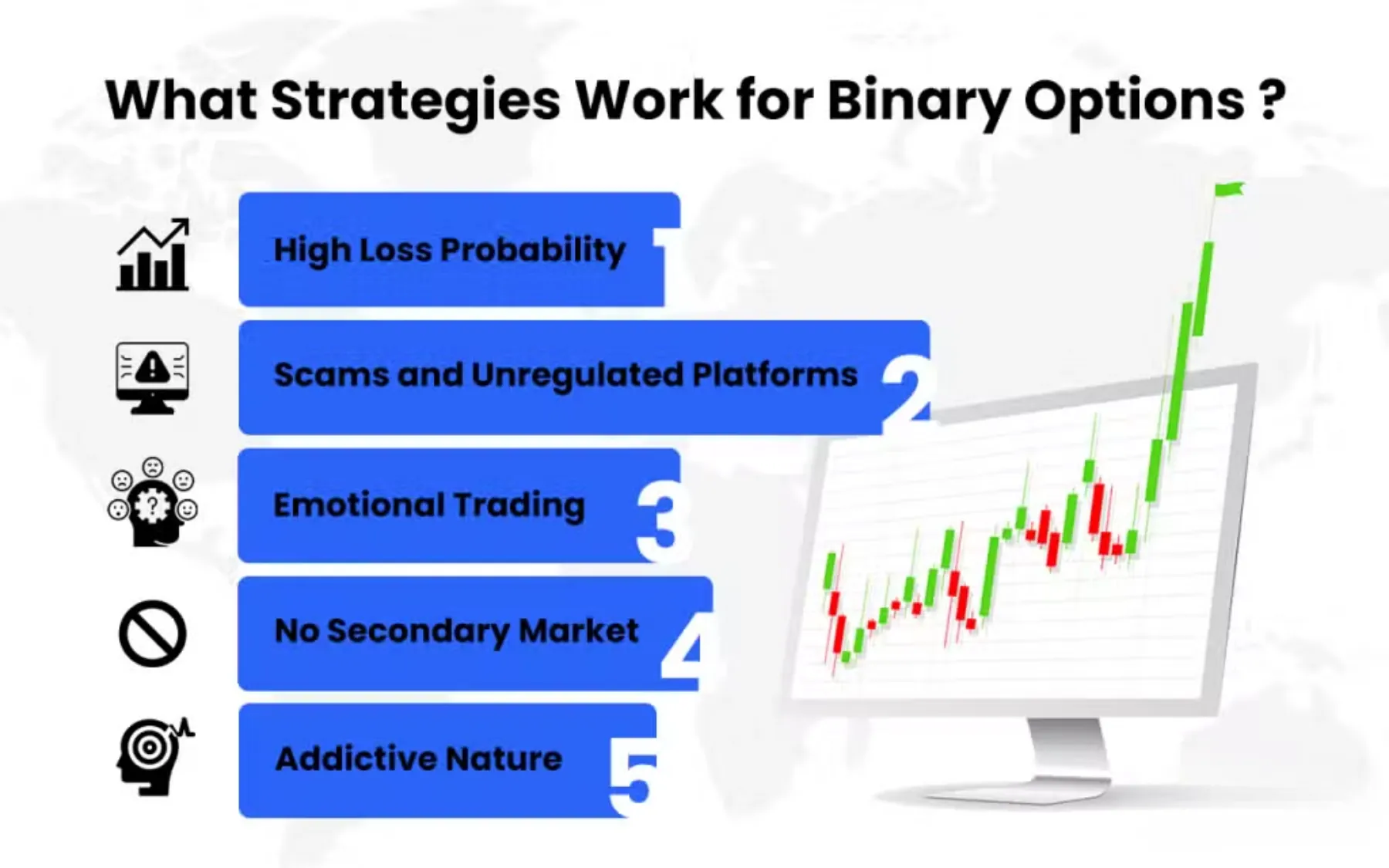
- Scalping: This ultra-short-term strategy involves opening and closing dozens or even hundreds of trades per day to capture very small price changes, often just a few pips at a time.
- Day Trading: Day traders open and close positions within a single trading day, aiming to profit from intraday volatility without holding positions overnight.
- Swing Trading: This longer-term approach involves holding trades for several days or weeks to capitalize on larger market swings or trends.
Binary options strategies are entirely focused on correctly predicting price direction within a fixed, and often very short, expiry time. The size of the price move is irrelevant.
- News-Based Trading: Traders place call or put options just before a major economic announcement, betting on the direction of the resulting volatility.
- Technical Indicator Strategy: This involves using indicators like the Relative Strength Index (RSI) or Bollinger Bands to find overbought or oversold conditions, predicting a short-term price reversal before the option expires.
- Price Action Strategy: Traders analyze candlestick patterns, like pin bars or engulfing patterns, to predict the next price move within a short timeframe.
What Are the Differences in Market Availability and Trading Hours?
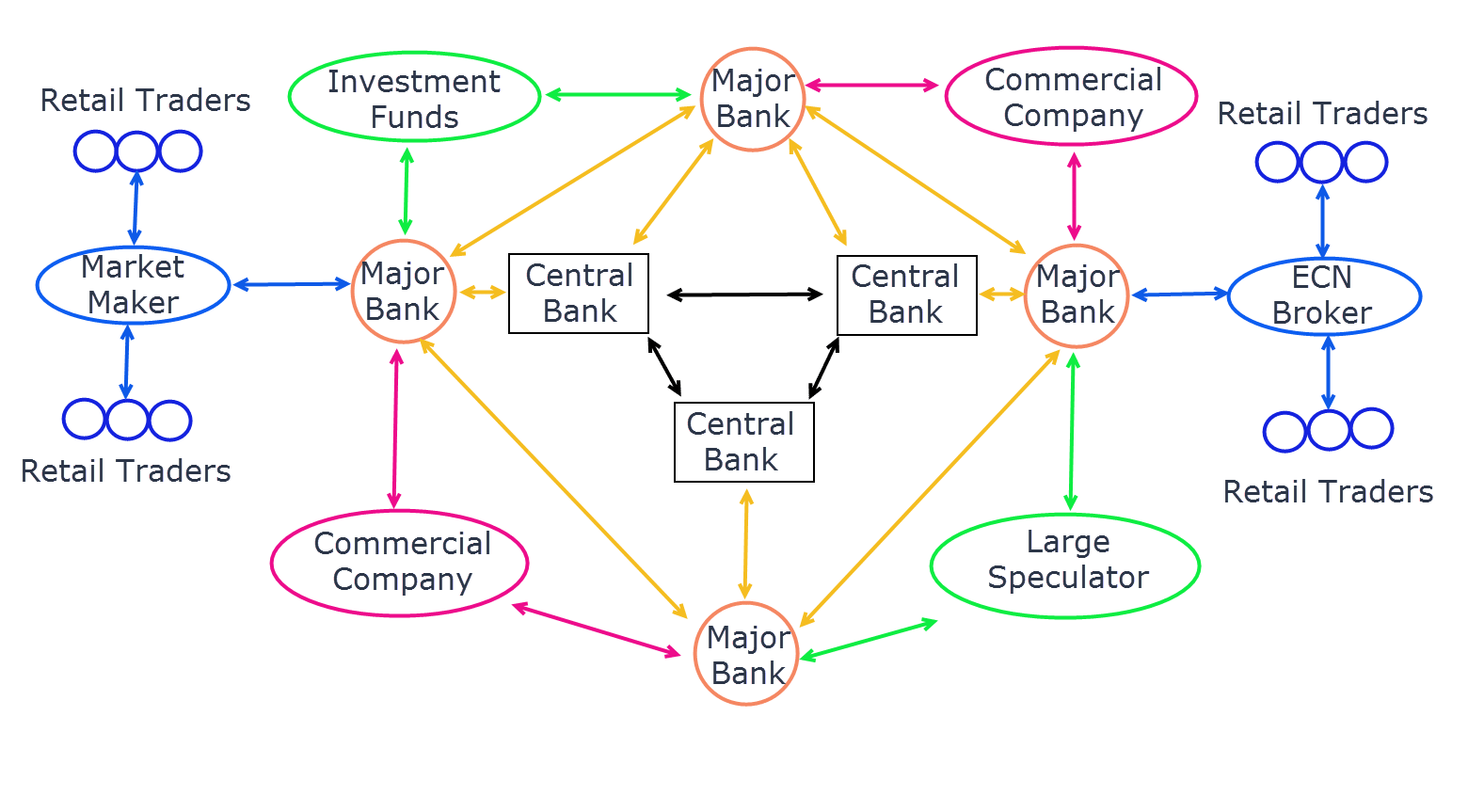
Market availability and trading hours present another key distinction. The decentralized nature of the global Forex market allows it to operate 24 hours a day, five days a week. It follows a continuous session that moves from Sydney to Tokyo, then to London, and finally to New York. This provides immense flexibility for traders, who can execute trades at any time of day or night from Sunday evening to Friday afternoon, EST. This continuous liquidity ensures that traders can almost always enter or exit a position in major currency pairs like the EUR/USD or GBP/USD.

The availability of binary options is more fragmented and entirely dependent on the broker and the underlying asset. While a broker may offer binary options on Forex pairs 24/5, their offerings for other asset classes are limited to the trading hours of those respective markets. For example, you can only trade binary options on the S&P 500 index during U.S. stock market hours. Likewise, options on individual stocks like Apple or commodities like crude oil will have their own specific trading windows. This can limit opportunities compared to the always-on nature of the Forex market.
Can You Use Technical Analysis for Both Forex and Binary Options?
Yes, technical analysis is a fundamental tool for both Forex and binary options trading, but its application and goals differ significantly. In both markets, traders use charts, patterns, and indicators like Moving Averages, MACD, and RSI to forecast future price movements. These tools help identify trends, support and resistance levels, and potential entry points. The core principles of reading market sentiment and momentum through price history remain consistent across both trading styles.
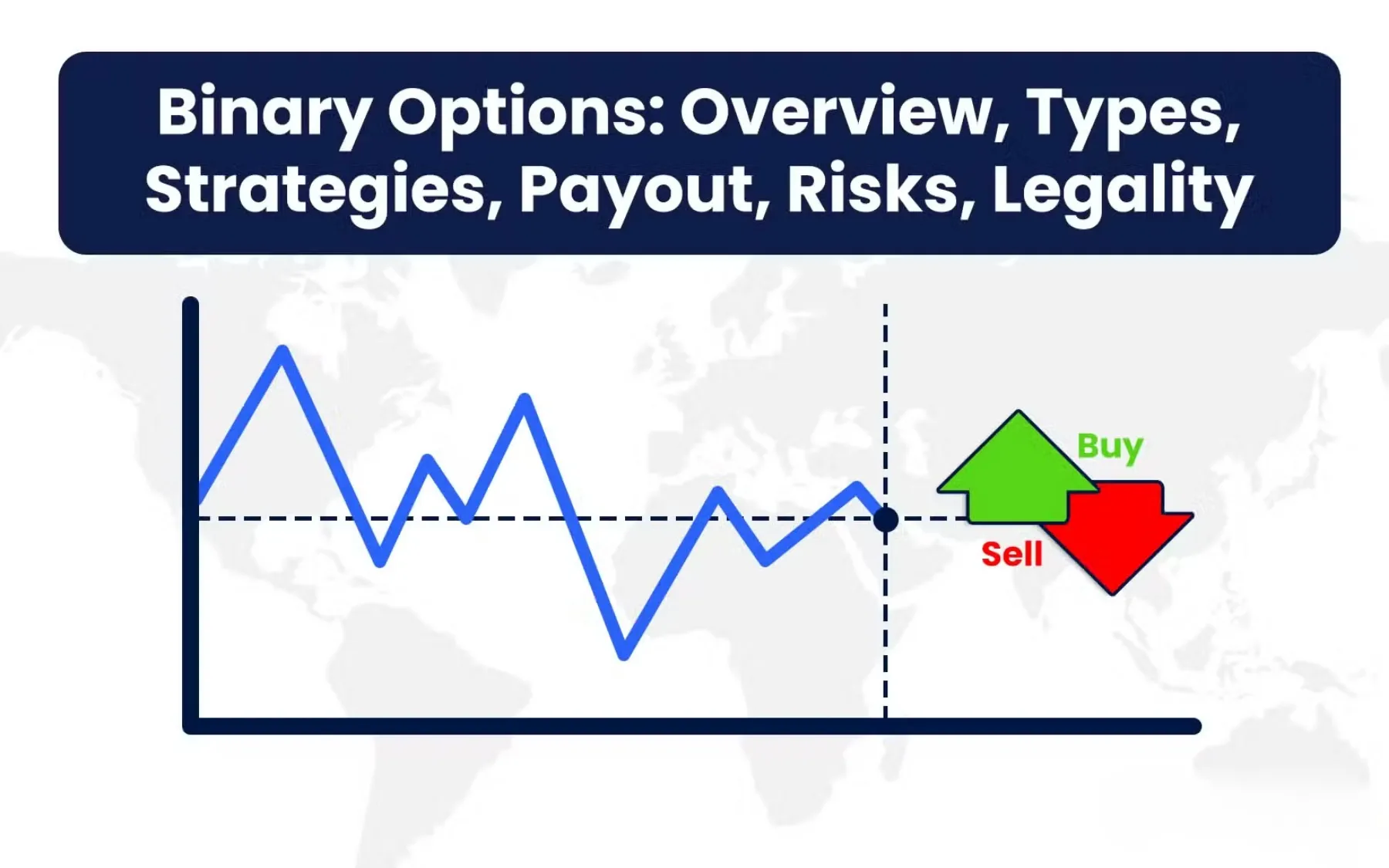
The primary difference lies in what the analysis is used to predict. In Forex trading, technical analysis is used to determine not only the likely direction of a price move but also its potential magnitude and duration. A trader needs to set a stop-loss and a take-profit level, so understanding how far a price might travel is essential for managing risk and reward. For binary options, the analysis is simplified. A trader only needs to predict the direction of the price relative to the strike price at the moment of expiry. The magnitude of the move is completely irrelevant. An asset closing just 0.1 pips in your favor yields the full payout, making technical analysis a tool for a simple “yes or no” decision.
What Is the Psychological Difference Between Trading Forex and Binary Options?
The psychological pressures of trading Forex and binary options are profoundly different, stemming from their distinct risk and time structures. Forex trading is often a slow and methodical process that demands patience and emotional resilience. Trades can remain open for hours, days, or even weeks, and they may move into a loss before turning profitable. Managing the anxiety of an open-ended drawdown and resisting the urge to close a position prematurely requires immense discipline. The focus is on long-term consistency and managing a portfolio of trades where wins and losses vary in size.
Binary options trading creates a much more intense, high-frequency psychological environment. The fixed expiry times and all-or-nothing outcomes generate instant gratification or immediate disappointment. This rapid feedback loop can be highly addictive and often encourages destructive behaviors.
- Revenge Trading: After a quick loss, the urge to immediately enter another trade to win the money back is very strong, leading to impulsive, poorly analyzed decisions.
- Overtrading: The simplicity and speed of placing trades can cause traders to take too many positions, deviating from their strategy.
- Gambler’s Fallacy: Traders may believe a series of losses makes a win more likely, a cognitive bias that has no basis in market reality.